
Close Menu
    Facebook X (Twitter) Instagram
    SciTechDaily
    • Biology
    • Chemistry
    • Earth
    • Health
    • Physics
    • Science
    • Space
    • Technology
    Facebook X (Twitter) Pinterest YouTube RSS
    SciTechDaily
    Home»Health»Fixing Rogue Brain Cells To Treat Neurodegenerative Diseases Like Alzheimer’s and Parkinson’s
    Health

    Fixing Rogue Brain Cells To Treat Neurodegenerative Diseases Like Alzheimer’s and Parkinson’s

    By Case Western Reserve UniversityFebruary 23, 2024No Comments4 Mins Read
    Facebook Twitter Pinterest Telegram LinkedIn WhatsApp Email Reddit
    Share
    Facebook Twitter LinkedIn Pinterest Telegram Email Reddit
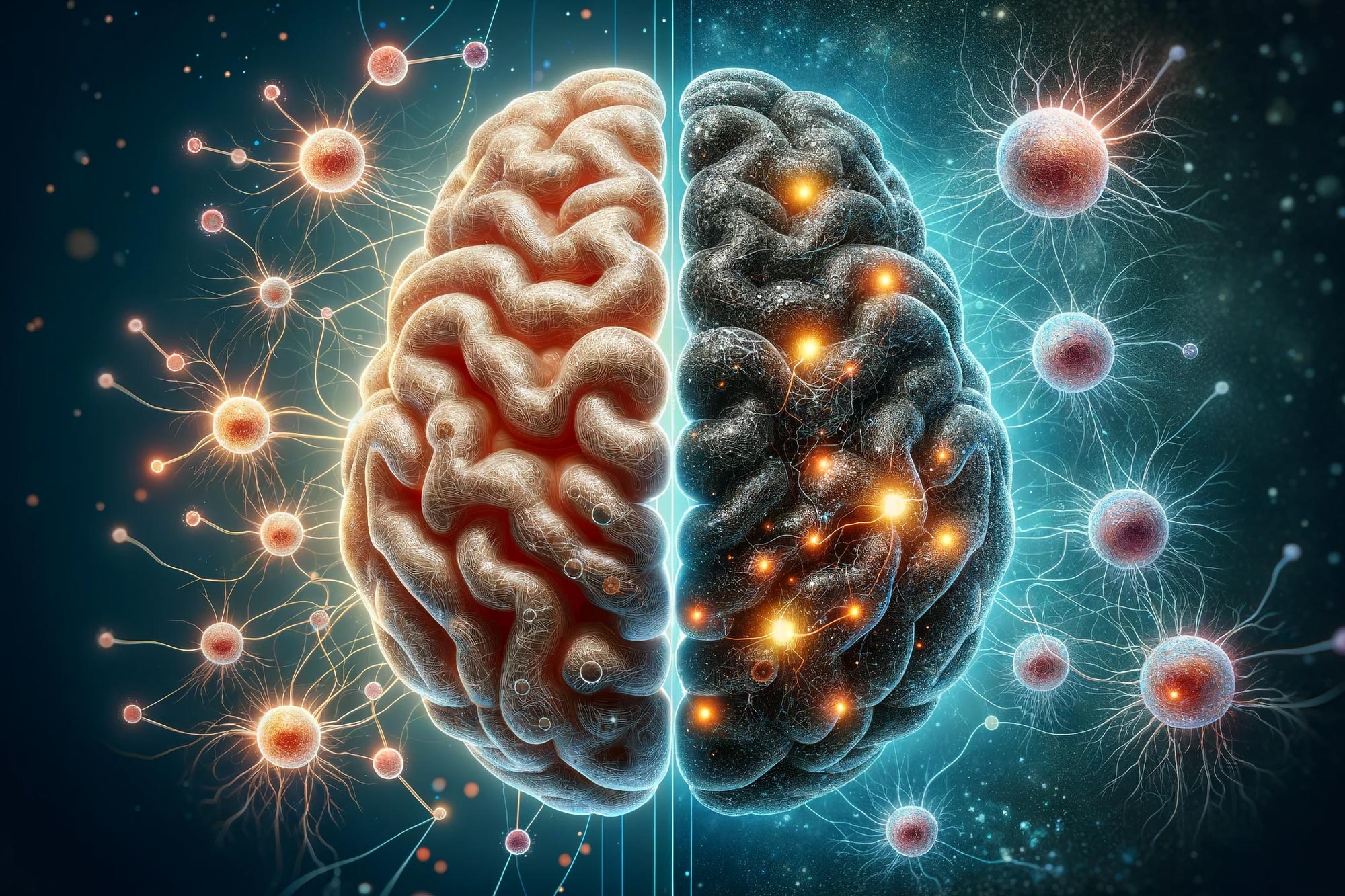
    Rogue Brain Cells Neurodegeneration Art Concept
    A new study reveals a potential treatment strategy for neurodegenerative diseases by targeting astrocytes with drugs that inhibit HDAC3, protecting nerve cells and offering hope for advancements in therapies for conditions such as Alzheimer’s and Parkinson’s. Credit: SciTechDaily.com

    Researchers identify new therapeutic approach targeting astrocytes, the brain’s most abundant cells.

    A team led by scientists at the Case Western Reserve University School of Medicine has identified a new therapeutic approach for combating neurodegenerative diseases, offering hope of improved treatments for Alzheimer’s disease, Parkinson’s disease, Vanishing White Matter disease, and multiple sclerosis, among others.

    Neurodegenerative diseases, which affect millions of people worldwide, occur when nerve cells in the brain or nervous system lose function over time and ultimately die, according to the National Institutes of Health. Alzheimer’s disease and Parkinson’s disease are the most common.
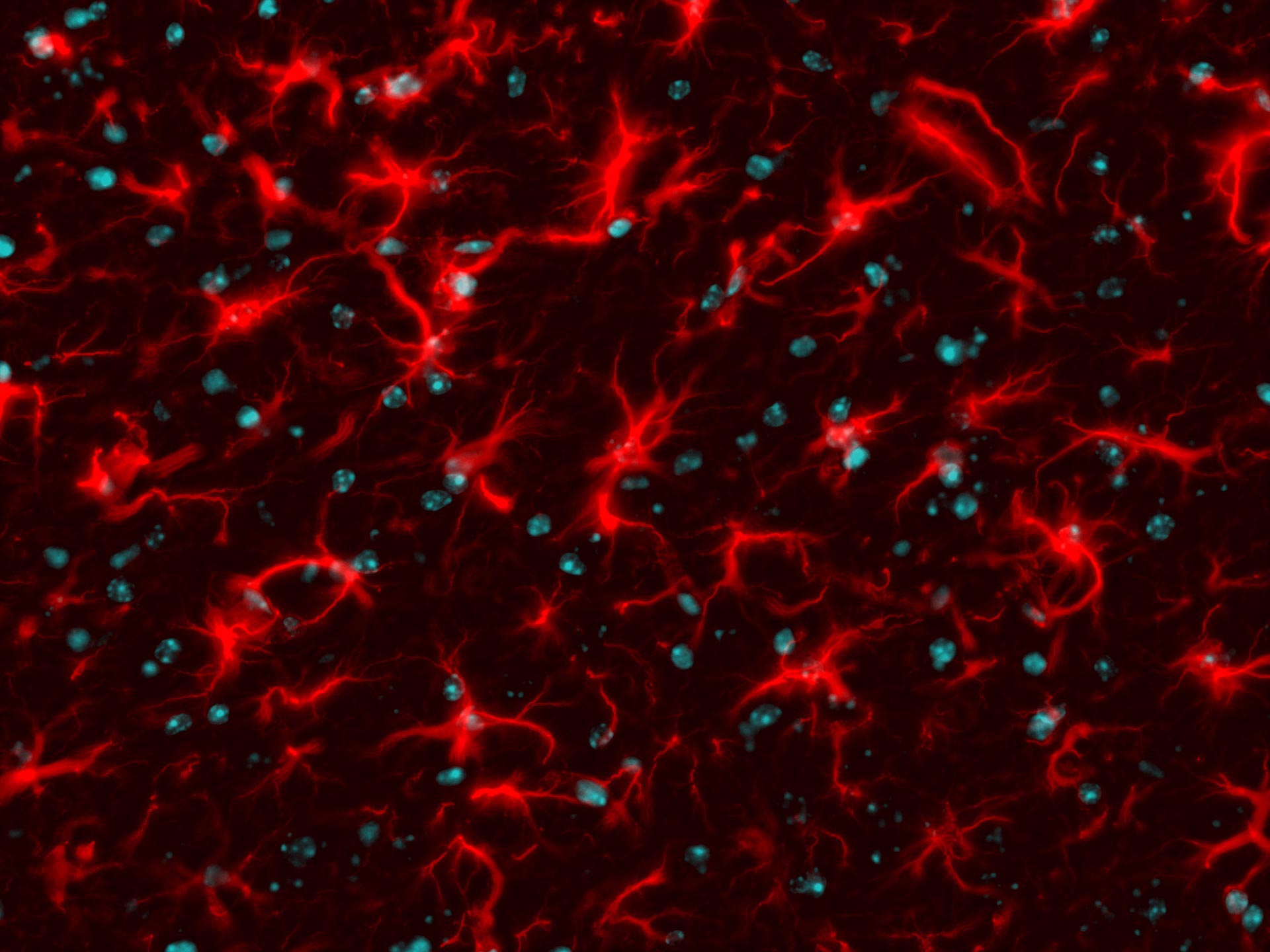
    Rogue Mouse Brain Cells
    Rogue mouse brain cells in red. Credit: Case Western Reserve University

    Astrocytes: Key to Neurodegeneration

    The research team’s new study, published online on February 20 in the journal Nature Neuroscience, focused on astrocytes—the brain’s most abundant cells, which normally support healthy brain function. Growing evidence indicates astrocytes can switch to a harmful state that increases nerve-cell loss in neurodegenerative diseases.

    The researchers created a new cellular technique to test thousands of possible medications for their ability to prevent these rogue astrocytes from forming.

    Benjamin Clayton
    Benjamin Clayton. Credit: Case Western Reserve University

    Innovations in Drug Screening and Therapeutic Potential

    “By harnessing the power of high-throughput drug-screening, we’ve identified a key protein regulator that, when inhibited, can prevent the formation of harmful astrocytes,” said Benjamin Clayton, lead author and National Multiple Sclerosis Society career transition fellow in the laboratory of Paul Tesar at the Case Western Reserve School of Medicine.

    They found that blocking the activity of a particular protein, HDAC3, may prevent the development of dangerous astrocytes. The scientists discovered that by administering medications that specifically target HDAC3, they were able to prevent the development of dangerous astrocytes and significantly increase the survival of nerve cells in mouse models.

    “This research establishes a platform for discovering therapies to control diseased astrocytes and highlights the therapeutic potential of regulating astrocyte states to treat neurodegenerative diseases,” said Tesar, the Dr. Donald and Ruth Weber Goodman Professor of Innovative Therapeutics and the study’s principal investigator.

    Paul Tesar
    Paul Tesar. Credit: Case Western Reserve University

    Tesar, also director of the School of Medicine’s Institute for Glial Sciences, said more research needs to be done before patients might benefit from the promising approach. But, he said, their findings could lead to the creation of novel therapies that disarm harmful astrocytes and support neuroprotection—perhaps improving the lives of people with neurodegenerative illnesses in the future.

    “Therapies for neurodegenerative disease typically target the nerve cells directly,” Tesar said, “but here we asked if fixing the damaging effects of astrocytes could provide therapeutic benefit. Our findings redefine the landscape of neurodegenerative disease treatment and open the door to a new era of astrocyte targeting medicines.”

    Reference: “A phenotypic screening platform for identifying chemical modulators of astrocyte reactivity” by Benjamin L. L. Clayton, James D. Kristell, Kevin C. Allan, Erin F. Cohn, Molly Karl, Andrew D. Jerome, Eric Garrison, Yuka Maeno-Hikichi, Annalise M. Sturno, Alexis Kerr, H. Elizabeth Shick, Jesse A. Sepeda, Eric C. Freundt, Andrew R. Sas, Benjamin M. Segal, Robert H. Miller and Paul J. Tesar, 20 February 2024, Nature Neuroscience.
    DOI: 10.1038/s41593-024-01580-z

    The team included additional researchers from the Case Western Reserve School of Medicine, and from the George Washington School of Medicine, The Ohio State University, and the University of Tampa.

    The research was supported by grants from the National Institutes of Health, National Multiple Sclerosis Society, and Hartwell Foundation, and philanthropic support by sTF5 Care and the R. Blane & Claudia Walter, Long, Goodman, Geller, and Weidenthal families.

    Never miss a breakthrough: Join the SciTechDaily newsletter.
    Follow us on Google and Google News.

    Alzheimer's Disease Brain Case Western Reserve University Dementia Neuroscience Parkinson's Disease Popular
    Share. Facebook Twitter Pinterest LinkedIn Email Reddit

    Related Articles

    Essential Amino Acid Supplements Could Prevent Dementia

    Hit the Sleep “Sweet Spot” To Keep Brain Sharp: Too Little and Too Much Sleep Linked to Cognitive Decline

    Natural Compound in Basil May Protect Against Alzheimer’s Disease

    Groundbreaking Research Identifies Likely Cause of Alzheimer’s Disease – Potential for New Treatment

    Neurologist Explores Link Between COVID and “Brain Fog,” Memory Loss and Dementia

    COVID-19 Associated With Long-Term Cognitive Dysfunction, Acceleration of Alzheimer’s Symptoms

    Are We Wrong About Alzheimer’s? Researchers Question Prevailing Theory After New Discovery

    Statins Used to Lower Cholesterol Linked to Doubled Risk of Developing Dementia

    Identifying “The Terrorist Inside My Husband’s Brain” – Living Brain Imaging Can Clearly Differentiate Between Types of Dementia

    Leave A Reply Cancel Reply

    • Facebook
    • Twitter
    • Pinterest
    • YouTube

    Don't Miss a Discovery

    Subscribe for the Latest in Science & Tech!

    Trending News

    The Secret to Healthy Aging May Be More Protein and More Exercise

    These 567-Million-Year-Old Fossils Are Rewriting the Story of Life on Earth

    The Spider-Like Creatures Helping Scientists Decode the Origins of Fatherhood

    Scientists Baffled by a Sudden Reversal Deep Inside Earth’s Core

    This Strange Sea Creature Can Survive Five Years Without Food – Scientists Finally Know Why

    New Quantum Sensor Opens a Window Into the Invisible Universe

    Stanford Scientists Reverse Age-Related Memory Loss by Targeting the Gut

    James Webb Uncovers the Atmosphere of a Hellish Lava World 41 Light-Years Away

    Follow SciTechDaily
    • Facebook
    • Twitter
    • YouTube
    • Pinterest
    • Newsletter
    • RSS
    SciTech News
    • Biology News
    • Chemistry News
    • Earth News
    • Health News
    • Physics News
    • Science News
    • Space News
    • Technology News
    Recent Posts
    • One of Arizona’s Largest Reservoirs Is Less Than 1% Full After Snowpack Collapse
    • Scientists Detect Hundreds of Iceberg Earthquakes at Antarctica’s Crumbling Doomsday Glacier
    • This 400-Year-Old Shark May Hold the Secret to Preserving Human Vision
    • Hip Replacements Are Lasting Far Longer Than Doctors Once Thought
    • Why Swallowing a Fish Bone Can Become a Life-Threatening Medical Emergency
    Copyright © 1998 - 2026 SciTechDaily. All Rights Reserved.
    • Science News
    • About
    • Contact
    • Editorial Board
    • Privacy Policy
    • Terms of Use

    Type above and press Enter to search. Press Esc to cancel.