
Close Menu
    Facebook X (Twitter) Instagram
    SciTechDaily
    • Biology
    • Chemistry
    • Earth
    • Health
    • Physics
    • Science
    • Space
    • Technology
    Facebook X (Twitter) Pinterest YouTube RSS
    SciTechDaily
    Home»Space»Whispers in the Dark Nebula: The Chameleon’s Secret
    Space

    Whispers in the Dark Nebula: The Chameleon’s Secret

    By ESA/HubbleApril 8, 2024No Comments2 Mins Read
    Facebook Twitter Pinterest Telegram LinkedIn WhatsApp Email Reddit
    Share
    Facebook Twitter LinkedIn Pinterest Telegram Email Reddit
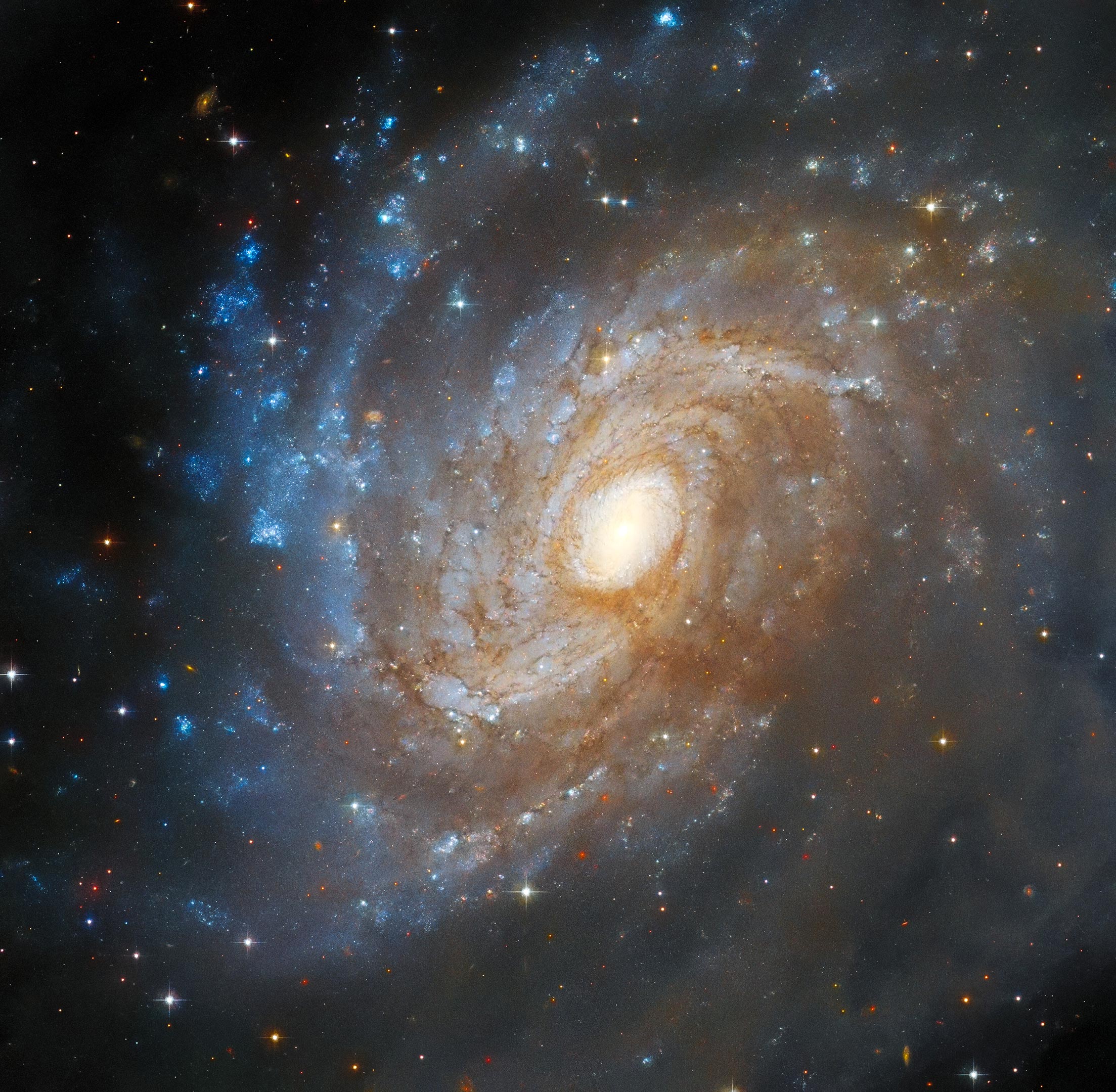
    Spiral Galaxy IC 4633
    This Hubble Space Telescope image showcases the spiral galaxy IC 4633, located in the constellation Apus, 100 million light-years away. Credit: ESA/Hubble & NASA, J. Dalcanton, Dark Energy Survey/DOE/FNAL/DECam/CTIO/NOIRLab/NSF/AURA, Acknowledgment: L. Shatz

    The spiral galaxy IC 4633, revealed by Hubble, is intertwined with the dark nebula of the Chameleon region and the enigmatic South Celestial Serpent, showcasing a captivating astronomical tableau.

    In this week’s Picture of the Week from Hubble, the subject is the spiral galaxy IC 4633, located 100 million light-years away from us in the constellation Apus. IC 4633 is a galaxy rich in star-forming activity, as well as hosting an active galactic nucleus at its core. From our point of view, the galaxy is tilted mostly towards us, giving astronomers a fairly good view of its billions of stars.

    However, we can’t fully appreciate the features of this galaxy — at least in visible light — because it’s partially concealed by a stretch of dark dust. This dark nebula is part of the Chameleon star-forming region, itself located only around 500 light-years from us, in a nearby part of the Milky Way galaxy. The dark clouds in the Chameleon region occupy a large area of the southern sky, covering their namesake constellation but also encroaching on nearby constellations, like Apus. The cloud is well-studied for its treasury of young stars, particularly the cloud Cha I, which has been imaged by Hubble and also by the NASA/ESA/CSA James Webb Space Telescope.

    The cloud overlapping IC 4633 lies east of the well-known Cha I, II, and III, and has been called MW9 or the South Celestial Serpent. A vast, narrow trail of faint gas that snakes over the southern celestial pole, it’s much more subdued-looking than its neighbors. It’s classified as an integrated flux nebula (IFN) — a cloud of gas and dust in the Milky Way galaxy that’s not near to any single star, and is only faintly lit by the total light of all the galaxy’s stars. Hubble has no problem making out the South Celestial Serpent, though this image captures only a tiny part of it. For a showy astronomical object like IC 4633, among the South Celestial Serpent’s coils clearly isn’t a bad place to hide.

    Never miss a breakthrough: Join the SciTechDaily newsletter.
    Follow us on Google and Google News.

    Astronomy European Space Agency Hubble Space Telescope
    Share. Facebook Twitter Pinterest LinkedIn Email Reddit

    Related Articles

    A Diamond Necklace of Cosmic Proportions

    Hubble Snaps a Stunning Close-Up of a Magnificent Spiral Galaxy

    Extraordinary Hubble Image: Light Bends From the Beyond

    Hubble Space Telescope Sees Volcanic Activity Reforming the Atmosphere on a Rocky Exoplanet

    Hubble Spies a Luminous Heart With Dark Tendrils

    Spectacular Return to the Veil Nebula

    Hubble Spots a Peculiar Sight: Unusual Spiral Galaxy With a Heavy Arm

    A Flash of Life: Hubble Spies an Unusual Planetary Nebula

    Through the Cosmic Clouds: Hubble Spots a Beautiful Stellar Nursery

    Leave A Reply Cancel Reply

    • Facebook
    • Twitter
    • Pinterest
    • YouTube

    Don't Miss a Discovery

    Subscribe for the Latest in Science & Tech!

    Trending News

    Millions Take This Joint Supplement but Scientists Found a Concerning Alzheimer’s Link

    Why Evolution Stalled for Millions of Years Before Suddenly Exploding

    New Feathered Dinosaur May Have Solved a 120-Million-Year-Old Fossil Mystery

    Ozempic and Similar Drugs Linked to Dramatic Drop in Addiction Rates

    Ancient Meteorite Reveals a Forgotten Planet That Existed 4.5 Billion Years Ago

    Scientists Reveal What Happened When 12 People Were Trapped Together in Antarctica for 10 Months

    The “Impossible” Earthquake Beneath Utah Was Real After All

    A Major Update Just Hit Cholesterol Guidelines – Here’s What Every Adult Needs To Know

    Follow SciTechDaily
    • Facebook
    • Twitter
    • YouTube
    • Pinterest
    • Newsletter
    • RSS
    SciTech News
    • Biology News
    • Chemistry News
    • Earth News
    • Health News
    • Physics News
    • Science News
    • Space News
    • Technology News
    Recent Posts
    • Satellites Can Now Detect a City’s Hidden Vital Signs Before Humans Notice
    • Bumble Bees Solve an Insect Version of a Famous Primate Intelligence Test
    • This Surprising Hair Type Could Hold the Key to Chronic Itch Relief
    • Your Diet Could Be Missing the Key Ingredient for Heart Protection
    • New Study Reveals Unexpected Way To Destroy Pancreatic Cancer Cells
    Copyright © 1998 - 2026 SciTechDaily. All Rights Reserved.
    • Science News
    • About
    • Contact
    • Editorial Board
    • Privacy Policy
    • Terms of Use

    Type above and press Enter to search. Press Esc to cancel.