
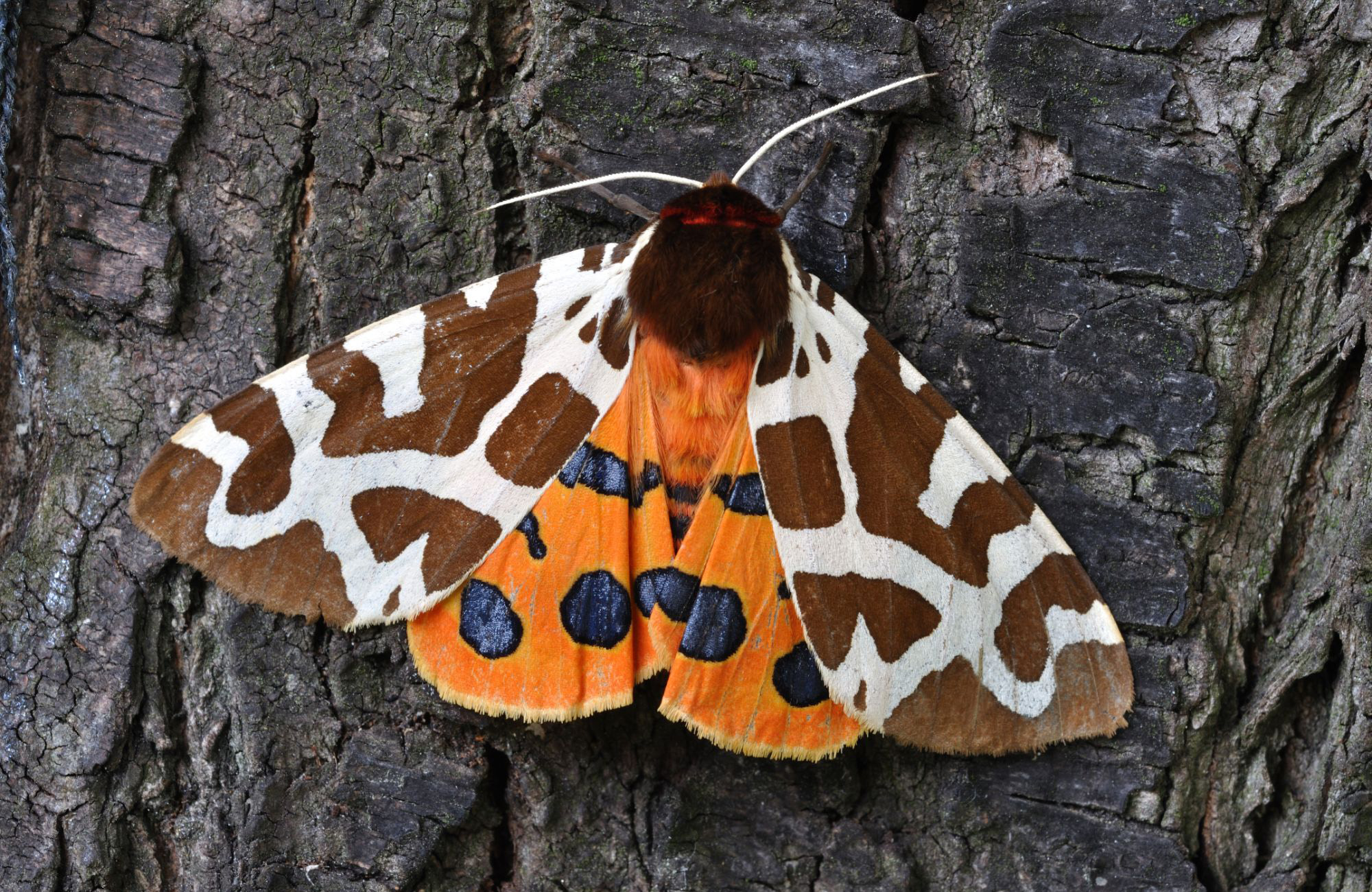
Insects of all stripes are in the midst of a vanishing act, a catastrophic sleight-of-hand occurring so rapidly that scientists can’t keep up. Things get even trickier when you consider that insects have a complex life cycle with eggs, larvae, pupae, and adults. Are they all disappearing at equal rates, or are some faster than others? Few people have checked.
In a new study, researchers presented the results of a year-long survey in which they monitored the abundance of adult and larval moths in an urban, sub-tropical environment. It’s the first time researchers have analyzed multiple life stages to assess the severity of ongoing insect declines. It’s also one of only a few studies that have tackled the problem in lower latitudes, where extreme temperatures are pushing animals to their limit.
“Subtropical and tropical environments have the greatest insect abundance and diversity and are areas seeing the greatest expansion of cities worldwide,” said lead author Michael Belitz, who conducted the research while working at the Florida Museum of Natural History. “The urban heat island effect in these areas may be especially detrimental to insects.”
Urban Heat and Its Effects
Regardless of where they’re located, modern cities have a heat problem. In natural or rural environments, a significant portion of the sun’s light is harmlessly reflected back into space. But asphalt and concrete absorb more light, transforming it into heat. During the day, this can make cities up to 7 degrees Fahrenheit warmer than surrounding areas, creating bubbles of dangerously high temperatures called heat islands.
In lower latitudes, where temperatures are already high, this heat trap can have disastrous consequences for those trapped inside.
“There’s no doubt that insect declines are a real phenomenon. The harder question to answer is where these declines are happening fastest. Is it different in tropical compared to temperate regions?” said co-author Robert Guralnick, curator of biodiversity informatics at the Florida Museum of Natural History.
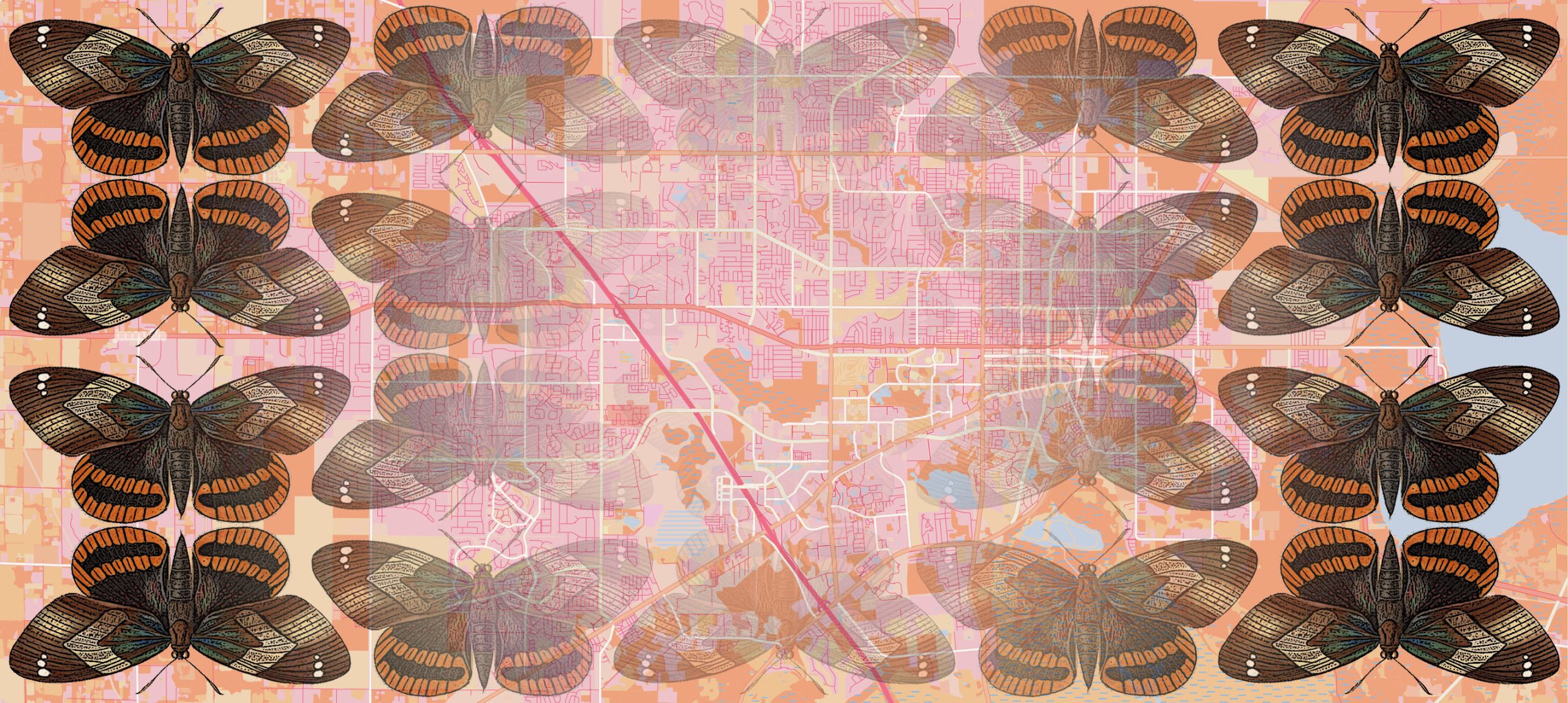
To find out, the team devised a survey in which they collected moths from several sites with varying levels of development in Alachua County, Florida. Catching adult moths was easy; all team members needed was a light source to lure them in. Caterpillars, on the other hand, are not drawn to artificial light and spend most of their time in the tree canopy, making them hard to find. But moth larvae are a critical component of natural and urban ecosystems, and Belitz was reluctant to leave them out.
“Caterpillars are an important food source for breeding birds,” he said. “Even if birds are seed eaters as adults, they feed their young caterpillars.”
Although caterpillars spend most of their time out of reach, there’s at least one way to estimate their abundance: their poop! Larvae continuously excrete the digested remnants of decimated leaves in the form of pellets, which drop to the forest floor. Belitz put out funnels attached to collection jars beneath trees at each site. By weighing the amount of poop that fell inside each week, he calculated rough estimates of how many caterpillars there were.
Findings from the Study
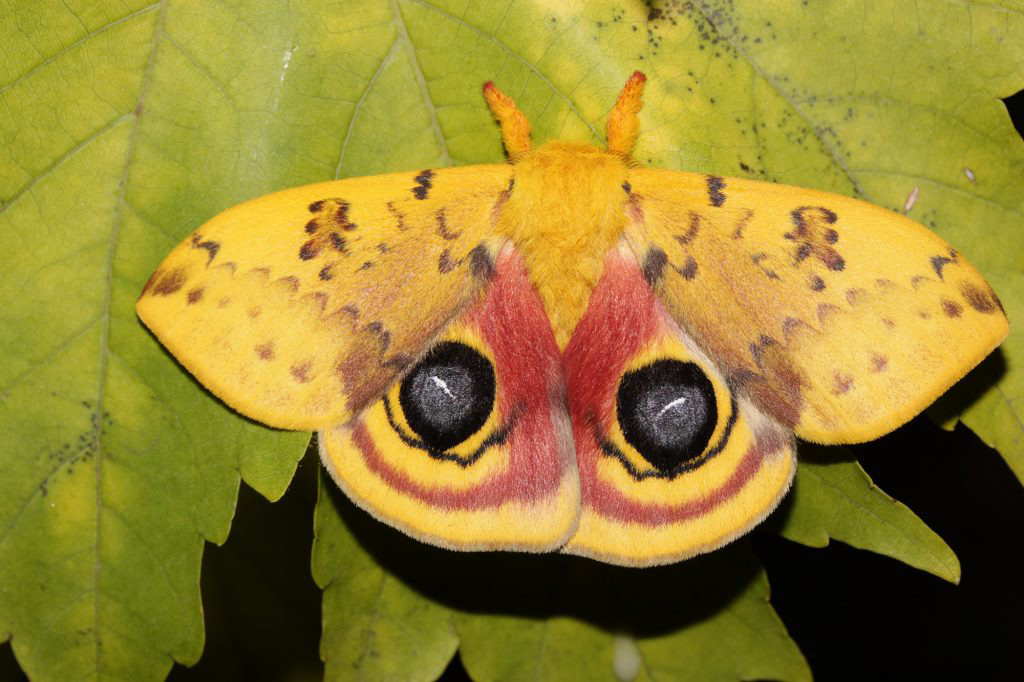
By the end of the year, they’d collected more than 35,000 moths, which they categorized as macro- or micro-moths. The first group includes well-known species like luna and io moths, which have comparatively large wings and are able to travel great distances. Micro moths — in this case, considered to be anything 10 millimeters or less in length — included the innumerable leaf-rollers, plant-borers, and grass moths, with cloak-like wings and colors that come in a mind-boggling variety of beiges and browns.
The distinction between large and small is important. Larger moths are better equipped to navigate fragmented habitats and are more likely to escape from a heat dome if it becomes too hot. Micro-moths are restricted to smaller areas, which may make them more vulnerable to temperature swings.
The results showed a strong pattern of decline among moths of all sizes and life stages from rural to urban areas.
A closer look at the macromoths alone revealed that, contrary to expectations, larger macromoths fared worse than those that were smaller. This runs counter to a previous study conducted in Belgium, which showed the opposite pattern.
Belitz suspects the difference in average temperature between temperate Europe and subtropical Florida is the culprit. Large moths must expend more energy to keep cool than those that are small. Similar patterns have been seen in other insects, Belitz said.
“Generally, in arthropods, urbanization selects for smaller body size because there’s less metabolic stress.”
They also found that moths with a varied diet were better suited to city life than those with refined palates. Some caterpillars feed on a single species of plant and are among the first to disappear when an area is developed. Moths whose larvae can get by with several different plant species are more resilient in the face of urbanization.
Most worringly of all, the team took samples only from protected areas yet still observed marked declines.
“You might think that you’re looking at a natural environment when you walk into a city park, because it looks intact,” Guralnick said. “The truth is, what you see is a completely different community than those that exist in places like wildlife management areas.”
Alachua County is also relatively undeveloped compared with other parts of Florida. The domino-effect of biodiversity loss in a part of the state that maintains hundreds of acres of protected land bodes ill for other cities.
“It’s shocking to see how strong these declines are in a city that’s not deeply urbanized,” Guralnick said. “We’re talking town-sized, as opposed to something like New York City.”
But all is not lost, Belitz said. Moths and other insects still eke out an existence on the margins of urban areas, and increasing their numbers is, in some ways, as simple as creating the right environment for them, which anyone can do.
“Native plants are a really important way to increase biodiversity,” he said. “You can increase the number of pollinators in your yard by growing host plants.”
Light pollution in urban environments also disrupts the internal navigation system of many insects. “It creates ecological traps, where moths are drawn to light and then get picked off by bats. Turning out lights at night is a truly actionable thing people can do that has a large, positive effect for insects and other animals.”
Reference: “Substantial urbanization-driven declines of larval and adult moths in a subtropical environment” by Michael W. Belitz, Asia Sawyer, Lillian K. Hendrick, Akito Y. Kawahara and Robert P. Guralnick, 25 March 2024, Global Change Biology.
DOI: 10.1111/gcb.17241
Never miss a breakthrough: Join the SciTechDaily newsletter.
Follow us on Google and Google News.