
Close Menu
    Facebook X (Twitter) Instagram
    SciTechDaily
    • Biology
    • Chemistry
    • Earth
    • Health
    • Physics
    • Science
    • Space
    • Technology
    Facebook X (Twitter) Pinterest YouTube RSS
    SciTechDaily
    Home»Earth»Surprise Snowfall: Winter’s Late Arrival Down Under
    Earth

    Surprise Snowfall: Winter’s Late Arrival Down Under

    By Lindsey Doermann, NASA Earth ObservatoryAugust 3, 20241 Comment3 Mins Read
    Facebook Twitter Pinterest Telegram LinkedIn WhatsApp Email Reddit
    Share
    Facebook Twitter LinkedIn Pinterest Telegram Email Reddit
    Australia Snowy Mountains July 2024 Annotated
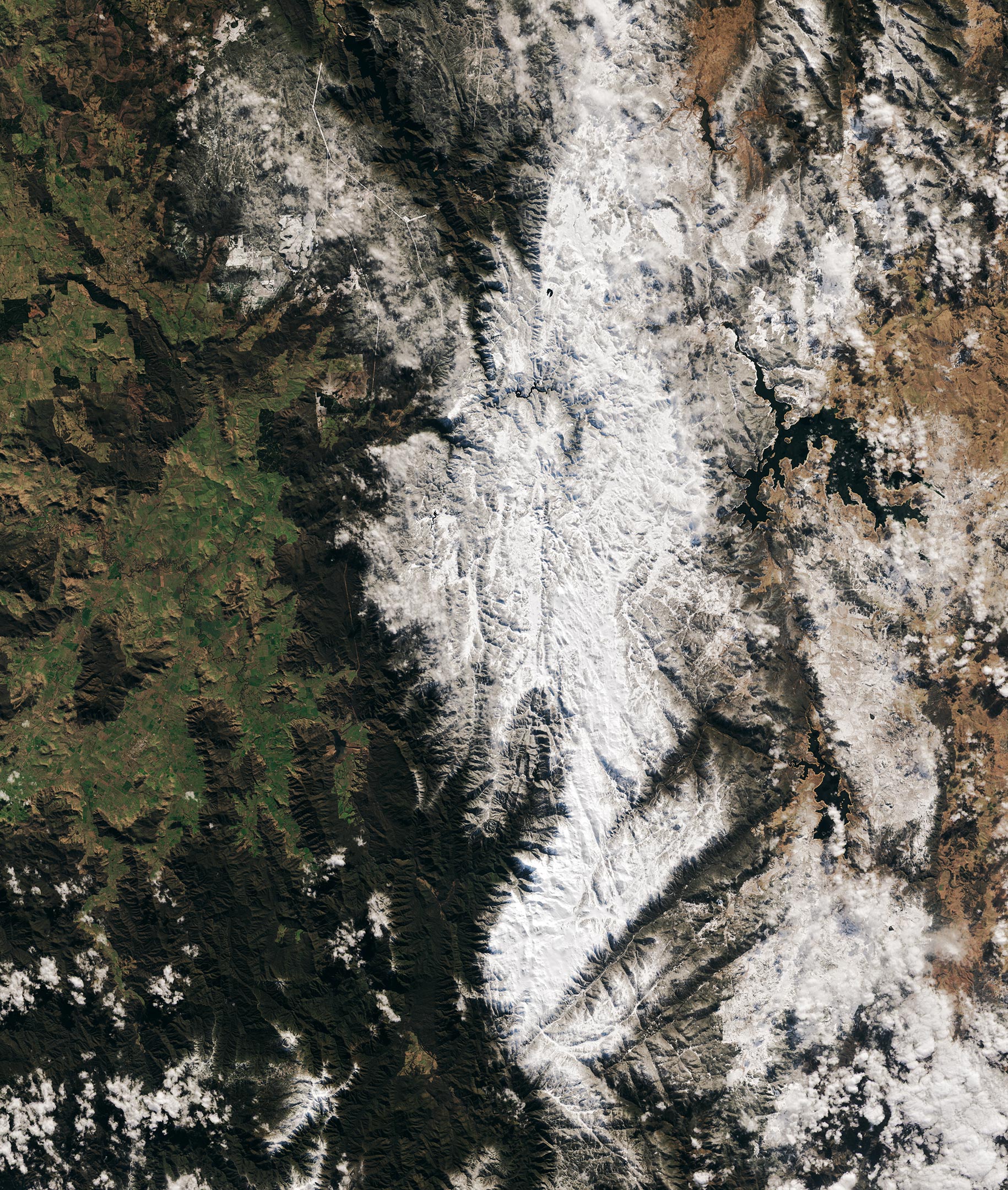
    Satellite image of Australia’s Snowy Mountains captured on July 28, 2024, by the Operational Land Imager on Landsat 8.

    Fresh powder fell on Australia’s tallest peaks and popular ski resorts.

    In July 2024, southeastern Australia’s Snowy Mountains experienced a late but significant snowfall, enhancing conditions for skiing. This event, captured by Landsat 8’s OLI, marked a shift from the season’s slow start, with substantial snow accumulating after July 19.

    Winter’s Grand Arrival in Southeastern Australia

    Winter made a late, but bold, entrance to the mountains in southeastern Australia. Much to the delight of skiers Down Under, a period of seasonal weather in July 2024 brought significant accumulations to the Snowy Mountains in New South Wales.

    The OLI (Operational Land Imager) on Landsat 8 acquired this wintry image of Australia’s Snowy Mountains on July 28. Part of the Australian Alps, the range is home to the country’s tallest peaks, including Mount Kosciuszko at 2,228 meters (7,310 feet), as well as several popular ski resorts. Peak snow season in this region usually lasts from June to August, although snow commonly falls at higher elevations in May and can linger through October.

    A Slow Start to the Ski Season

    Winter got off to a slow start in the Snowy Mountains in 2024, however. Slopes were mostly bare for the traditional opening of the ski season in early June, according to news reports. Meteorologists attributed the lack of snow to blocking highs, or strong high pressure systems, that persisted over the Great Australian Bight.

    Weather patterns changed on July 19, and heavy snow reached the mountains. On July 21, the Thredbo ski resort reported that 59 centimeters (23 inches) of snow had fallen during the storm. Smaller accumulations came in subsequent days. Starting July 28, a strong cold front delivered “unusually low” temperatures to parts of New South Wales and yet more snow to the mountains. According to news reports, some of Australia’s extreme winter weather in 2024 was influenced by a rare sudden stratospheric warming event over the Antarctic.

    Climate Impact on Snow Patterns

    Variable snow years are the norm in the Australian Alps, according to the Australian Bureau of Meteorology. Climate patterns such as El Niño, La Niña, and the Indian Ocean Dipole modulate each winter’s snowpack. Despite the significant year-to-year variability, long-term observations point to a thinning alpine snowpack. Maximum snow depth has trended down since the late 1950s, the agency reported, adding that the declines are linked with warming trends. The annual average temperature has risen about 1.4 degrees Celsius (2.5 degrees Fahrenheit) in the region since 1950.

    NASA Earth Observatory image by Michala Garrison, using Landsat data from the U.S. Geological Survey.

    Never miss a breakthrough: Join the SciTechDaily newsletter.
    Follow us on Google and Google News.

    Geography NASA NASA Earth Observatory Snow Weather
    Share. Facebook Twitter Pinterest LinkedIn Email Reddit

    Related Articles

    One of Earth’s Driest Deserts Just Turned White

    New Satellite Data Uncovers a Stunning Shift in Himalayan Snowlines

    Snowpocalypse in Seoul: Unprecedented Storm Shatters Century-Old Records

    Snowpocalypse Now: Anchorage Smashes Snowfall Records

    Trading Surfboards for Snowboards: Storms Have Left Abundant Snow Atop Hawaii’s Tallest Volcanic Mountains

    Mount Fuji’s Missing Snow – Japan’s Iconic Mountain Looks Different

    Massive Snowfall Blankets Spain – Heaviest Snowfall in the Region in 50 Years

    California Cool Yule Tule

    Incredible Rare Peek at Patagonia in Winter

    1 Comment

    1. Clyde Spencer on August 4, 2024 8:41 am

      When I lived in Vermont in 1966 and ’67, it didn’t snow (18″) until Xmas Eve the first year; the second year it snowed mid-October. Weather varies! Don’t read more into this than natural variation.

      Reply
    Leave A Reply Cancel Reply

    • Facebook
    • Twitter
    • Pinterest
    • YouTube

    Don't Miss a Discovery

    Subscribe for the Latest in Science & Tech!

    Trending News

    Study Finds Exercise May Be a Surprisingly Powerful Treatment for Pain

    New Research Reveals Dinosaurs May Have Eaten Seaweed

    Don’t Miss: Saturn, Halley’s Comet Meteors and the Seven Sisters Light Up October

    Could Vitamin C Help Stop Leukemia Before It Starts?

    AI May Seem Human-Like, but That Doesn’t Mean People Think It’s Conscious

    Study Finds Natural Dairy Trans Fats Behave Very Differently From Industrial Fats

    Your Voice May Reveal How Fast Your Brain Is Aging

    These Fingernail-Sized Animals Are Moving Astonishing Amounts of California Beach Sand

    Follow SciTechDaily
    • Facebook
    • Twitter
    • YouTube
    • Pinterest
    • Newsletter
    • RSS
    SciTech News
    • Biology News
    • Chemistry News
    • Earth News
    • Health News
    • Physics News
    • Science News
    • Space News
    • Technology News
    Recent Posts
    • A 178-Year-Old Space Weather Mystery Has Finally Been Solved
    • A Giant Diplodocus Just Turned Up Where Scientists Never Expected
    • Magnetic Nanoparticles Could Help Detect and Treat Dangerous Ectopic Pregnancies
    • Long-Acting HIV Shots Could Solve a Major Treatment Challenge for Young People
    • Red Meat Contains a Sugar Humans Can’t Make – Scientists Think It May Trigger Inflammation
    Copyright © 1998 - 2026 SciTechDaily. All Rights Reserved.
    • Science News
    • About
    • Contact
    • Editorial Board
    • Privacy Policy
    • Terms of Use

    Type above and press Enter to search. Press Esc to cancel.