
A recent study has identified two new predatory bird species from the Hell Creek Formation that coexisted with dinosaurs, enhancing our understanding of prehistoric bird life and their survival mechanisms through mass extinctions.
The Hell Creek Formation in present-day Dakota, Montana, and Wyoming was once inhabited by some of the most iconic dinosaurs, such as Triceratops and Tyrannosaurus rex (including SUE, one of the largest, most complete, and best-preserved T. rex specimens ever found). However, new research reveals these giant dinosaurs weren’t alone in their ecosystem.
In a new paper published in PLOS ONE, scientists have described two new species of birds that lived alongside these dinosaurs 68 million years ago. The researchers were able to name these new species based on just one bone each: the powerful foot bone that suggests these birds could have captured and carried off prey.
Discovery of Ancient Predatory Birds
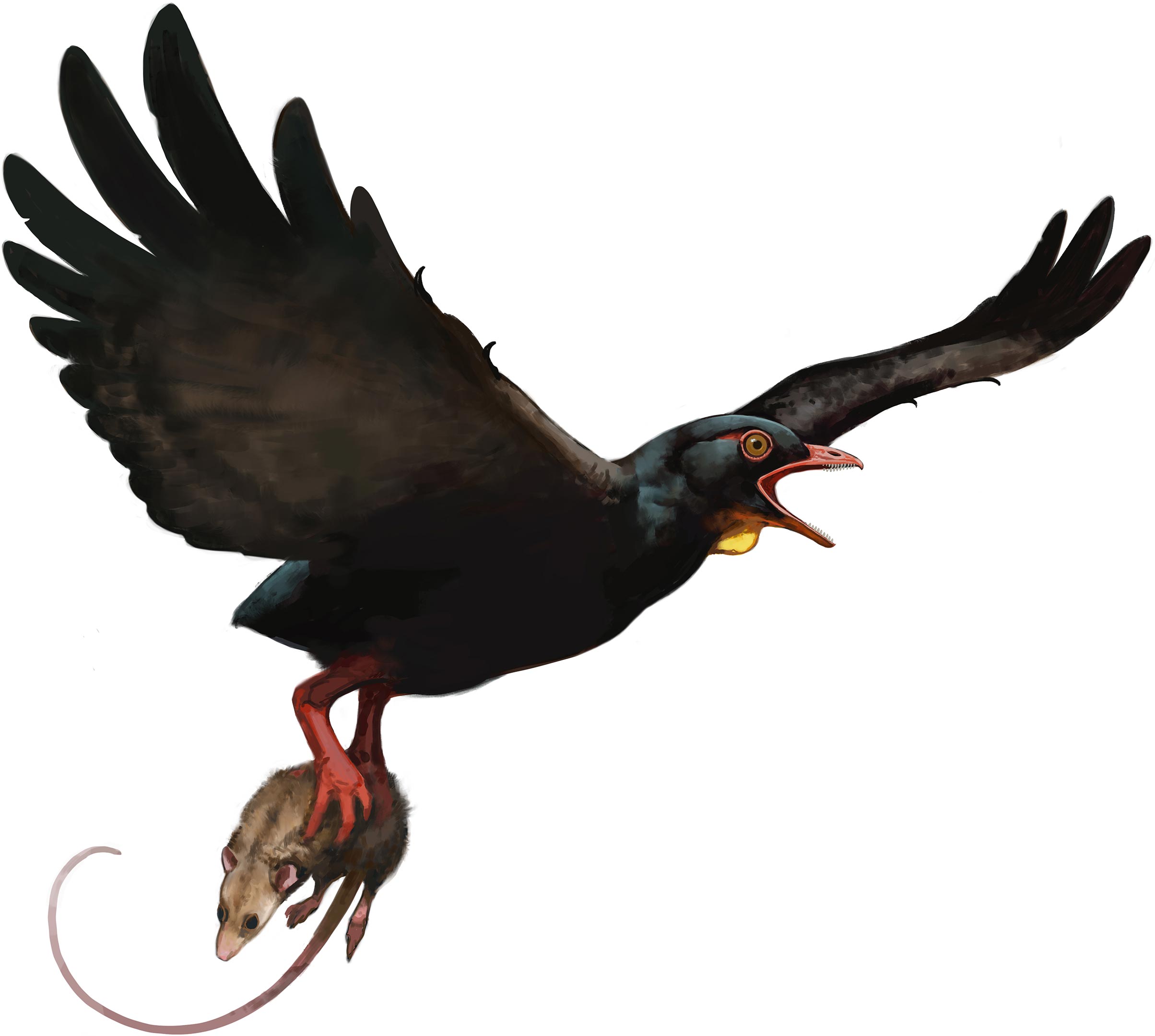
“Based on clues in their foot bones, we think these birds would have been able to catch and carry prey, similar to what a modern hawk or owl does,” says Alex Clark, a PhD student at the Field Museum and the University of Chicago and the study’s lead author. “While they might not be the first birds of prey to ever evolve, their fossils are the earliest known examples of predatory birds.”
Insights from Fossilized Foot Bones
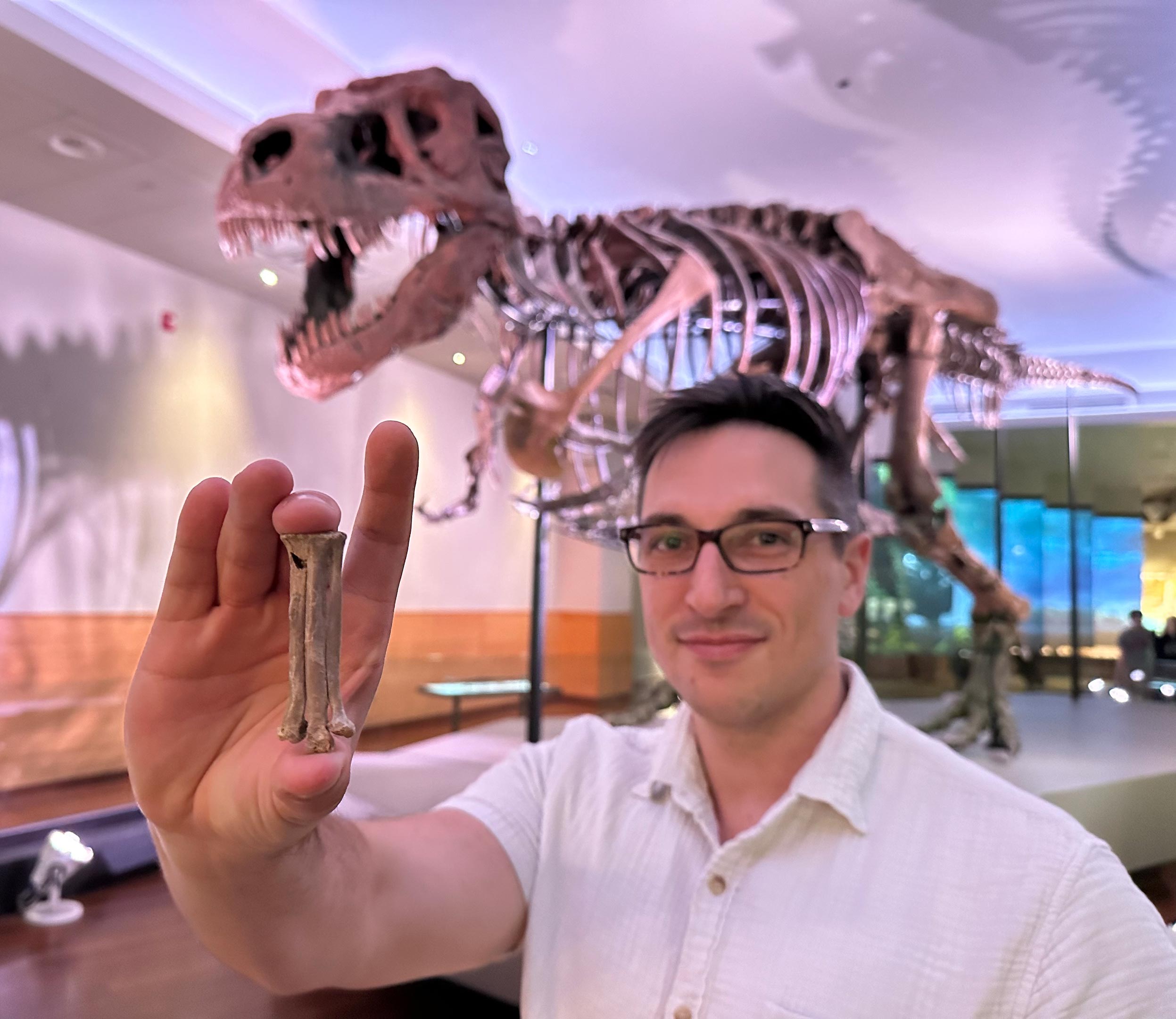
The three fossils Clark studied in this paper had been collected in the past several years by researchers at other institutions, but there hadn’t been much work done on them. Clark recalls that when he first saw the fossils, they weren’t especially dazzling– they were all a foot bone that the toes attach to, called the tarsometatarsus, and they’d been found on their own, without other, flashier body parts like skulls and claws. While the bones were large for bird tarsometatarsi, they were still only about the size of an adult human thumb. However, these isolated bones proved to be a treasure trove of information.
“Every nook and cranny and bump that occurs on a bone can tell us something about where the muscles or tendons attached and how big they were,” says Clark. On these bones, there was an especially noteworthy bump– a muscle attachment point called a tubercle. On each bone, it was larger and farther down than in most birds.
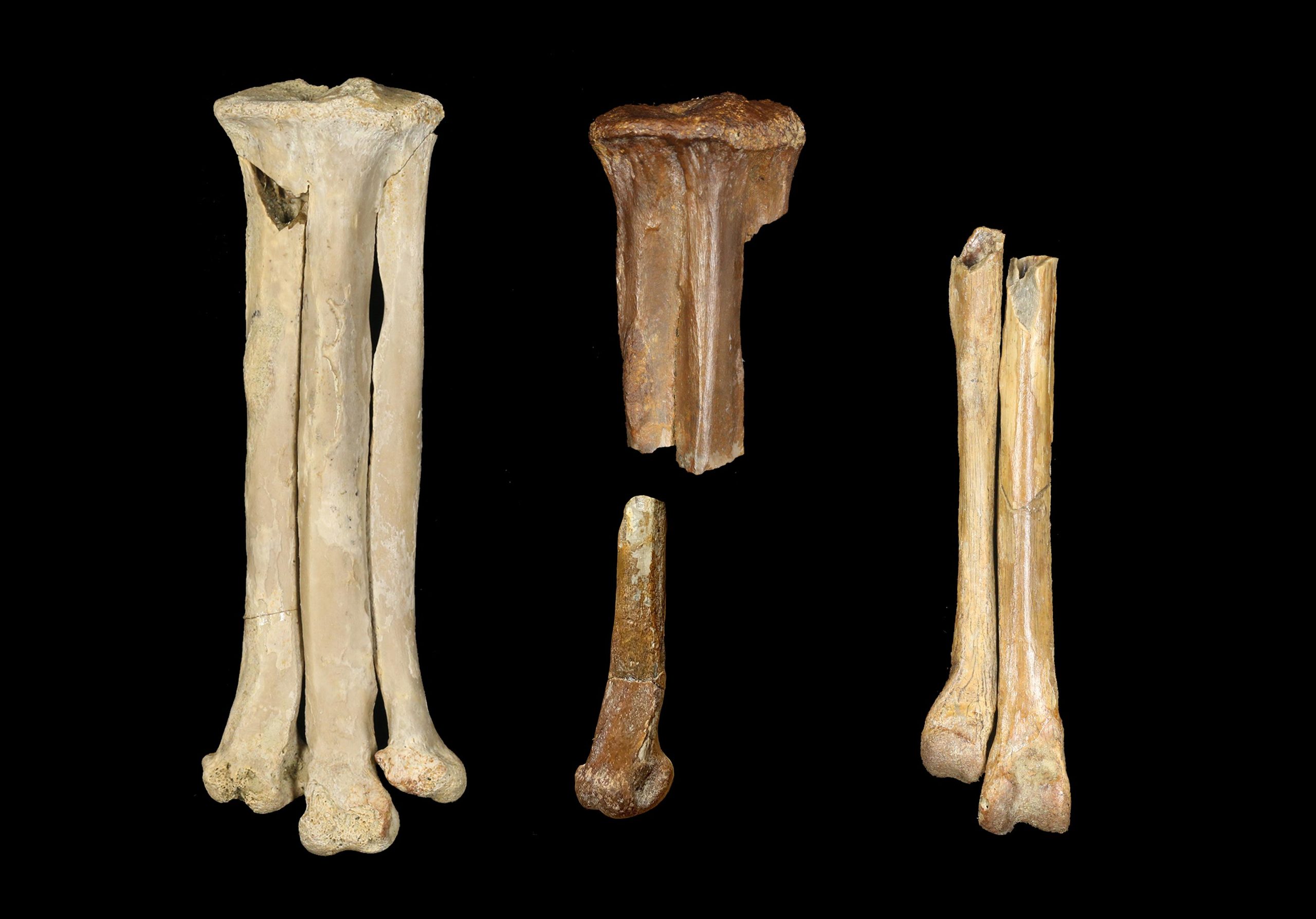
“When we see tubercles this large and this far down in modern birds, they’re in birds of prey like owls and hawks,” says Clark. “That’s because when they hunt and pick up their prey with their feet, they’re lifting proportionally heavy things and holding them close to their bodies to stay as aerodynamically efficient as possible. These fossil ankle bones look like they’re built to do something similar.”
Biomechanical Analysis and New Species Identification
Clark and his colleagues conducted a series of biomechanical analyses comparing the fossil foot bones to those of a variety of modern birds. “The muscles and bone of the ankle work like a lever, and by comparing how far down on the bone the muscle attaches, we can get a good idea of how it would have moved and how strong it would have been,” says Clark. The math corroborated the researchers’ hypothesis that these feet would have been strong enough for these hawk-sized birds to pick up small mammals and even baby dinosaurs.
From the three foot bones, Clark and his team described two new species to science: Avisaurus darwini, after Charles Darwin, and Magnusavis ekalakaenis, in honor of the town of Ekalaka, Montana, where the fossil was found. The third bone may be another new species, but the fossil’s degraded condition made it difficult to confirm. All of these birds are part of a group called the avisaurids. They belong to a larger group of birds called the enantiornithines, which went extinct with most of their fellow dinosaurs when the asteroid hit 66 million years ago.
Implications of the New Discoveries
“These discoveries have effectively doubled the number of bird species known from the Hell Creek Formation and will be critical for helping us to better understand why only some birds survived the mass extinction that wiped out T. rex and the avisaurids described here,” Jingmai O’Connor, the Field Museum’s associate curator of fossil reptiles in the Negaunee Integrative Research Center, Clark’s advisor, and a co-author of the paper.
“’I’m really proud and very impressed with what Alex was able to do with these specimens. They’re each just a single bone. But he brings his background as an ecologist into his paleontological work to tell more than the average paleontologist about what an animal’s life would have been like,” says O’Connor. “Alex has done a superb job with being able to extract so much incredible ecological information from just a single bone.”
Reference: “New enantiornithine diversity in the Hell Creek Formation and the functional morphology of the avisaurid tarsometatarsus” by Alexander D. Clark, Jessie Atterholt, John B. Scannella, Nathan Carroll and Jingmai K. O’Connor, 9 October 2024, PLOS ONE.
DOI: 10.1371/journal.pone.0310686
Never miss a breakthrough: Join the SciTechDaily newsletter.
Follow us on Google and Google News.
4 Comments
So, from three little bones, they know exactly what the birds looked like and that they hunted baby dinosaurs. Sure. Right. Whatever.
They don’t say they know exactly what they looked like. That’s just a paleoartist’s speculation of what it may have looked like, to adorn the article with a pretty picture and spark the reader’s interest and imagination.
Cool bones,come learn about shadowstones, come learn how paleo peoples lives are carved on stones gems fossils by a geodesic crystal,in color, come lesrn about the birds that carried people off stoney river relics,you tube,tiktok,subscribe like share, come learn the truth
Come learn, carved pictogliphs in color,stoneyriverrelics,my shorts are carved pics, by a geodesic crystal. I have t he beginning to the spiral of life and the allseeing eye of the pyramid