
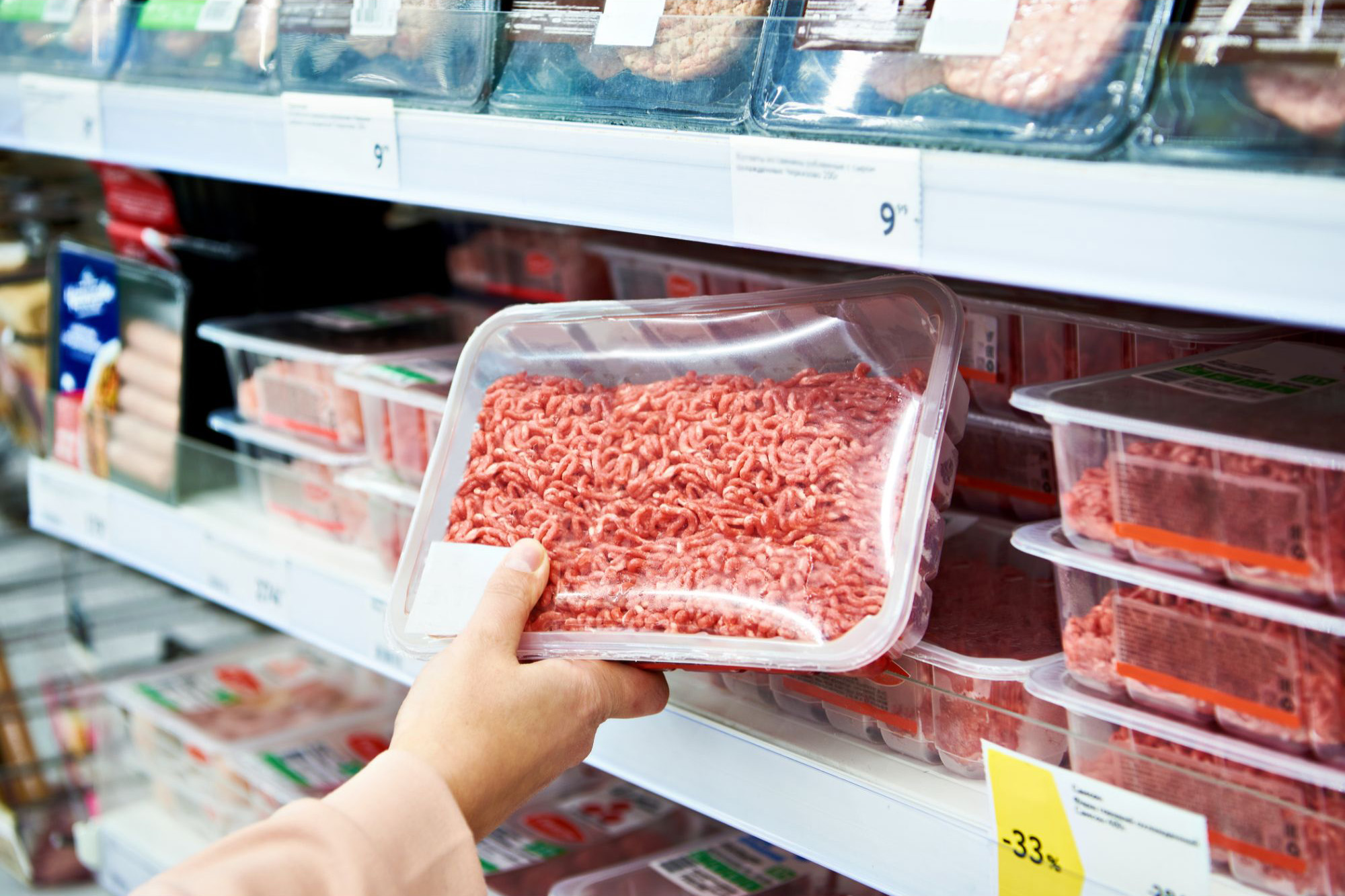
A study from Uppsala University reveals that 40% of the public may support rationing goods with high climate impacts, with acceptance levels similar to taxation.
Rationing goods like meat and fuel can be an effective and equitable way to lower consumption with a significant climate impact. Nearly 40 percent of the public indicate they would be open to such measures, according to new research from the Climate Change Leadership Group at Uppsala University.
“Rationing may seem dramatic, but so is climate change. This may explain why support is rather high. One advantage of rationing is that it can be perceived as fair, if made independent of income. Policies perceived as fair often enjoy higher levels of acceptance,” explains Oskar Lindgren, a doctoral student in natural resources and sustainable development at the Department of Earth Sciences at Uppsala University, who led the study, published in Nature magazine’s Humanities & Social Sciences Communications journal.
The Need for Effective and Fair Climate Policies
To achieve climate targets, policies that effectively reduce consumption with a high climate impact, such as meat and fuel, are needed. At the same time, public acceptance of a particular policy instrument strongly depends on whether it is perceived as fair or not. So far, research in this area has mainly examined economic instruments, such as carbon taxes, while giving little attention to other instruments that could be effective, like rationing.

A new study involving nearly 9,000 people in Brazil, India, Germany, South Africa, and the United States compares the acceptability of rationing fuel and so-called “emission-intensive” food, such as meat, with the acceptability of taxes on the same products. The study is the first of its kind. One conclusion is that the acceptability of rationing is on par with the acceptability of taxes. For example, 38% of the people surveyed were in favor or strongly in favor of fuel rationing. The corresponding figure for fuel tax was 39%.
Surprising Findings on Rationing and Taxation
“Most surprisingly, there is hardly any difference in acceptability between rationing and taxation of fossil fuels. We expected rationing to be perceived more negatively because it directly limits people’s consumption. But in Germany, the proportion of people who strongly oppose fossil fuel taxes is actually higher than the proportion who strongly oppose fossil fuel rationing,” notes Mikael Karlsson, Senior Lecturer in Climate Leadership at Uppsala University and one of the researchers behind the study.
The study also shows that acceptability differs between countries. In India and South Africa, the acceptability of rationing for both fuel and emissions-intensive food is higher than in the other countries. In particular, many respondents in Germany and the United States are strongly against meat rationing. Individuals who express concern about climate change are most likely to favor the instrument, but younger and more educated individuals also have a more positive attitude.
“More research is now needed on attitudes towards rationing and the design of such policy instruments. Water rationing is taking place in many parts of the world, and many people seem willing to limit their consumption for climate mitigation purposes, as long as others do the same. These are encouraging findings,” says Lindgren.
Reference: “Public acceptability of climate-motivated rationing” by Oskar Lindgren, Erik Elwing, Mikael Karlsson and Sverker C. Jagers, 26 September 2024, Humanities and Social Sciences Communications.
DOI: 10.1057/s41599-024-03823-7
Funding: Mistra, Svenska Forskningsrådet Formas
Never miss a breakthrough: Join the SciTechDaily newsletter.
Follow us on Google and Google News.
10 Comments
If bovine flatulence is such a contributor to excess methane in the atmosphere that we need to reduce our use of meat, then 6 billion humans should also be forced to ration beans. Fair is fair.
I’m thinking that you have NOT been around cattle!
The headline asked a question. The answer is no, with profanity.
Let’s skip the fraught discussion of Germans deciding what anyone is allowed to eat. But the Swedish? Sweden’s fertility rate collapsed, a third of the remaining fertility rate is now to foreign-born parents, and that immigration solution hasn’t gone to plan. Is it wise to risk a mass-exodus or revolution, by preventing the remaining people eating and telling them they have to freeze in the cold?
The better solution is to allow me to decide the taxation and rationing of lecturer Mikael Karlsson and student Oskar Lindgren. I am willing to tell these two what they can eat.
EV’s draw down on the power grid at inopportune times. EV’s should be allowed only one hour of charging per day, and that at night when the demand is lower. Gotta protect the environment. Social media accounts, gaming, and texting draw down on the available bandwidth, so cell phone usage should be limited to one hour per day as well, and that limited to non-business hours, so as not to overtax the servers, which consume a tremendous amount of power. Gotta protect the environment. See what I did there? Shall I continue?
Now about the flatulence of 8.5 billion humans, especially when eating beans……………
I’m thinking that you have NOT been around cattle!
A stockyard is not the same as a few barn animals. I don’t find the odor from a few barn cows all that offensive, unlike being downwind of a stock yard. There is more going on than meets the nose.
Fore the above comments, I am heartened to know there are some decently bright people still breathing.
This is not what I would consider progress. However, I think the real problem isn’t too many cows, it is too many people.
Agreed.