
Close Menu
    Facebook X (Twitter) Instagram
    SciTechDaily
    • Biology
    • Chemistry
    • Earth
    • Health
    • Physics
    • Science
    • Space
    • Technology
    Facebook X (Twitter) Pinterest YouTube RSS
    SciTechDaily
    Home»Health»Game-Changing Surgery Saves Liver Cancer Patient Once Deemed Inoperable
    Health

    Game-Changing Surgery Saves Liver Cancer Patient Once Deemed Inoperable

    By Boston University School of MedicineFebruary 15, 2025No Comments3 Mins Read
    Facebook Twitter Pinterest Telegram LinkedIn WhatsApp Email Reddit
    Share
    Facebook Twitter LinkedIn Pinterest Telegram Email Reddit
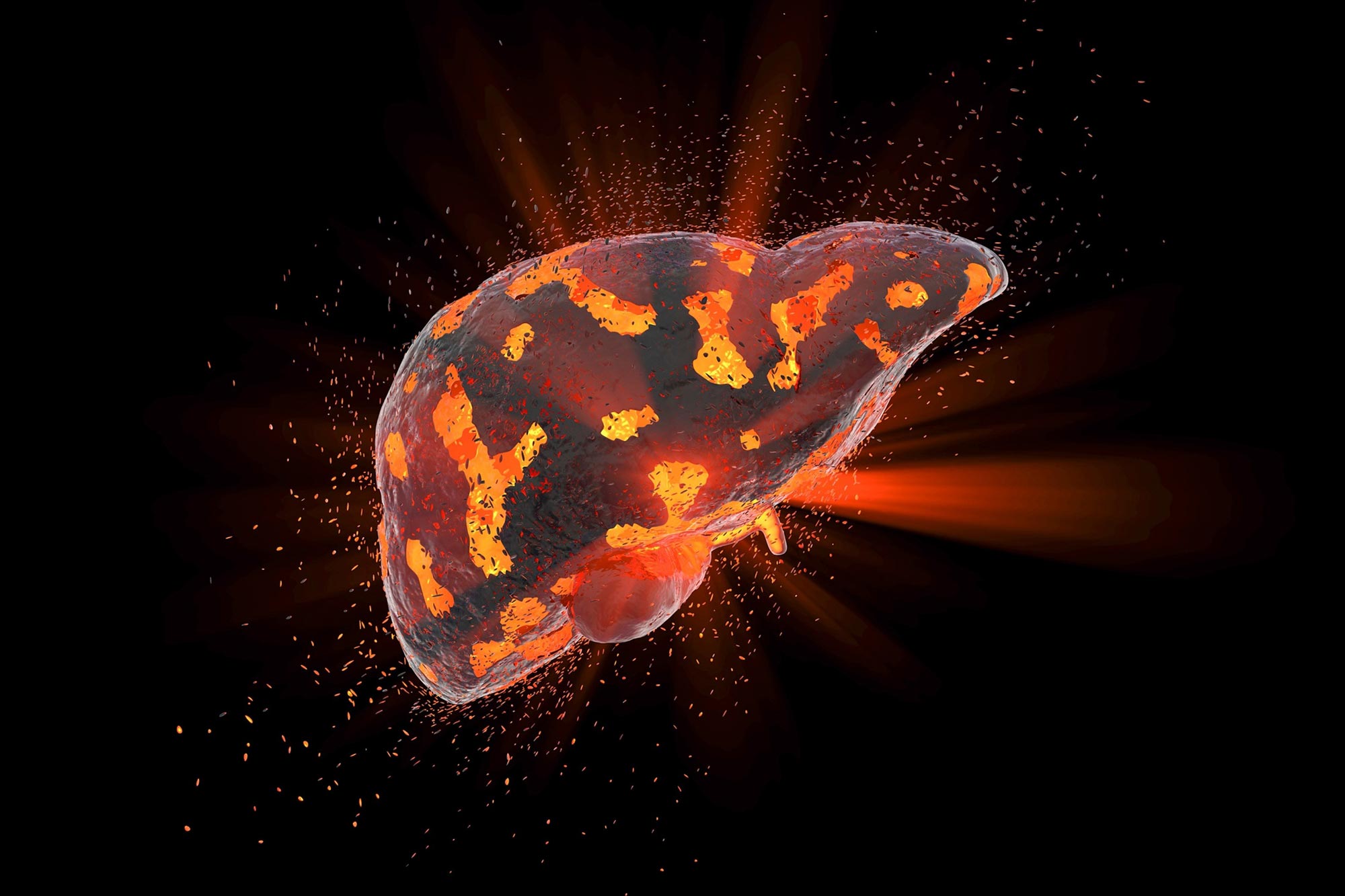
    Liver Disease Concept Illustration
    A new study demonstrates how immunotherapy and targeted radiation therapy (TARE) can shrink previously inoperable liver tumors, allowing for successful surgical removal using the Arantius-first technique. This minimally invasive approach improves safety and outcomes for cirrhotic patients.

    Innovative therapies and surgical techniques have the potential to transform liver cancer care.

    People with cirrhosis—a condition where healthy liver tissue is replaced by scar tissue—have an increased risk of developing liver cancer. This scarring disrupts blood flow and impairs liver function. Patients with advanced liver cancer and cirrhosis are typically not considered candidates for surgery or transplantation.

    However, a new study published in the British Journal of Surgery reports a successful case in which a patient, previously deemed ineligible for surgery, underwent tumor removal after receiving immunotherapy and targeted radiation therapy (TARE).

    The Arantius-First Technique: A Safer Surgical Approach

    “Our study describes how a minimally invasive surgical approach known as the Arantius-first technique, can be applied in high-risk populations, potentially expanding surgical indications for patients with cirrhosis,” explains corresponding author Eduardo Vega, MD, assistant professor of surgery at Boston University Chobanian & Avedisian School of Medicine.

    The Arantius-first technique is a laparoscopic procedure that uses the Arantius’ ligament as an anatomical landmark to quickly expose the middle hepatic vein (MHV).

    This method allows the surgeon to quickly and accurately locate the MHV, one of the liver’s major vessels. In conventional approaches, there is a higher risk of split injuries or iatrogenic damage to the MHV, which can lead to severe complications, particularly in patients with cirrhosis who have limited functional liver reserve.

    By focusing on this landmark, the Arantius-first technique minimizes the risk of injuring the MHV and ensures its preservation, which is critical during a left hepatectomy in cirrhotic patients. This precision not only enhances the safety of the procedure but also contributes to better patient outcomes.

    A Multistep Treatment Approach

    This patient’s care involved multiple steps. First, the tumor was treated with TARE, a targeted radiation therapy that reduces tumor size while sparing healthy liver tissue. Next, immunotherapy was used to boost the immune system’s ability to fight the cancer.

    These combined treatments transformed the tumor from unresectable to resectable. Finally, laparoscopic surgery was performed using the “Arantius-first” technique, which allowed for precise tumor removal while minimizing harm to the remaining liver.

    According to the researchers, this study highlights the importance of collaboration across disciplines, with surgeons, oncologists, and radiologists working together to achieve exceptional outcomes.

    Reference: “Laparoscopic left hemihepatectomy using the Arantius-first approach after 90Y transarterial radioembolization and immunotherapy in a cirrhotic patient” by William Kawahara, Belen Rivera, Jeffrey Roberts, Cathleen Huang, Aishatu Ladu, George P Sorescu, Dmitry J Rabkin, Olga Kozyreva, Fernando Rotellar and Eduardo A Vega, 6 February 2025, British Journal of Surgery.
    DOI: 10.1093/bjs/znae305

    Never miss a breakthrough: Join the SciTechDaily newsletter.
    Follow us on Google and Google News.

    Boston University Cancer Liver Surgery
    Share. Facebook Twitter Pinterest LinkedIn Email Reddit

    Related Articles

    Damaged Liver Tissue Restored Faster Than Ever With Cellular Regeneration Therapy

    RNA Discovery May Lead to Better Diagnosis and Treatment of Liver Cancer

    One in Seven Cancer Patients Missed Out on Potentially Life-Saving Operations During COVID Lockdowns

    How To Trigger and Control Liver Regeneration

    Potential Treatment May Prevent Cancer Cells From Hijacking Metabolic Pathways

    High-Intensity Focused Ultrasound Treats Prostate Cancer With Minimal Side Effects

    Mini Human Livers Grown in Lab Successfully Transplanted Into Rats

    Incredible New Imaging Technology Could ‘Revolutionize’ Cancer Surgery

    Accurate Cancer Detection During Surgery with ‘MasSpec Pen’

    Leave A Reply Cancel Reply

    • Facebook
    • Twitter
    • Pinterest
    • YouTube

    Don't Miss a Discovery

    Subscribe for the Latest in Science & Tech!

    Trending News

    Common Laxative May Help Reverse Depression-Related Brain Fog

    Younger Generations Are Aging Faster – and It May Be Fueling a Surge in Cancer

    New Discovery Could Unlock Quantum Computers the Size of a Coin

    Shingles Vaccine Linked to 24% Lower Dementia Risk in Older Adults

    Scientists Found a Wordle Trick That Solves 99% of Puzzles

    A Hidden Galaxy Called Shadow Blaster May Explain One of Astronomy’s Biggest Mysteries

    These 3 Common Sleep Habits May Be Aging Your Brain Faster

    Rare Goblin Shark Spotted Alive in Its Natural Habitat for the First Time

    Follow SciTechDaily
    • Facebook
    • Twitter
    • YouTube
    • Pinterest
    • Newsletter
    • RSS
    SciTech News
    • Biology News
    • Chemistry News
    • Earth News
    • Health News
    • Physics News
    • Science News
    • Space News
    • Technology News
    Recent Posts
    • New Fossils Show the Arctic Was an Evolutionary Powerhouse During the Age of Dinosaurs
    • What Happened to Australasia’s Lost Crocodiles? New Research Reveals a Dramatic Extinction Story
    • 520-Million-Year-Old Fossils Solve One of Evolution’s Biggest Mysteries
    • This Extraordinary Desert Mouse Defies Aging – and It Could Change Human Longevity
    • A Simple Blood Test Can Reveal the True Age of Your Brain, Heart, and Other Organs
    Copyright © 1998 - 2026 SciTechDaily. All Rights Reserved.
    • Science News
    • About
    • Contact
    • Editorial Board
    • Privacy Policy
    • Terms of Use

    Type above and press Enter to search. Press Esc to cancel.