
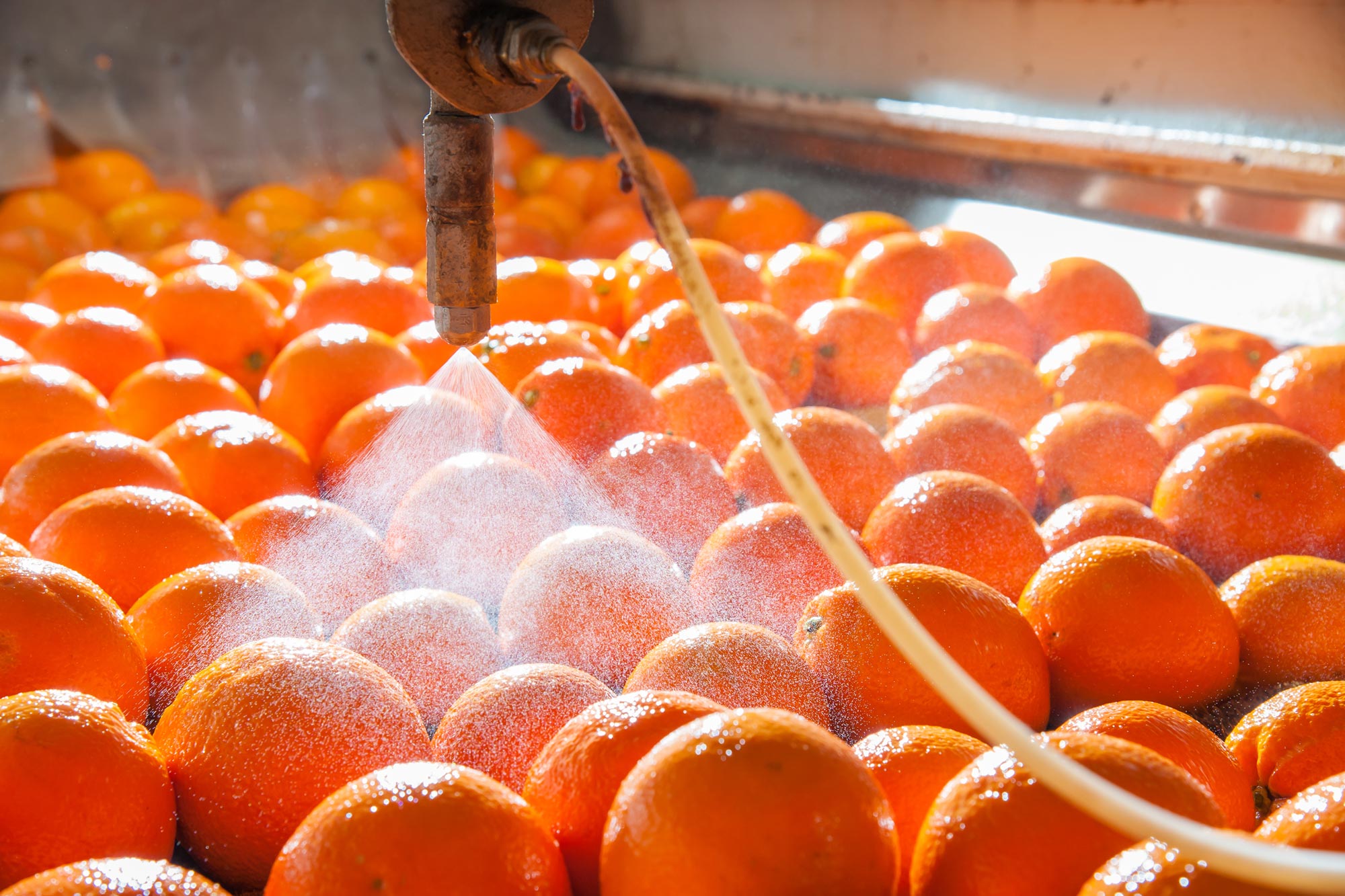
A biodegradable wash may help remove surface pesticide residues and keep fruit fresh longer, though more testing is needed before real-world use.
Many shoppers follow the same pattern after buying produce: they bring fruits and vegetables home, wash them, dry them, and hope they stay good long enough to eat. Fresh produce, however, can deteriorate quickly. Grapes can lose moisture and shrivel, sliced apples can turn brown, and berries can spoil within a short time.
Many shoppers are also concerned about what might be left on fruit surfaces, including traces of pesticides.
Keeping produce clean and keeping it fresh are often treated as two separate challenges that need separate solutions. Rinsing can feel like an easy way to take control, but the science is more complicated.
The U.S. Food and Drug Administration advises people to rinse produce under running water and says soap, detergent, and commercial produce washes should not be used. Water can help remove some material from the surface, but it cannot fix every issue.
Our new study suggests those goals may be combined. We developed a dual-function biodegradable wash that is able to remove surface pesticide residues and form a thin protective layer to help fruit stay fresh for longer.
The timing matters. Around one quarter of fruits and vegetables are lost or wasted globally each year. For fresh produce, even small gains after harvest can matter because quality can change quickly during shipping, storage and daily use at home.
What’s inside and how does it work?
The wash developed in the study is made from starch nanoparticles, tannic acid, and iron. Starch is a plant-based material often used in food science because it can form films. Tannic acid is a plant compound found in many foods and plants. Iron helps connect tannic acid into a fine network on the surface of the starch particles.
In plain terms, starch provides the base, tannic acid adds useful plant chemistry, and iron helps hold the structure together. During rinsing, this structure can interact with some pesticide molecules on the fruit’s surface and helps wash them away.
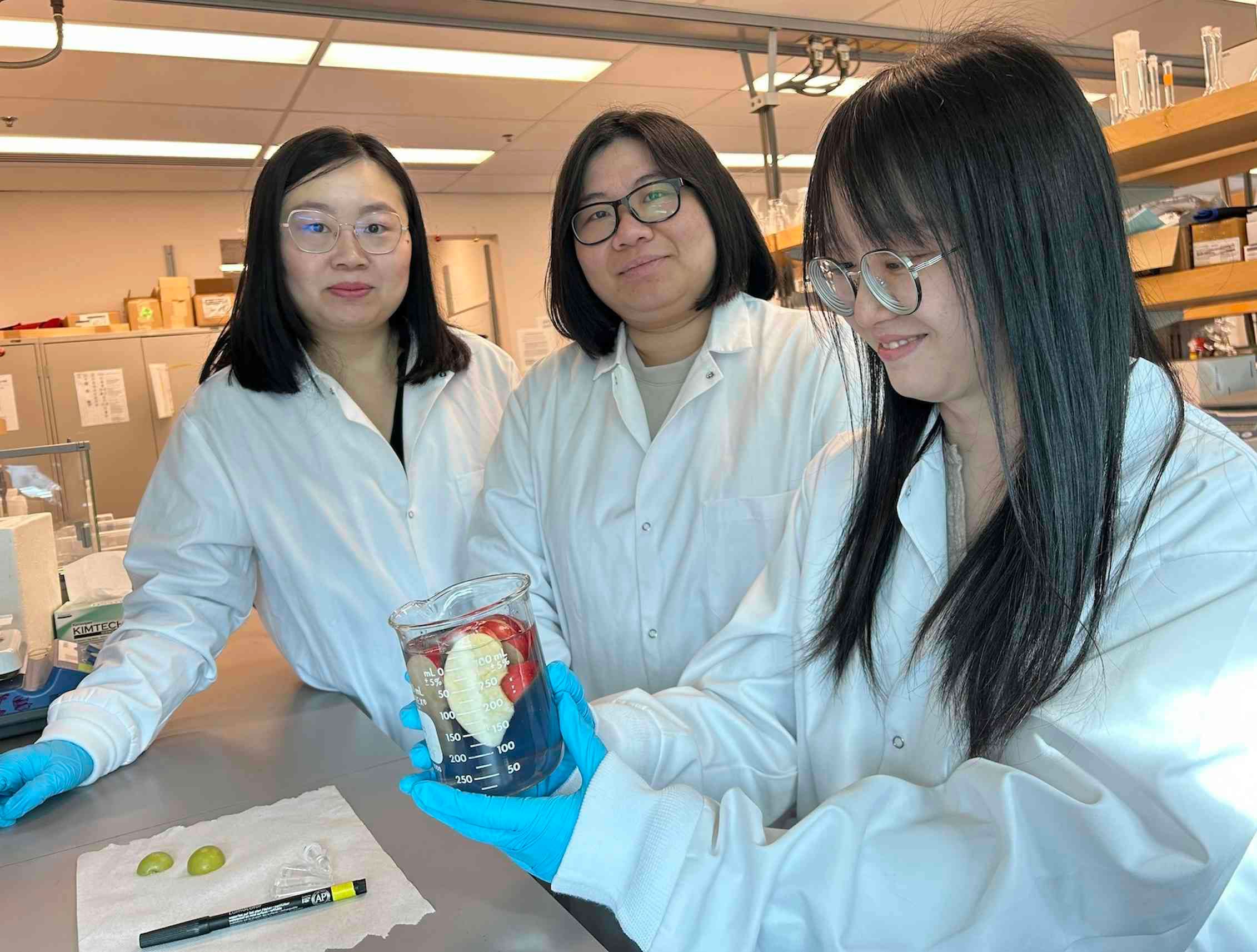
University of British Columbia researchers have developed a natural, biodegradable wash that removed up to 96 percent of pesticide residue from fruit and slowed browning and moisture loss. Credit: Sachi Wickramasinghe/UBC Media Relations
When immersed, the same wash can form a very thin coating layer. This is not meant to be a heavy wax-like layer. It is closer to a light surface film that can slow water loss and help maintain appearance. That matters because people often decide whether to eat or throw away fruit based on how it looks and feels.
Removing surface pesticide residues
The cleaning results were strong. On apple surfaces, the wash removed more than 85 percent of thiabendazole, compared with 48 percent for tap water, 65 percent for baking soda and 61 percent for native starch.
Thiabendazole is a fungicide used on some fresh produce post-harvest. We also tested two other pesticides. The wash removed 93 percent of the acetamiprid residues and 89 percent of imidacloprid from apple surfaces. These results suggest the wash can work across more than one type of pesticide residue, rather than only one special chosen compound.
There is, however, an important limit. The study focused on residues on the fruit surface. Some pesticides can move into plant tissue while the fruit is growing, which makes them much harder to remove after harvest.
A better wash should not be understood as a way to erase all pesticide exposure. It’s a tool for reducing what’s on the surface of a fruit or vegetable.
Keeping produce fresh longer
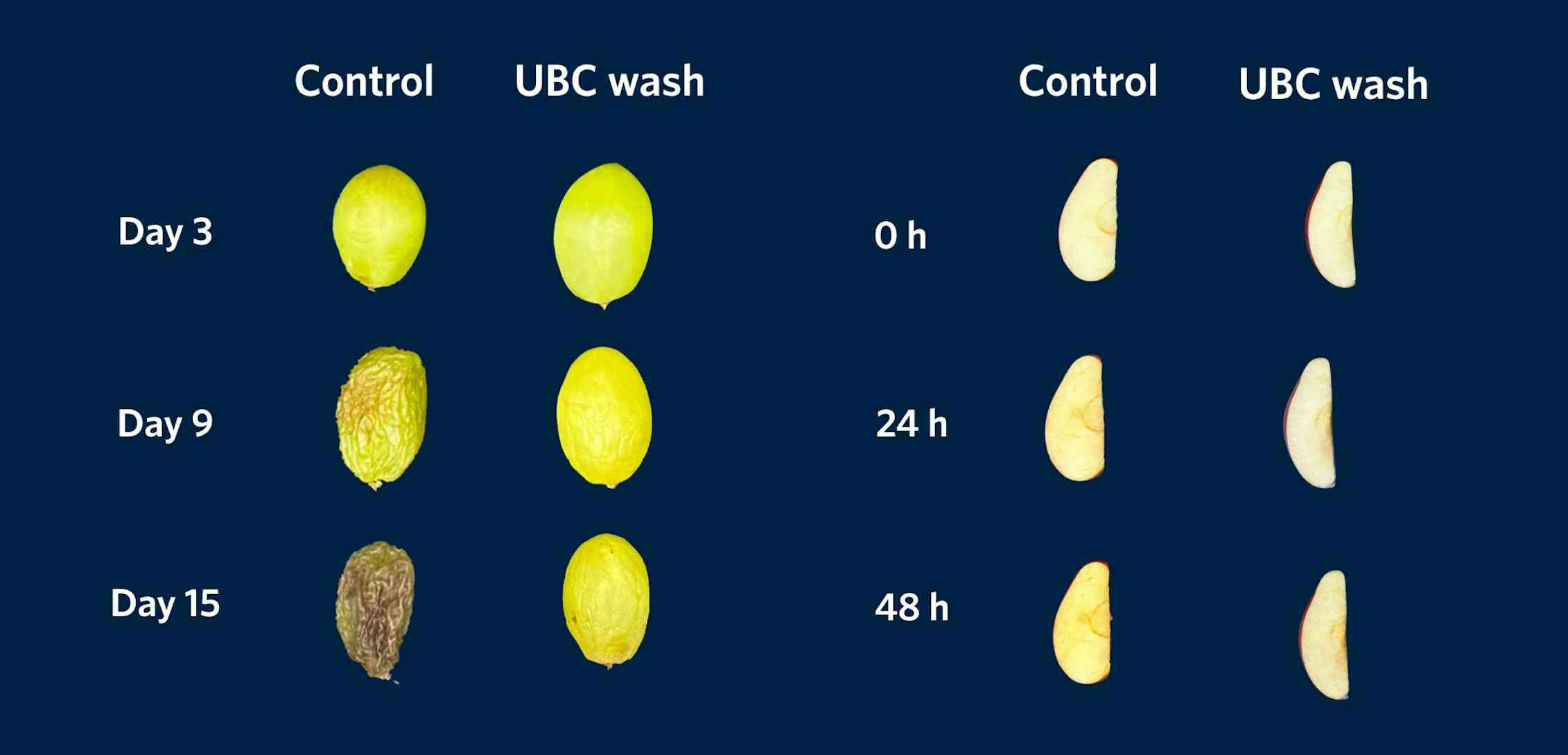
The second part of our study looked at freshness. Over 15 days, untreated grapes lost around 45 percent of their weight, while grapes treated with our wash system lost only 21 percent. Fresh-cut apples also lost less weight over 48 hours, dropping from 17 percent in untreated samples to 9 percent.
Those changes can impact what people buy. Treated grapes looked fresher after storage, and apple slices stayed lighter for longer. That kind of change matters outside the lab because produce that looks dried out or browned is less likely to be eaten.
The coating also showed an ability to slow oxidation and inhibited a test bacterium in laboratory experiments. This doesn’t mean the wash has completed all the safety tests needed for consumer use. However, it does suggest the coating may do more than simply sit on the surface.
What this could mean in practice
For now, a realistic use for our wash would likely be in post-harvest processing plants, not kitchen sinks. Processing facilities can control washing time, concentration, water handling and disposal more carefully than households can. We estimated the raw-material cost is less than US$0.032 per apple. Meanwhile, we are actively working on developing a household spray formulation for consumer use.
More work is needed. The wash should be tested on more fruits and vegetables, under commercial conditions and through the regulatory steps required before real-world use.
Still, the idea is useful because it reframes the problem. A fruit wash doesn’t have to be only a rinse. It could clean more effectively and then keep working, helping produce stay fresh, appealing, and more likely to be eaten.
Reference: “Dual-Function Metal–Phenolic Network-Capped Starch Nanoparticles for Postharvest Pesticide Removal and Produce Preservation” by Tianyi Jin, Zhangmin Wan, Ivy Chiu, Song Yan, Gary Othniel Wijaya, Orlando Rojas, Keng C. Chou, Rickey Y. Yada and Tianxi Yang, 12 April 2026, ACS Nano.
DOI: 10.1021/acsnano.5c20410
The research discussed in this article received funding from the Natural Sciences and Engineering Research Council of Canada (NSERC).
Adapted from an article originally published in The Conversation.
Never miss a breakthrough: Join the SciTechDaily newsletter.
Follow us on Google and Google News.
3 Comments
There already is such a thing for this.
What is that thing?
“A biodegradable wash may help remove surface pesticide residues and keep fruit fresh longer, though more testing is needed before real-world use.”
—-
Availability anticipated for the 2040-2050 decade.