
Close Menu
    Facebook X (Twitter) Instagram
    SciTechDaily
    • Biology
    • Chemistry
    • Earth
    • Health
    • Physics
    • Science
    • Space
    • Technology
    Facebook X (Twitter) Pinterest YouTube RSS
    SciTechDaily
    Home»Science»Natural Pest Control: Biological Control of Insect Pests Is Saving Farmers Billions of Dollars
    Science

    Natural Pest Control: Biological Control of Insect Pests Is Saving Farmers Billions of Dollars

    By University of QueenslandSeptember 3, 20204 Comments3 Mins Read
    Facebook Twitter Pinterest Telegram LinkedIn WhatsApp Email Reddit
    Share
    Facebook Twitter LinkedIn Pinterest Telegram Email Reddit
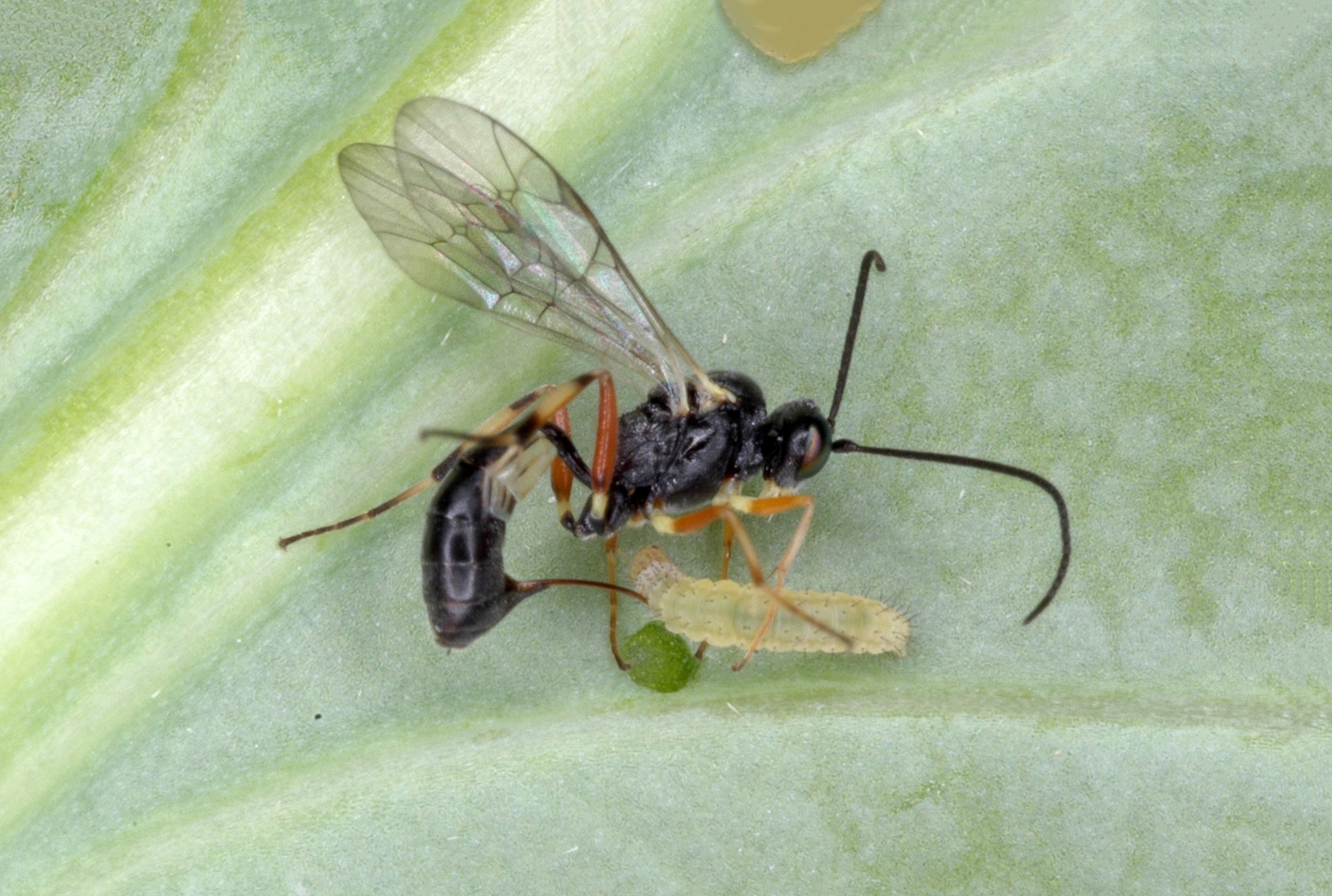
    Parasitic Wasp Pest Caterpiller
    A parasitic wasp (biological control agent) injects an egg into a pest caterpillar. The wasp will develop inside the caterpillar, eventually killing it. Credit: The University of Queensland

    Biological control of insect pests – where ‘natural enemies’ keep pests at bay – is saving farmers in Asia and the Pacific billions of dollars, according to University of Queensland-led research.

    Dr. Kris Wyckhuys from UQ’s School of Biological Sciences said biological control involved the careful release of an exotic natural enemy from a pest’s native habitat.

    “Scientists meticulously choose co-evolved beneficial insects that are the most effective and least likely to pose ecological upsets,” Dr. Wyckhuys said. “We’ve reviewed how biological control introductions have effectively managed 43 insect pests in food, feed, and fiber crops in the Asia-Pacific region over a century.”

    The team found that biological control has helped regulate invasive pest threats in multiple key food crops such as banana, breadfruit, and coconut.

    “Our work shows these techniques are saving farmers in Asia around $20.1 billion to $26.8 billion (US$14.6-19.5 billion) per year,” Dr. Wyckhuys said. “That’s a phenomenal amount of money and benefit, particularly when compared to other innovations in the agricultural sector.

    “A good point of comparison is the Green Revolution in Asia during the late 1960s, which tripled the output of local rice production but also saw a rise of chemical fertilizers, agrochemicals and newer methods of cultivation.

    “A large part of the Green Revolution impacts can be ascribed to double-yielding rice varieties, which generated $4.8 billion (US$4.3 billion) per year in Asia.”

    UQ’s Associate Professor Michael Furlong said recognition of the success of biological control might lead to greater uptake and more resilient, prosperous farming globally.

    “Biological control offers great opportunities for some of the world’s poorest farmers,” Dr. Furlong said. “It’s promoted rural growth and prosperity even in marginal, poorly endowed, non-rice environments.

    “A great example is the coconut scale (Aspidiotus destructor), which jeopardized the economic prosperity and food security of entire nations. This coconut scale posed a serious problem to crops like coconut, bananas, and copra industries in Fiji at the start of the Twentieth Century.

    “In 1928, lady beetles from Trinidad and millimeter-long parasitic wasps were introduced, and the results were almost immediate. Coconut scale ceased to be an economic issue on all of the main Fijian islands within nine months, and after 18 months, the scale was so rare it was difficult to find.

    “These innovative approaches, with increasingly better science, are helping feed the world, safeguard on-farm biodiversity and increase farmers’ quality of life.

    “We’re hoping this research provides lessons for future efforts to mitigate invasive species, restore ecological resilience, and sustainably increase the output of our global food system.”

    Reference: “Ecological pest control fortifies agricultural growth in Asia–Pacific economies” by Kris A. G. Wyckhuys, Yanhui Lu, Wenwu Zhou, Matthew J. W. Cock, Steven E. Naranjo, Atumurirava Fereti, Frances E. Williams and Michael J. Furlong, 31 August 2020, Nature Ecology and Evolution.
    DOI: 10.1038/s41559-020-01294-y

    Never miss a breakthrough: Join the SciTechDaily newsletter.
    Follow us on Google and Google News.

    Agriculture Ecology Economics Popular Sustainability University of Queensland
    Share. Facebook Twitter Pinterest LinkedIn Email Reddit

    Related Articles

    Groundbreaking “Dairy Farm of the Future” Provides Cows the Freedom of Choice

    Goodbye Traditional Farming? German Scientists Harvest Protein From Air and Water

    The Science Behind Red Nets: A New Dawn in Eco-Friendly Farming

    Green Menace? Study Finds Food From Urban Agriculture Has 6x Larger Carbon Footprint

    New Breed of Honey Bees a Major Advance in Global Fight Against Parasitic Varroa Mite

    Safi Organics: A Life-Changing Fertilizer for Rural Farmers in Kenya

    Human Waste Is Nutrient-Rich – It Can Be Used To Sustain Agriculture and Improve Economies

    What Mario Kart Teaches Us about How to Reduce World Poverty and Improve Sustainability

    Feeding Cattle a Bit of Seaweed Reduces Their Greenhouse Gas Emissions 82%

    4 Comments

    1. xABBAAA on September 3, 2020 7:35 am

      … I wonder, when a nano bots that kill the pests will be ready?

      The waves could harm the plants, but I think that it is more harmful to corporation wallets, though.

      Along, the people end up with more stuff in their body’s.
      So! Who cares, it is good to business! …

      Reply
      • LowIQ on September 3, 2020 10:17 am

        You are delusional, nanobots… hahahahaha

        Reply
    2. Mahfuzul on September 4, 2020 6:54 pm

      Very useful information on natural pest control, which is need of the hour to protect soil and environment from getting polluted.

      Reply
    3. tim casady on September 5, 2020 4:42 pm

      Dietirck the D-vac inventor who grew benficals claimed the fruit fly war in cal was sfaked and that in fact it couldn’t reproduce in cal..

      Reply
    Leave A Reply Cancel Reply

    • Facebook
    • Twitter
    • Pinterest
    • YouTube

    Don't Miss a Discovery

    Subscribe for the Latest in Science & Tech!

    Trending News

    Researchers Have Found a Dietary Compound That Increases Longevity

    Scientists Baffled by Bizarre “Living Fossil” From 275 Million Years Ago

    Your IQ at 23 Could Predict Your Wealth at 27, Study Finds

    320 Light-Years Away, a Planet Confirms a Fundamental Cosmic Assumption

    The Crown Jewel of Dentistry? Breakthrough Tech Could Transform Tooth Repair

    Python Blood Could Hold the Secret to Weight Loss Without Side Effects

    Naturally Occurring Bacteria Completely Eradicate Tumors in Mice With a Single Dose

    New “Nanozyme Hypothesis” Could Rewrite the Story of Life’s Origins

    Follow SciTechDaily
    • Facebook
    • Twitter
    • YouTube
    • Pinterest
    • Newsletter
    • RSS
    SciTech News
    • Biology News
    • Chemistry News
    • Earth News
    • Health News
    • Physics News
    • Science News
    • Space News
    • Technology News
    Recent Posts
    • New Study Reveals Earth Is Getting Brighter at Night – About 2% Each Year
    • Accidental Deep Ocean Discovery Reveals Hidden Carbon Sink
    • Cooling the Planet Could Come at a Devastating Cost
    • These New Molecules Could Change How We Treat Lupus and Arthritis
    • Saunas May Do More Than Raise Body Temperature – They Activate Your Immune System
    Copyright © 1998 - 2026 SciTechDaily. All Rights Reserved.
    • Science News
    • About
    • Contact
    • Editorial Board
    • Privacy Policy
    • Terms of Use

    Type above and press Enter to search. Press Esc to cancel.