
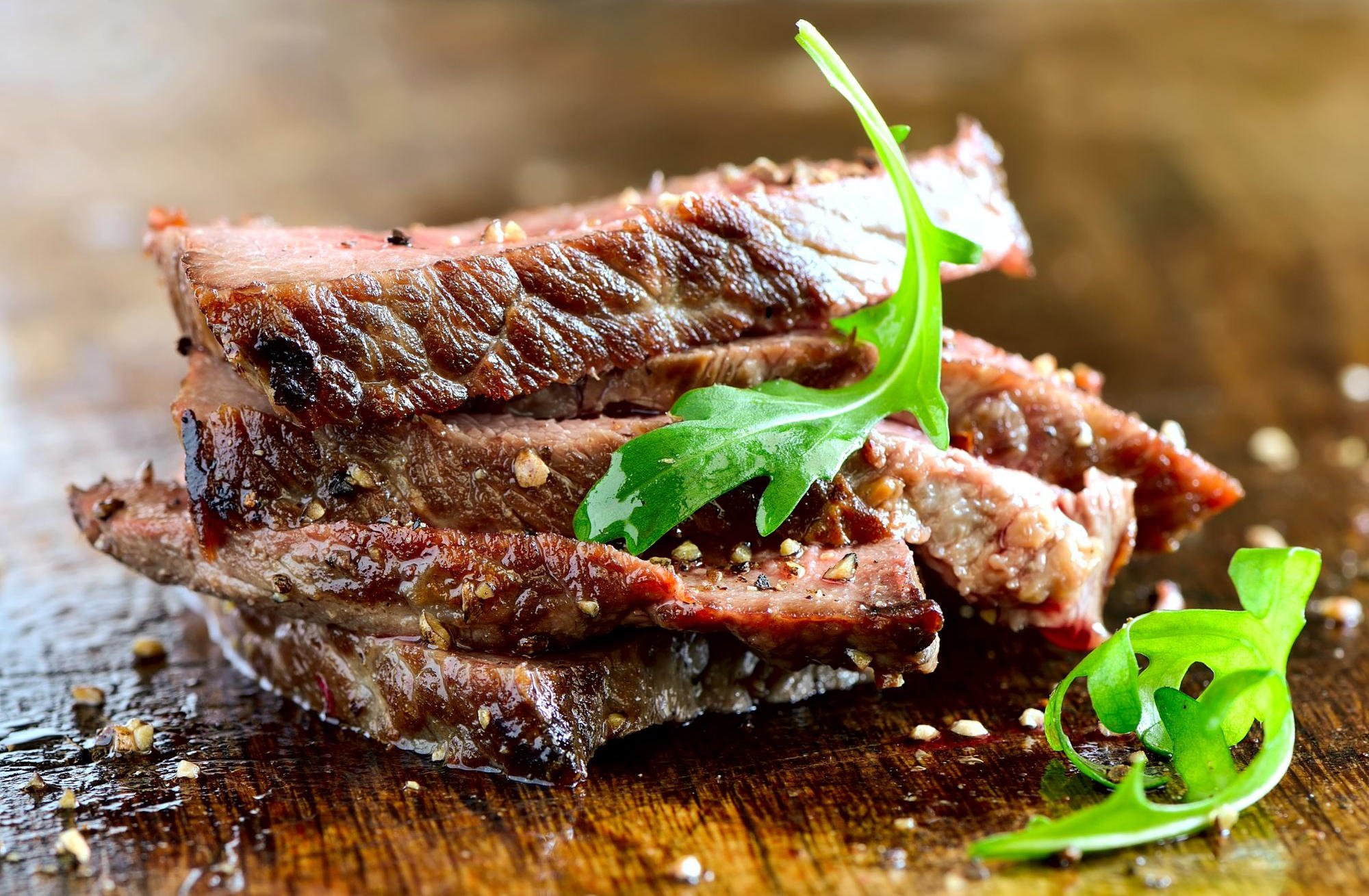
Research suggests that equal servings of animal protein may pack a much bigger muscle-building punch than their plant-based counterparts.
When it comes to protein, the same serving size on paper may not mean the same nutritional payoff in the body.
A 2023 Purdue University study found that two ounce equivalents (oz-eq) of animal-based protein foods supplied more bioavailable essential amino acids (EAA) than the same two oz-eq amount of plant-based protein foods. Essential amino acids are especially important because the body cannot make them on its own. They must come from food, and they help support muscle and whole-body protein building.
The findings add a sharper edge to a familiar nutrition question: are all protein foods truly comparable when they are measured by the same serving system?
Protein Quality Matters
The protein quality of a food or meal (i.e., the EAA content of a meal) is a major factor in determining how the body can use amino acids for muscle and whole-body protein building.
The Dietary Guidelines for Americans (DGAs) encourages people to eat a variety of protein foods and uses ounce-equivalent portions to compare them. One oz-eq equals one ounce of meat, one whole egg, 0.25 cups of beans, or 0.5 ounces of nuts.
“The basis for the DGAs stating that these protein foods are ‘equivalent’ and have ‘similar nutritional content’ is unclear,” suggests Dr. Wayne Campbell, primary investigator on this study and professor in the Department of Nutrition Science at Purdue University.
Campbell notes that protein foods can vary widely in calories, fat, carbohydrates, total protein, and protein quality. (See table below.) In other words, two foods can count the same under the ounce equivalent system while giving the body very different amounts of usable essential amino acids.
A Closer Look at the Foods Tested
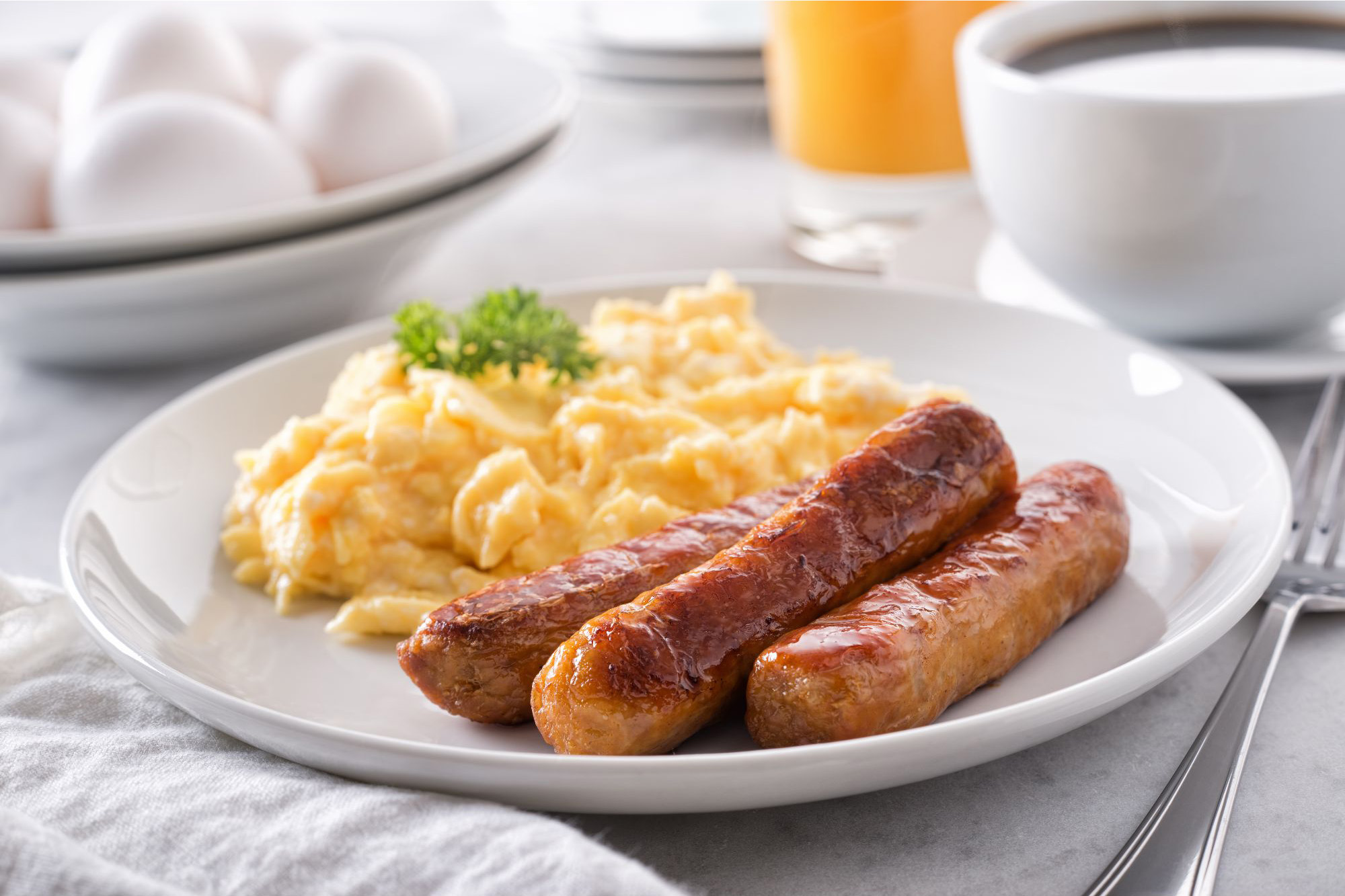
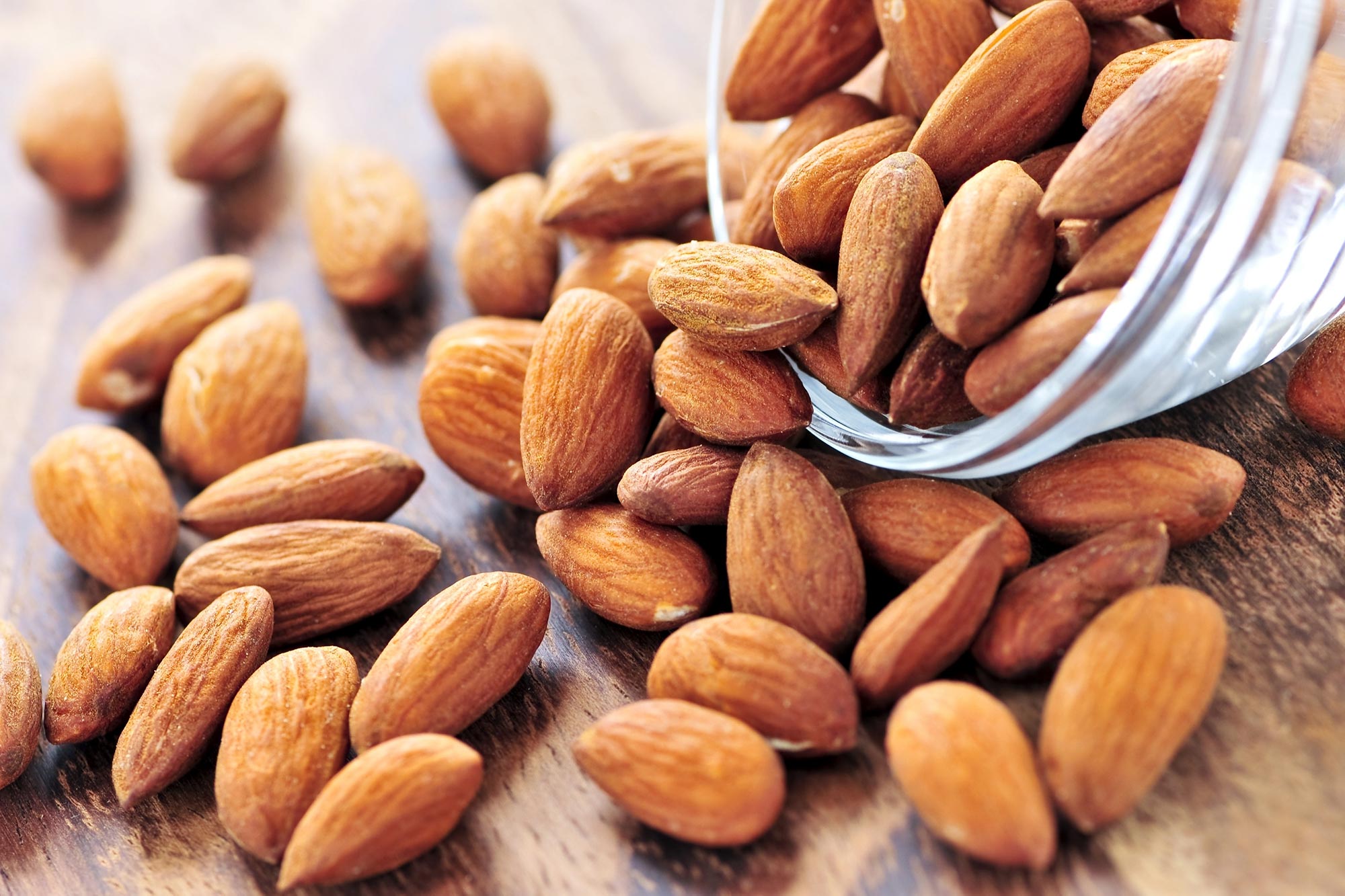
The study compared a standard test meal with two oz-eq portions of four protein foods: unprocessed lean pork loin, scrambled whole eggs, black beans, and raw sliced almonds.
Energy and macronutrient contents of the test meal and protein food sources, and essential amino acid content of the protein food sources.
| | Energy (kcal) | Fat (g) | Carbohydrate (g) | Protein (g) | EAA (g) |
| Test meal | 218 | 11.5 | 25.8 | 6 | 2.09 |
| Lean pork loin (2 oz-eq) | 73 | 1 | 0 | 14 | 7.36 |
| Whole eggs (2 oz-eq) | 145 | 10 | 0 | 12.5 | 5.38 |
| Black beans (2 oz-eq) | 113 | 0.5 | 20 | 7.5 | 3.02 |
| Almonds (2 oz-eq) | 161 | 14 | 6 | 6 | 1.85 |
Adapted from Connolly et al. (2023); The quantity of protein for each trial includes the protein from the test meal: lean pork (20 g); whole eggs (18.5 g); black beans (13.5 g); and almonds (12 g). The total quantity of EAA for each trial includes the EAA from the test meal: lean pork loin (9.45 g); whole eggs (7.47 g); black beans (5.11 g); and almonds (3.94 g). EAA—essential amino acids.
Why the Question Matters
The researchers were especially interested in whether the ounce equivalent system gives people a clear picture of protein quality. That question may matter for groups that need reliable protein intake but may not always get a wide range of high-quality protein foods.
This can include younger adults who have limited variety in their protein choices. It may also be important for older adults, who often have higher needs for nutrient-dense protein to help support muscle maintenance, physical function, and healthy aging.
To investigate the issue, scientists tested whether two oz-eq portions of animal-based protein foods and plant-based protein foods, eaten as part of a mixed whole foods meal, produced different levels of essential amino acids in the bloodstream.
How the Study Was Conducted
The research included two crossover randomized controlled trials. One involved 30 otherwise healthy young adults. The other involved 25 otherwise healthy older adults.
Each participant completed four separate 300-minute testing sessions, with at least three days between sessions. In each session, participants ate a standardized meal that included two oz-eq of one protein food: unprocessed lean pork loin, scrambled whole eggs, black beans, or raw sliced almonds.
The study investigators were blinded to the order of the protein food assignments until all participants had completed testing and the results had been analyzed.
Blood samples were collected before the meal and again 30, 60, 120, 180, 240, and 300 minutes after eating. Researchers used those samples to measure essential amino acid bioavailability, as well as blood sugar and insulin levels.
Animal Protein Delivered More Essential Amino Acids
“In line with our hypothesis before starting this study, consuming meals with two oz-eq of animal-based protein foods resulted in more EAAs in the bloodstream compared to meals with two oz-eq of plant-based protein foods in both young and older adults, separately and combined,” explains Dr. Gavin Connolly, clinical trials project manager and research associate in the Department of Nutrition Science at Purdue University. Also, there were no differences in EAA bioavailability between young and older adults, he adds.
The findings suggest that the animal-based proteins tested in the study, unprocessed lean pork loin and scrambled eggs, more effectively supplied essential amino acids linked to the body’s ability to build body protein or muscle.
“This is an important consideration for muscle and whole-body health and physical function across the life course,” he suggests.
The researchers also reported several additional findings. Lean pork led to greater EAA bioavailability than eggs in young adults, older adults, and the combined study population. Black beans and almonds did not differ from each other in EAA bioavailability. Young and older adults also showed no difference in EAA bioavailability across the protein foods tested.
What Newer Research Adds
Since the Purdue study was published in 2023, additional research has continued to refine the animal-versus-plant protein debate. A 2025 systematic review of randomized controlled trials found that animal protein had a small beneficial effect on muscle mass compared with plant protein overall, especially in younger adults and when compared with non-soy plant proteins. However, the review found no clear difference between soy protein and animal protein for muscle mass, and no overall difference between plant and animal protein sources for muscle strength or physical performance.
That newer evidence supports a more nuanced message. Some animal proteins may deliver essential amino acids more efficiently, especially when compared with certain whole plant foods or non-soy plant sources. At the same time, not all plant proteins behave the same way. Soy protein, especially in more concentrated forms, appears more comparable to animal protein in several longer-term studies.
Other recent work is also exploring whether carefully designed blends of animal and plant proteins can improve digestibility, amino acid availability, and muscle protein synthesis in older adults. These studies reflect a growing interest in finding practical dietary strategies that support muscle health while also accounting for sustainability, food preferences, and the broader nutrient benefits of plant-based foods.
Limits of the Findings
The Purdue study had important limitations.
“Portion sizes of the protein foods in the study likely do not truly reflect the amounts consumed on a meal-to-meal or weekly basis by young or older adults,” according to Dr. Connolly. Additionally, there were no direct measures of changes in muscle protein synthesis or whole-body protein balance in response to the meals containing the different protein foods, he explains.
That means the results show clear differences in essential amino acid bioavailability after the meals, but they do not prove that one eating pattern directly leads to better muscle growth, strength, or long-term health outcomes.
More research is needed to understand how animal-based and plant-based protein foods affect muscle, whole-body protein balance, and healthy aging across the lifespan.
Rethinking Protein Equivalency
The study authors suggest that these findings could help inform future public health nutrition guidance. In particular, they say the results may be useful as future DGAs consider whether different protein sources should continue to be treated as equivalent on an oz-eq basis across the lifespan.
“These results are also pertinent to the DGA’s recommendation to consume more plant-based foods,” adds Dr. Campbell.
Plant-based foods can offer important health benefits, including fiber, vitamins, minerals, and other beneficial compounds. However, Campbell says dietary advice should also recognize the role of nutrient-dense animal-based protein foods that provide high-quality protein.
The takeaway is not simply that one protein category is good and the other is bad. Instead, the research points to a more practical idea: protein source, protein quality, and total diet pattern all matter. For people trying to support muscle health, especially during aging, the body may respond very differently to protein foods that appear equivalent on a dietary chart.
References:
“Effects of Consuming Ounce-Equivalent Portions of Animal- vs. Plant-Based Protein Foods, as Defined by the Dietary Guidelines for Americans on Essential Amino Acids Bioavailability in Young and Older Adults: Two Cross-Over Randomized Controlled Trials” by Gavin Connolly, Joshua L. Hudson, Robert E. Bergia, Eric M. Davis, Austin S. Hartman, Wenbin Zhu, Chad C. Carroll and Wayne W. Campbell, 25 June 2023, Nutrients.
DOI: 10.3390/nu15132870
“Quality of meal protein determines anabolic response in older adults” by Il-Young Kim, Yun-A. Shin, Scott E. Schutzler, Gohar Azhar, Robert R. Wolfe and Arny A. Ferrando, 6 October 2017, Clinical Nutrition.
DOI: 10.1016/j.clnu.2017.09.025
“Metabolic Evaluation of the Dietary Guidelines’ Ounce Equivalents of Protein Food Sources in Young Adults: A Randomized Controlled Trial” by Sanghee Park, David D Church, Scott E Schutzler, Gohar Azhar, Il-Young Kim, Arny A Ferrando and Robert R Wolfe, 9 March 2021, The Journal of Nutrition.
DOI: 10.1093/jn/nxaa401
“Essential Amino Acids and Protein Synthesis: Insights into Maximizing the Muscle and Whole-Body Response to Feeding” by David D. Church, Katie R. Hirsch, Sanghee Park, Il-Young Kim, Jess A. Gwin, Stefan M. Pasiakos, Robert R. Wolfe and Arny A. Ferrando, 2 December 2020, Nutrients.
DOI: 10.3390/nu12123717
“Effect of Plant Versus Animal Protein on Muscle Mass, Strength, Physical Performance, and Sarcopenia: A Systematic Review and Meta-analysis of Randomized Controlled Trials” by Rachel J Reid-McCann, Sarah F Brennan, Nicola A Ward, Danielle Logan, Michelle C McKinley and Claire T McEvoy, 15 January 2025, Nutrition Reviews.
DOI: 10.1093/nutrit/nuae200
This research was funded by the Pork Checkoff and the American Egg Board—Egg Nutrition Center.
Never miss a breakthrough: Join the SciTechDaily newsletter.
Follow us on Google and Google News.
5 Comments
Animal nutritionists have been using different calculations for many nutrients based on many different parameters. Think about it this way: protein content is normally calculated based on nitrogen content. There are many different amino acids, not to mention nitrogen sources that humans have absolutely no ability to utilize. Seldom do plant proteins contain an optimal balance of amino acids, and the digestiblity is also variable. It’s impossible to do the kind of testing on people that has been done on pigs to determine the best balance between different protein sources.
“This research was funded by the Pork Checkoff and the American Egg Board—Egg Nutrition Center.”
And on top of that the fact that the scientist mentions that the study has important limitations, so all in all: I continue my flexitarian diet with a calm mind.
When was the last time somebody in the US got diagnosed with protein deficiency? It’s very rare. Aside from that the only sentence you really need to read is the last one: “This research was funded by the Pork Checkoff and the American Egg Board—Egg Nutrition Center.”
1. The “Animal is Better” Claim:
The article claims animal protein is “better” because it resulted in a higher concentration of essential amino acids (EAAs) in the bloodstream. However, “better” is a highly loaded word.
• The Reality: Animal protein is more bioavailable and dense in EAAs per ounce.
• The Catch: The study only measured short-term blood levels (acute absorption). It did not prove that eating pork leads to better long-term health, greater strength, or a longer life than a plant-based diet. In fact, large-scale, long-term epidemiological studies consistently show that replacing some animal protein with plant protein is linked to lower rates of cardiovascular disease and all-cause mortality.
2. The “Incomplete” Protein & Rice Argument:
They used beans and almonds, which are incomplete on their own and need to be paired (like beans and rice) to form a complete protein.
• By testing black beans and almonds in isolation, the study set them up to fail against “complete” proteins like pork and eggs. Real people don’t just eat a bowl of dry almonds for dinner; we eat mixed meals.
• A slight technical correction: The body maintains an “amino acid pool” and doesn’t actually require you to eat beans and rice in the exact same mouthful to utilize them. However, by measuring the immediate blood spike after a single meal, the researchers intentionally highlighted the lower EAA profile of the plant foods.
3. They Ignored the “Best” Plant Proteins:
This is perhaps the most glaring flaw in the study’s design. To make a fair comparison of “Animal vs. Plant,” you should stack the best against the best.
• Instead of comparing pork to soy (tofu/tempeh), pea protein, or quinoa—which are complete plant proteins with excellent amino acid profiles—they chose almonds and black beans.
• Gram for gram, almonds are primarily a fat source, not a dedicated protein source. Comparing the protein delivery of lean pork to almonds is a massive false equivalency.
4. “Biased Much?” (The National Pork Board):
This is a classic case of funding bias.
Follow the Money: The National Pork Board is a program funded by pork producers with the explicit marketing goal of checking off boxes to say, “Look, pork is a superfood!”
When an industry group funds a study, they design the protocol to ensure their product wins. By choosing “ounce-equivalent” servings (which favors dense meat over bulky beans) and picking low-protein, incomplete plant sources (almonds), they practically guaranteed the headline they wanted.
This article highlights an important nuance in the protein debate: while animal proteins may provide more readily available essential amino acids per serving, nutrition is about more than just amino acid absorption. Plant-based foods also offer fiber, antioxidants, and other beneficial compounds that support long-term health. The most valuable takeaway is that protein quality matters, especially for muscle maintenance and healthy aging, but overall dietary patterns matter just as much. Rather than viewing animal and plant proteins as competing choices, this research reinforces the importance of understanding their different strengths and using a balanced approach that aligns with individual health goals and nutritional needs.