
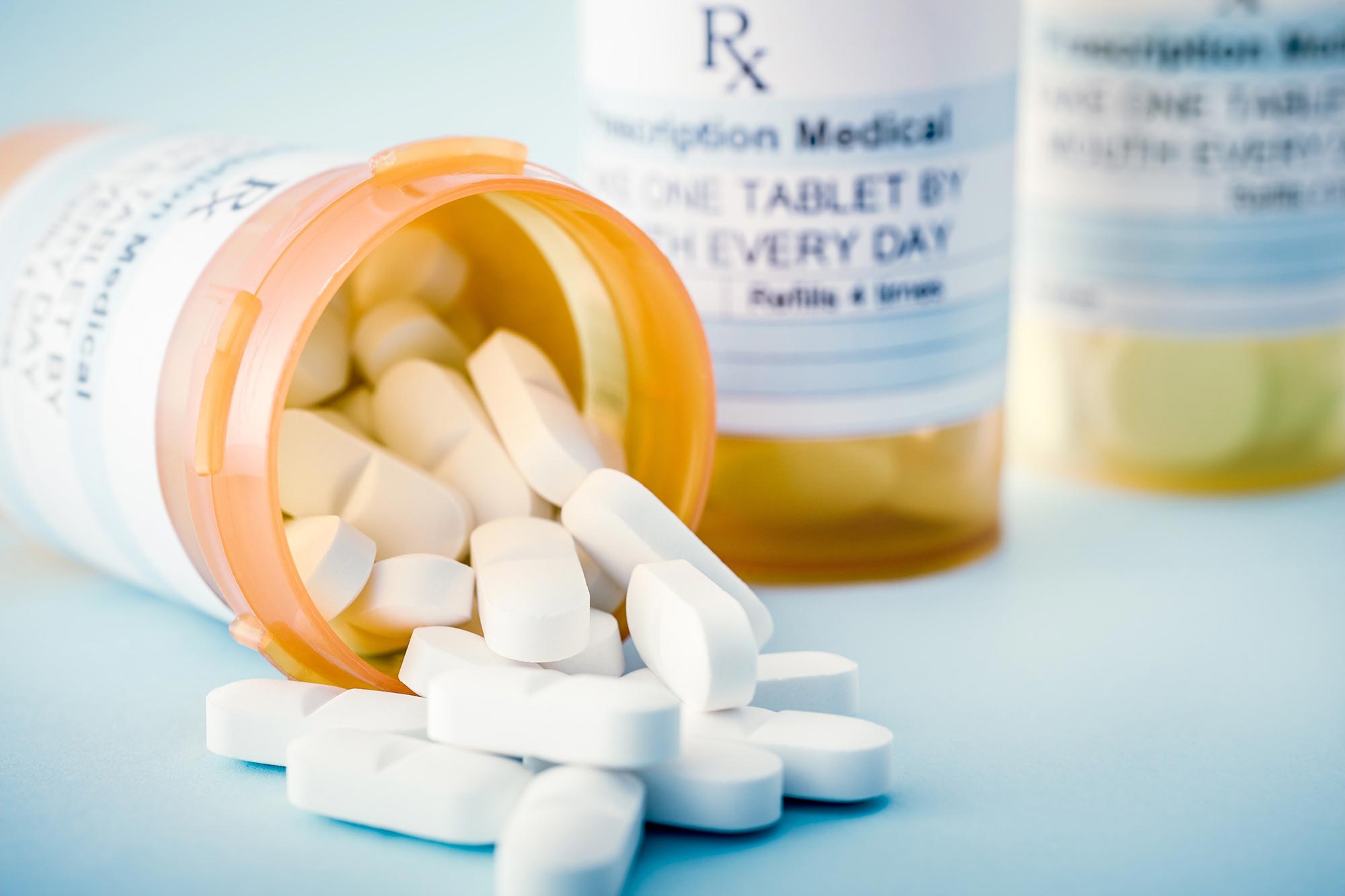
Patients struggled to read prescription instructions and remember details about new diagnoses.
Millennials and Gen X may also find the health care system difficult to navigate, not just older generations.
A new study from Northwestern University found that one in three American adults ages 35 to 64 cannot reliably understand prescription directions, complete medical forms, or remember information from doctor visits involving new chronic condition diagnoses.
These abilities, commonly known as health literacy, are essential for managing conditions such as high blood pressure, high cholesterol, and diabetes, which often begin during midlife.
“We didn’t think the problem was going to be this pervasive, but to think that people are reaching their mid to late 30s and 40s, and they haven’t been onboarded properly to perform basic personal health tasks is pretty powerful,” said corresponding lead author Abigail Vogeley, a research fellow and neuropsychology doctoral student in the Center for Applied Health Research on Aging at Northwestern University Feinberg School of Medicine. “This work is not about pointing out what people can’t do, but rather, can we confuse patients less?”
Previous research has shown that more than half of adults 65 and older struggle to navigate the health care system, but this is the first study to examine the issue specifically in middle-aged adults.
The study was published in the Journal of General Internal Medicine.
“In midlife, there’s no clear ‘user manual’ for engaging with health care,” said senior author Michael Wolf, the center’s director and faculty in the department of medicine at Feinberg. “Our findings suggest we’re not adequately preparing people to engage and manage their care.”
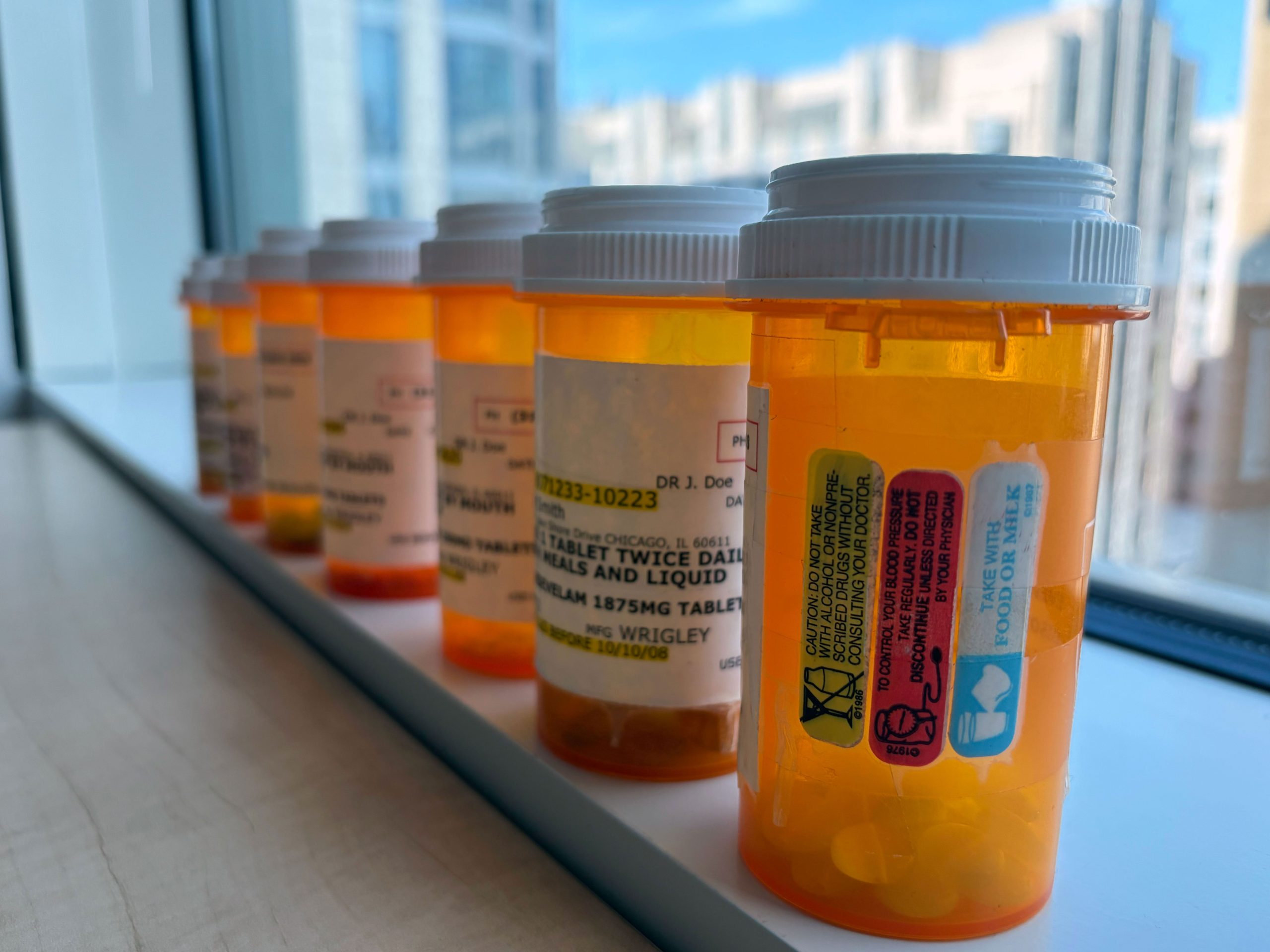
A sample size of 1,000 participants
The study involved 1,000 adults who were receiving care through Northwestern-affiliated hospitals and federally qualified health centers across Chicago. To be eligible, participants needed to have seen a doctor within the previous year or have an appointment scheduled within the next six months.
Participants completed interviews and practical tasks that reflected routine health care situations. These included reading prescription labels (e.g., should it be taken with food? Can you drink alcohol or be exposed to sunlight while taking them?), remembering physician instructions after watching a clinical video in which they were diagnosed with GERD, and reviewing written care materials, along with other common health tasks.
A general internal medicine physician delivers via video a fake diagnosis of GERD to study participants. Credit: Northwestern University
“Doctors may ask patients, ‘Are you taking your medicine?’ but we don’t ask how they’re taking it, so people might think, ‘I am doing great, I’m taking my medicine,’ but they don’t realize they’re making mistakes,” Wolf said.
A breakdown of the findings
The researchers measured health literacy, health self-management, and self-reported physical function using several screening tools.
They found:
- 32.5% had limited health literacy skills
- Lower health literacy was associated with lower income, less education, and unemployment
- People with weaker skills had more chronic conditions, received more prescription medications, and scored lower on cognitive testing
“Patients differ not just by demographics, but by their ability to manage their care,” Vogeley said.
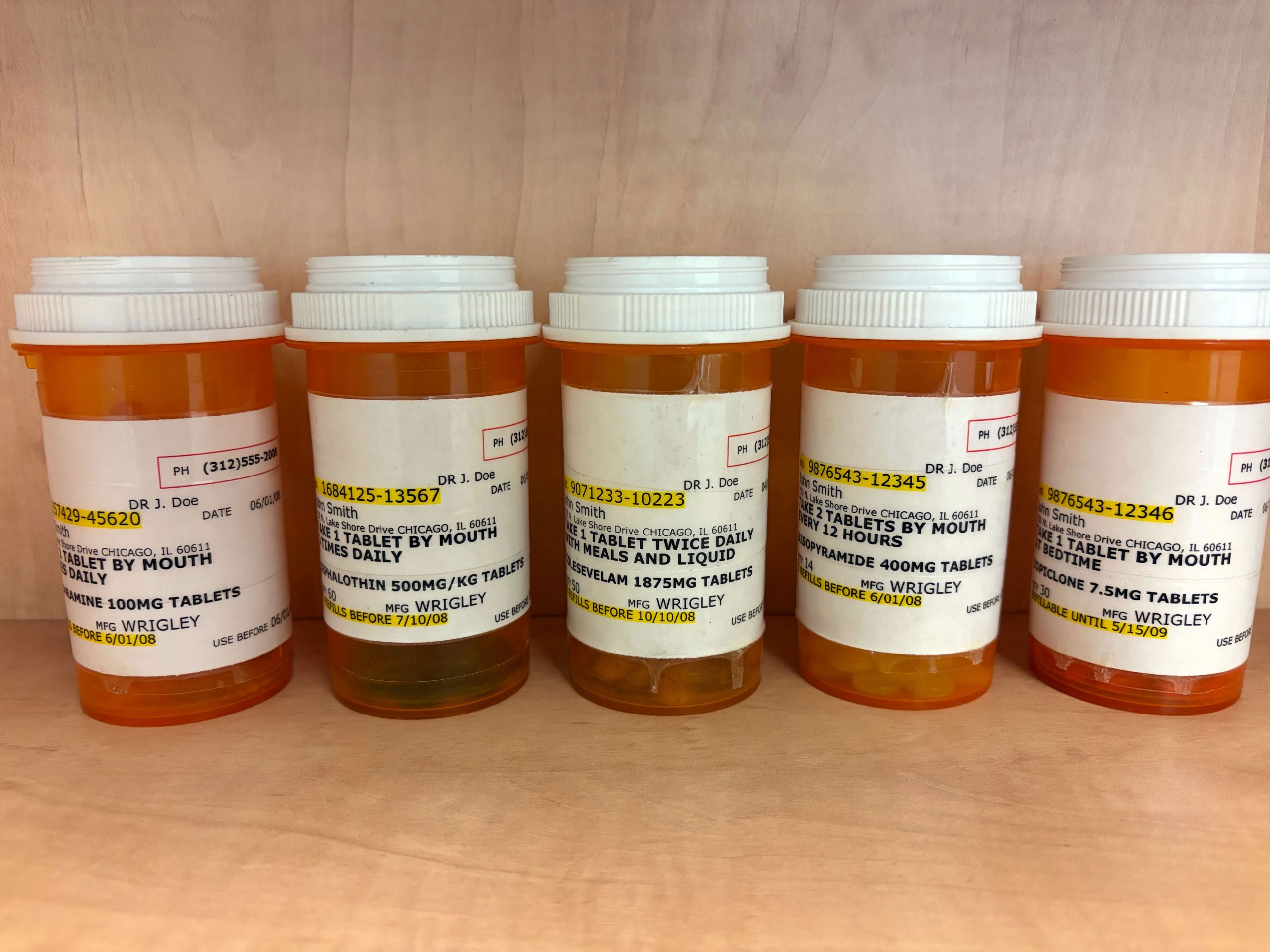
Many patient materials are currently written at a high school or college reading level. The authors recommend making health information easier to understand by using plain language at a sixth- to eighth-grade level.
They also point to broader consequences for the health care system.
“Billions are spent developing drugs, but far less is invested in helping patients use them correctly,” Wolf said. “Improving understanding could significantly improve outcomes and reduce harm.”
Chronic conditions in middle age
A large body of prior research has found that about two-thirds of U.S. adults ages 45 to 64 manage at least one chronic condition, while one-third manage multiple chronic conditions.
“We just assume people in middle age may know what they are doing when it comes to their health, even though this is a time where chronic conditions start to appear, and they’re often delayed in their diagnosis because of how patients variably use health care,” Wolf said.
Wolf said that when patients do not manage chronic conditions properly, the consequences can include hospital stays and worse health outcomes.
“The focus has always been on older adults, whom we might assume misdose medications because of cognitive decline, but our findings suggest health literacy is suboptimal even in middle age,” Vogeley said. “Middle-aged adults become older adults, so if we look at this from an optimistic perspective, this can be a place for intervention.”
Reference: “Prevalence of Limited Health Literacy During Middle Adulthood and Its Associations with Health Self-Management and Physical Function” by Abigail Vogeley MS, Andrea Russell PhD, Fangyu Yeh MPH, Laura Curtis MS, Lauren Opsasnick PhD, Julia Yoshino Benavente MPH, Morgan Bonham BS, Rebecca Lovett PhD, Sophia W. Light PhD, Britney Sun BA, Prophecy Agyare BA, Patrick Cecil MS, Rodolfo Zuleta BA, Stephen D. Persell MD, MPH, Minjee Kim MD and Michael S. Wolf PhD, MPH, 10 June 2026, Journal of General Internal Medicine.
DOI: 10.1007/s11606-026-10560-x
This work was supported by grants from the National Institutes of Health (R01AG070212, R01AG030711), with institutional support from UL1TR001422 and from the Claude D. Pepper Older Americans Independence Center at Northwestern University Feinberg School of Medicine (P30AG059988).
Never miss a breakthrough: Join the SciTechDaily newsletter.
Follow us on Google and Google News.
8 Comments
Aren’t people in the USA taught how to read these days?
Shortest answer possible: No
Half the human population has below average intelligence. I can guarantee that if they did the same study in other countries, it would show the same results. Stop bashing the US.
The problem is likely because so many people are wasted on drugs, pot or alcohol much of the day, every day.
A gpt query estimates that nearly half, or 44% of adult Americans can neither read, nor possess the literacy comprehension skills of a proficient 4th grader as tested in the NAEP’s standardized exams.
Make of that what you will.
I was a healthcare professional and it is extremely taxing for me to coal lake and understand how to manage chronic conditions. Many mid-level providers like NP and Pa’s do not have the knowledge necessary to see moderate to advance conditions.
Some Do and MD’s don’t have it either. I do my own research and then I recommend or ask the doctor for certain tests and a lot of times they want to play Sherlock Holmes and try to discover it on their own.
Edit: collate
Gen Xer here and I have experienced the OPPOSITE problem over and over. I’m smarter than the doctor/PA/NP, I know more about my conditions than they do, and I can’t get the proper testing/diagnosis/treatment needed to actually help me.
This article and the findings will only be used for medical personnel to justify controlling patients even more than they do now. It won’t make patients or doctors any smarter. It will only make patients be even more at the mercy of doctors who don’t really care about them.
I also agree with Jojo that people talking drugs/pot/alcohol all the time effects their cognitive abilities and some of it is probably permanent damage. But I also think covid is to blame, as well. Each time a person gets covid it lowers their IQ a little bit. The worse a case you get, the more it lowers your IQ. People get covid every year, sometimes more than once a year. Patients and doctors.
Think about that. Explains a lot, doesn’t it? Yep, we’re doomed.
This article only talks about how dumb patients are. There needs to be a study done to see how dumb medical personnel are, too. Don’t believe me? Next time you are in the hospital, afterwards look up your medical records on the patient portal. Look at all the things the doctors write about you in your permanent records. My records are mostly wrong/inaccurate and possibly mixed up with another patient and the doctors don’t let you correct the mistakes. I don’t even know how to get it all fixed. I would say about half the information in my medical records is just plain wrong…consisting of errors, but also misinterpretations, misjudgements, misdiagnoses, and even what appear to be outright lies and disinformation.