
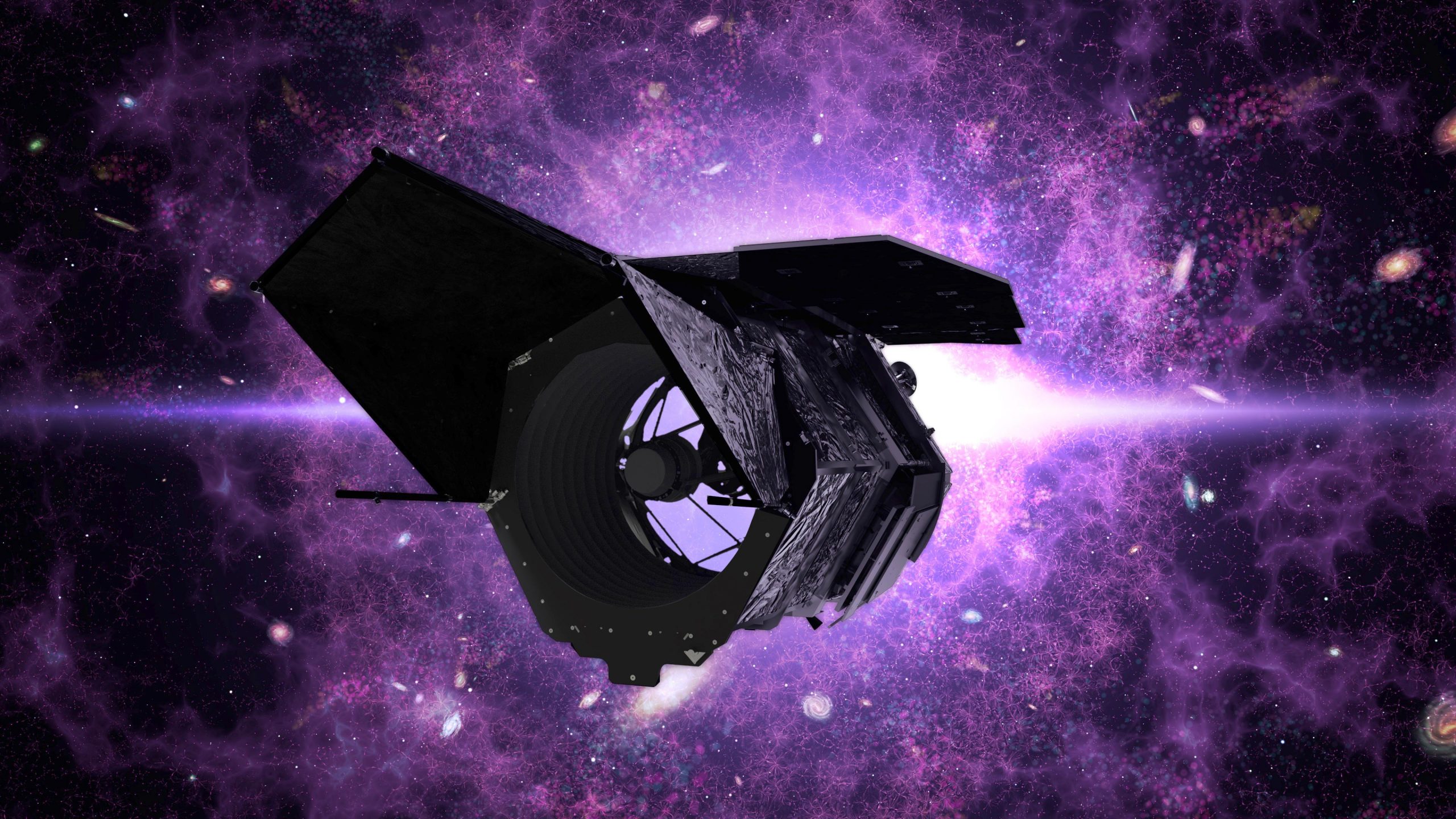
Now in space and undergoing commissioning, NASA’s Roman Space Telescope will test powerful new technology for directly studying exoplanets.
A planet orbiting close to a distant star can be extraordinarily difficult to see because the star’s glare overwhelms the much fainter light reflected by the planet. NASA’s Nancy Grace Roman Space Telescope will test a new approach designed to separate that faint planetary light from the much brighter star beside it.
The telescope’s Coronagraph Instrument, or CGI, will combine advanced coronagraphy with active wavefront control, using deformable mirrors to correct tiny optical imperfections and suppress stray starlight. If the technology performs as intended, astronomers could directly image and study gas giants that are older, cooler, and orbit closer to their stars than the hot, young planets typically found through direct imaging.
“The CGI aboard the Roman Space Telescope is the most technically sophisticated device for optical observations ever operated in space for scientific research,” says Oliver Krause, head of the Infrared Space Astronomy Research Group at the Max Planck Institute for Astronomy (MPIA) in Heidelberg.
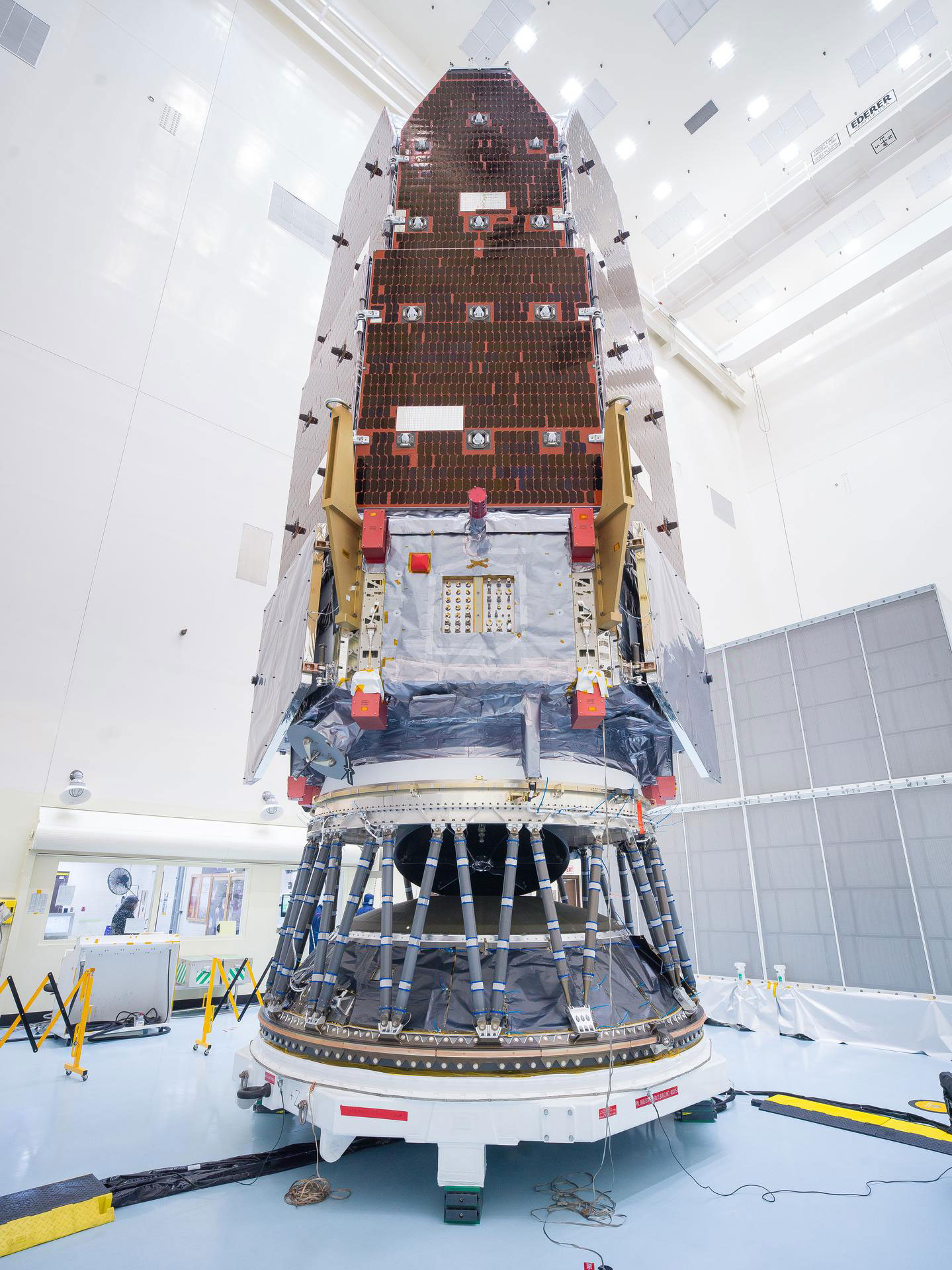
Roman launched from Kennedy Space Center aboard a SpaceX Falcon Heavy rocket on August 30, 2026, following roughly a decade of construction. The telescope was designed for a five-year primary mission with a possible five-year extension, but NASA now says fuel savings from its highly accurate launch and early trajectory correction could support at least 22 years of potential science operations. Roman will investigate the history of the universe and the roles of dark matter and dark energy in cosmic expansion and the formation of large-scale structure.
Roman is currently traveling toward its final orbit around the Sun-Earth L2 point, about 1 million miles (1.5 million kilometers) from Earth, where it is expected to arrive in early December.
Since launch, engineers have successfully powered on CGI and completed an initial checkout of its software, cameras, mechanisms, thermal controls, and other systems. The instrument is now undergoing months of calibration and testing before full science operations begin, when it will demonstrate technologies designed to make direct imaging of exoplanets far more powerful.
Roman is expected to discover many new exoplanets, while CGI will focus on a particularly difficult challenge: separating the faint light of planets from the overwhelming glare of their host stars. Its technology could expand direct imaging to worlds that are currently extremely difficult to observe.
Two techniques tackle stellar glare
A coronagraph uses specialized masks to block a bright star so that much fainter objects nearby can become visible. But those masks can produce strong image artifacts around the star. As a result, astronomers using this method have mainly detected Jupiter-like gas giants orbiting relatively far from their host stars, where they are easier to separate from the glare.
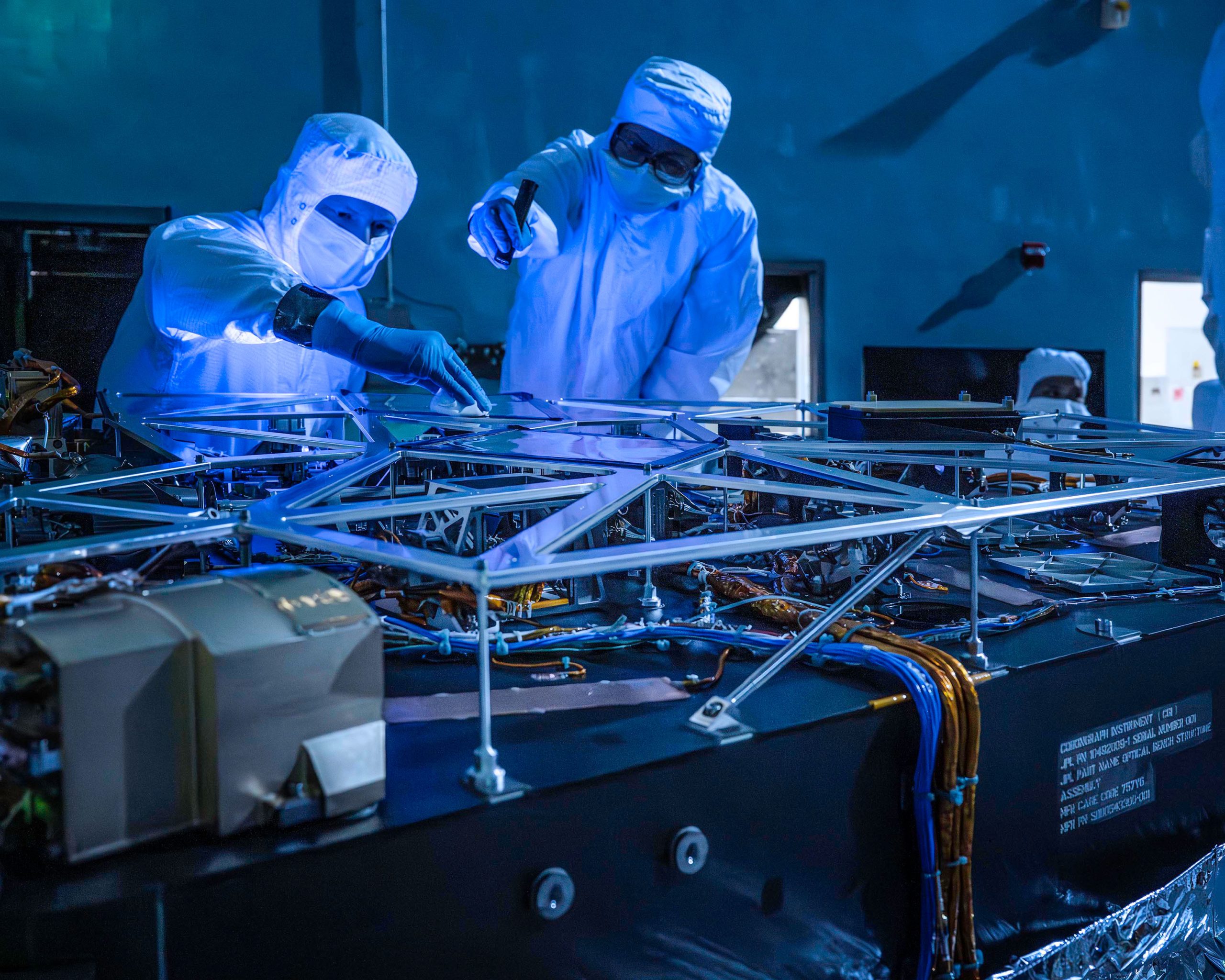
CGI adds active wavefront control to reduce these unwanted effects and improve the contrast between a star and a nearby planet. Two deformable mirrors, each controlled by more than 1,600 tiny actuators, can subtly change shape to compensate for minute imperfections and changes in the telescope’s optics. Similar deformable-mirror technology is used in adaptive optics on ground-based telescopes, but Roman will apply it with extraordinarily precise wavefront sensing and control in space.
Inside CGI, masks, deformable mirrors, and sensors will work together to suppress interfering starlight. The system is designed to detect a planet next to a host star that is a billion times brighter, roughly the contrast between Jupiter and the Sun. That would represent up to a thousandfold improvement over current capabilities.
An integrated spectrograph will then allow researchers to analyze the atmospheric composition of these planets. CGI is also intended to image circumstellar disks, the structures of material surrounding nearby stars, in visible light.
Extreme stability keeps CGI aligned
Achieving this level of performance requires extraordinary mechanical stability. Under Krause’s leadership, engineers and scientists at MPIA designed, developed, manufactured, and tested key components called Precision Alignment Mechanisms, or PAMs. These mechanisms precisely position optical elements such as filters, coronagraphs, and mirrors.
Over eight hours of operation, the PAMs must not tilt by more than 40 milliarcseconds. For comparison, 3.6 million milliarcseconds make up one degree. The required stability is equivalent to the apparent size of a person standing in Los Angeles when viewed from Heidelberg.
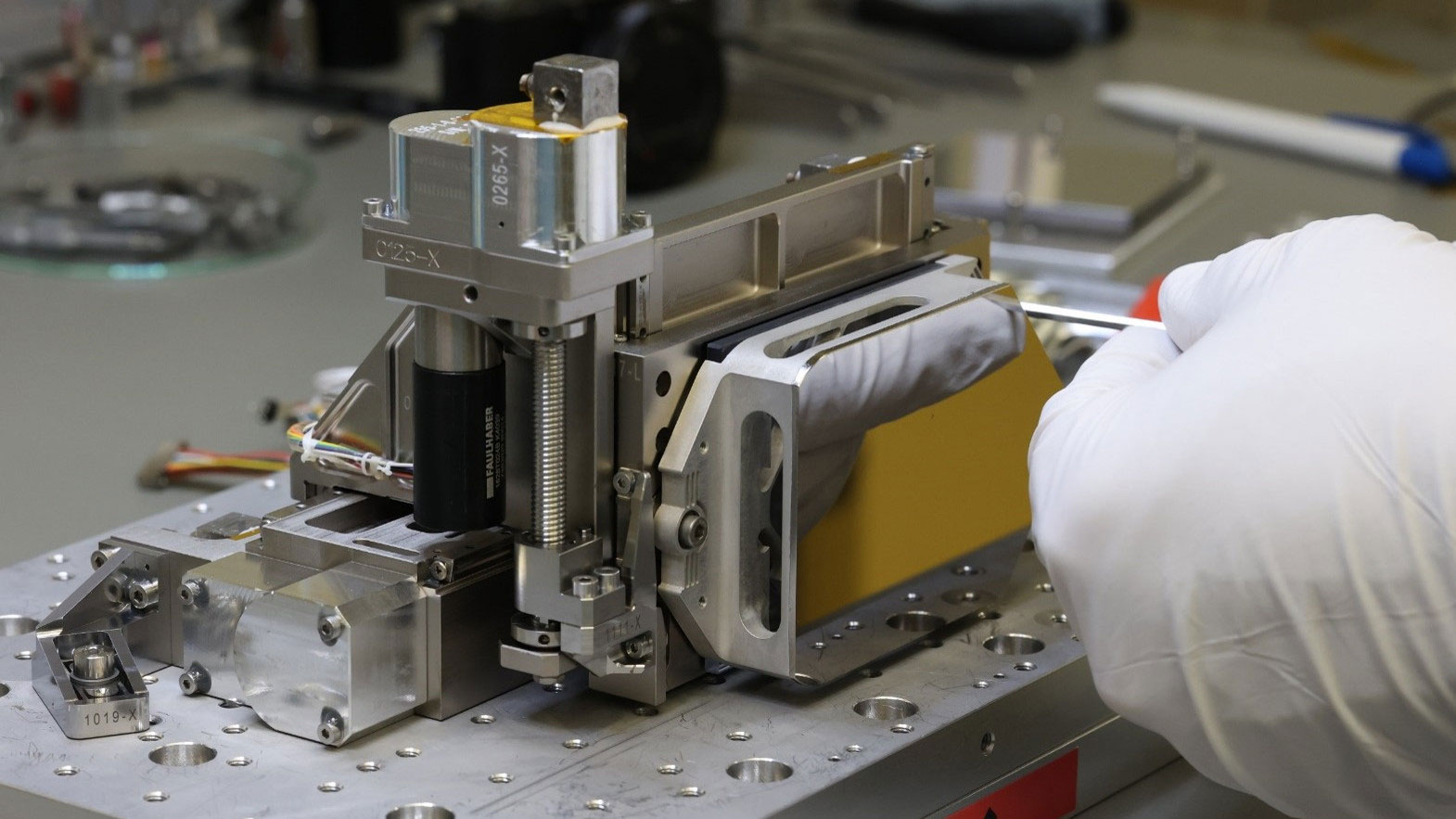
MPIA, NASA’s sole direct German partner on CGI, is also helping develop software to process technical and scientific data and prepare observations. NASA’s Community Participation Program coordinates the measurements, with Krause serving as the local project lead and Wolfgang Brandner responsible for observations aimed at detecting gas giants in visible light.
During Roman’s ongoing commissioning, members of the program are evaluating data as the observatory’s instruments undergo calibration and testing. “However, thanks to the CPP’s global distribution, with members in the US, Japan, and Europe, our data analysts can carry out their tasks during normal office hours,” says Wolfgang Brandner.
Once routine operations begin, the data will be made publicly available immediately after processing at the Roman Science Support Center. NASA expects Roman’s first science images to be released in early 2027.
A path toward imaging another Earth
If CGI succeeds, its technology could be refined for future space observatories such as the Habitable Worlds Observatory. That could bring astronomers closer to directly imaging an Earth-like planet around another star.
Never miss a breakthrough: Join the SciTechDaily newsletter.
Follow us on Google and Google News.