
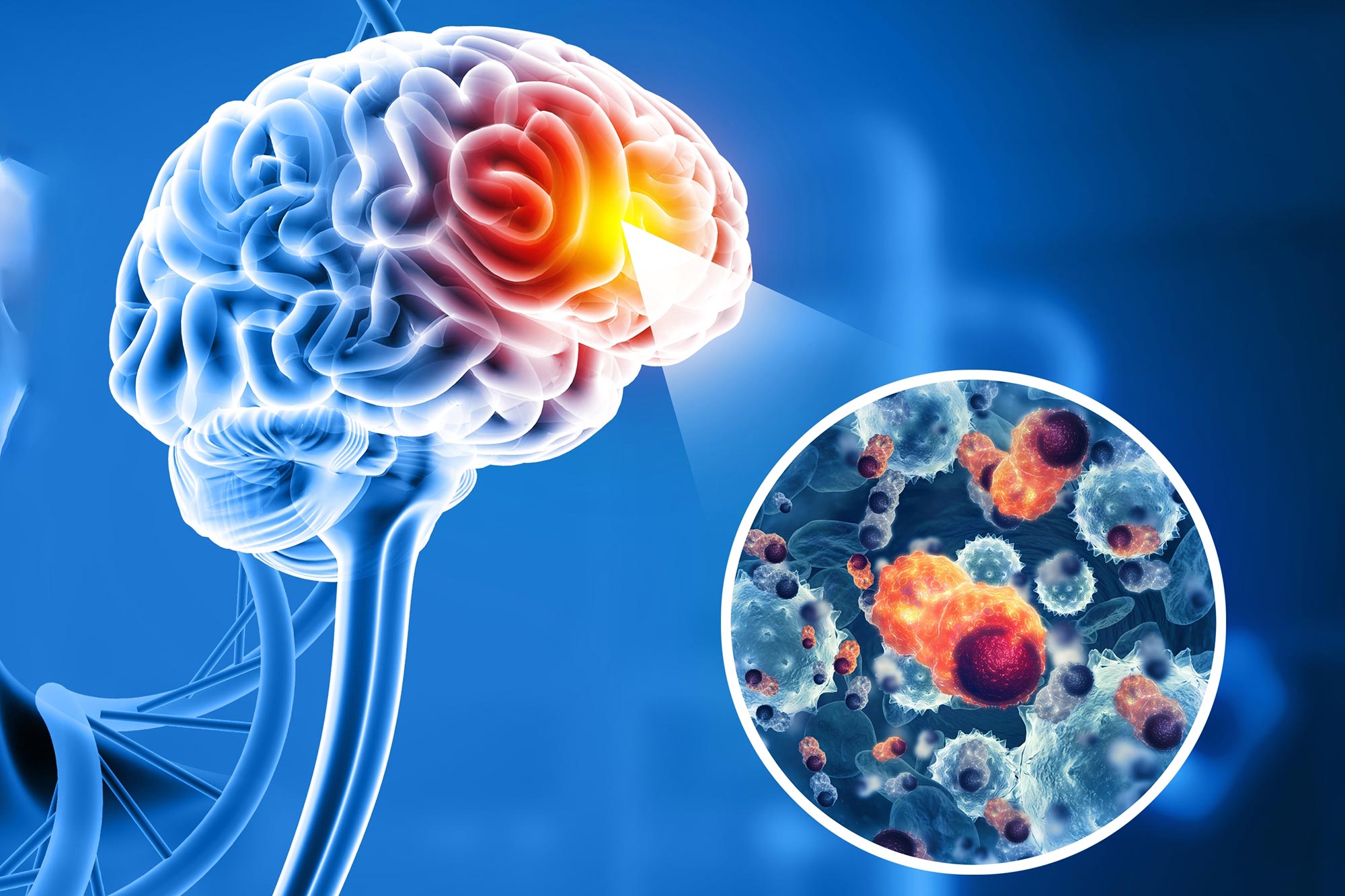
A blood stem cell molecule revealed how some childhood brain tumor mutations disrupt CoREST and led researchers to existing drugs worth testing further.
A molecule used to help blood stem cells multiply has led researchers to an unexpected connection with childhood brain cancer. Scientists at Lund University found that the molecule produces a cellular effect similar to one caused by genetic mutations in a subgroup of aggressive brain tumors in children.
The connection could help researchers understand how these tumors develop and has also pointed them toward existing drugs that may be worth investigating as future treatments.
The molecule, called UM171, was developed by researchers at Université de Montréal. In stem cell research, it is used to increase the number of blood stem cells outside the body while helping them remain stem cells rather than mature into blood cells. Producing more of these cells can provide enough for transplantation in people with serious blood diseases.
Blood stem cell research reveals a cancer link
Previous research, including work at Lund University, showed that UM171 acts through a protein called KBTBD4. This causes an important group of proteins in the cell, known as CoREST, to break down.
That mechanism caught the researchers’ attention because genetic mutations involving KBTBD4 can produce a similar effect in some childhood brain tumors.

“The same structure in the cell is also affected by mutations in the KBTBD4 gene, genetic changes that occur in a subgroup of aggressive brain tumors in children. Although the causes differ, the result is the same — the structure breaks down,” says Agatheeswaran Subramaniam, researcher at Lund University.
Some of these tumors are medulloblastomas, the most common malignant brain tumor in children. About 15 to 20 children in Sweden develop medulloblastoma each year.
Medulloblastoma belongs to a group called embryonal brain tumors. These cancers are thought to develop when immature cells in the growing brain fail to mature normally and instead continue dividing. Tumors associated with KBTBD4 mutations are particularly difficult to recreate in the laboratory because they arise early in brain development.
Cancer mutations keep cells stem-like
Although UM171 and the cancer-associated mutations both disrupt CoREST, there is an important difference. The molecule’s effect is temporary, while the mutations can cause a lasting shortage of CoREST and leave cells in a stem cell-like state.
“It is striking that a small molecule and genetic mutations lead to the same effect in the cell. But while the molecule has a temporary effect, the mutations instead lead to a long-term shortage of CoREST, meaning that the cells remain in a stem cell-like state. This may contribute to the development of embryonal tumors,” says Rohit Sivaprasad, doctoral student at Lund University.
Existing drugs counter the mutations in lab tests
That similarity gave researchers a way to investigate whether drugs might counteract the effects of the KBTBD4 mutations. In a large-scale drug screen, they identified a group of drugs called HDAC inhibitors that did so.
HDAC inhibitors affect gene activity inside cells. Because drugs in this class are already approved for other uses, the researchers describe the approach as drug repurposing, which means investigating an existing drug for a different disease.
The finding points to a possible path toward future treatment, but it remains at an early stage. The experiments were conducted in the laboratory using blood stem cells, not medulloblastoma tumors, so researchers still need to determine whether the drugs work against the tumors themselves.
“What is fascinating about research is that sometimes you find a fundamental mechanism that can help answer several different clinical questions. This study was carried out in the laboratory using blood stem cells. The next step is to test whether these drugs work in medulloblastoma tumors,” concludes Agatheeswaran Subramaniam.
Reference: “Cancer-associated KBTBD4 mutations induce differentiation defects and confer a unique therapeutic vulnerability” by Rohit Sivaprasad, Kristijonas Žemaitis, David Linfeldt, Sudip Ghosh, Anne de Snaijer, Mattias Magnusson, Fredrik Ek, Jenny Hansson and Agatheeswaran Subramaniam, 10 August 2026, Cancer Gene Therapy.
DOI: 10.1038/s41417-026-01068-x
Never miss a breakthrough: Join the SciTechDaily newsletter.
Follow us on Google and Google News.