
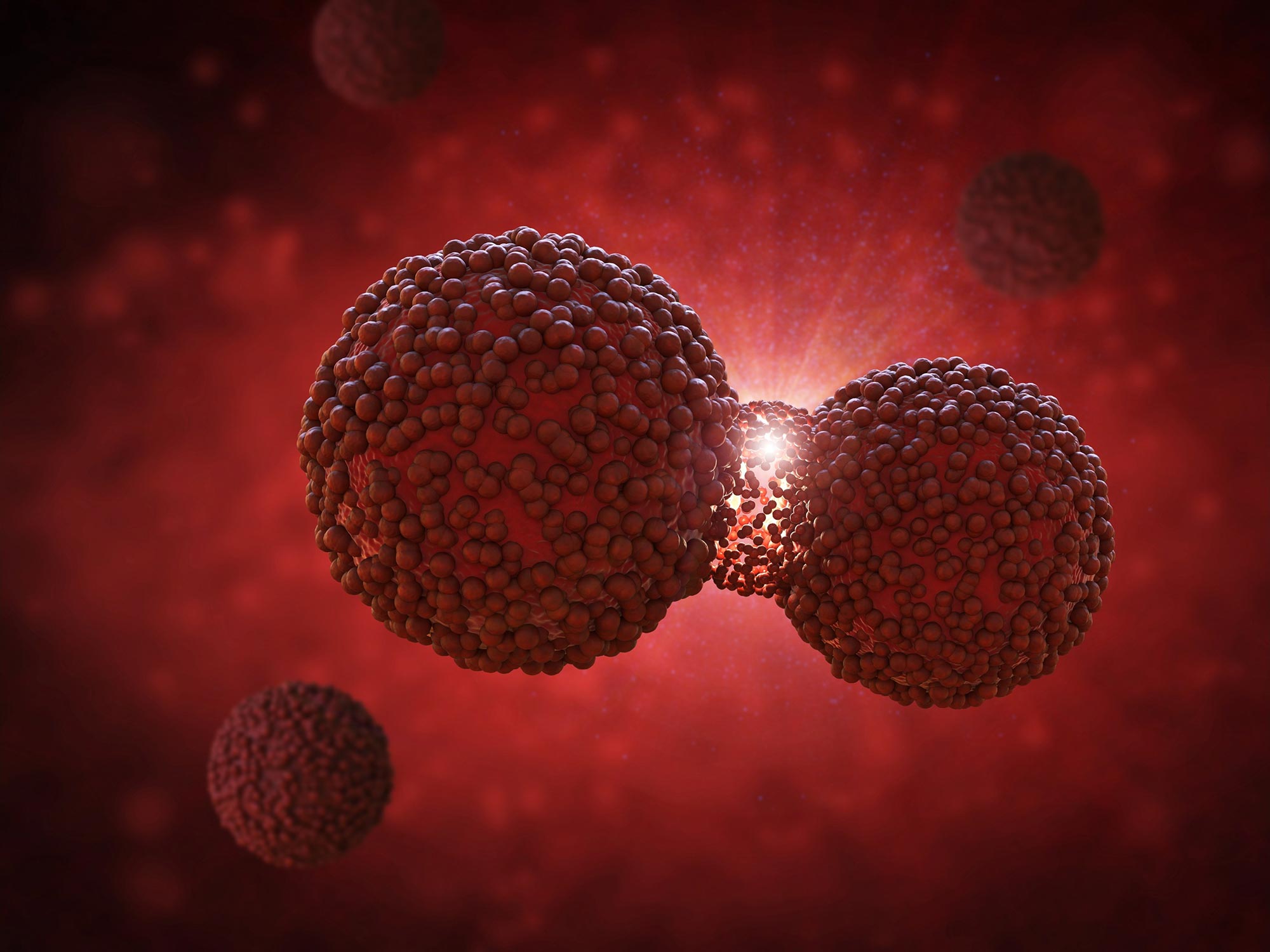
A tiny faction of pancreatic cancer cells can turn its surroundings into an immune-safe zone, protecting neighboring tumor cells along with itself.
Researchers at the Icahn School of Medicine at Mount Sinai have uncovered how rare groups of pancreatic cancer cells reshape their immediate surroundings to keep immune cells away. Disrupting these localized defenses slowed tumor growth and helped immunotherapy work more effectively in preclinical models, revealing a possible way to weaken one of cancer’s most stubborn forms.
The findings, published in Nature, center on fibrin, a mesh-forming protein best known for helping blood clots and wounds heal. Certain pancreatic cancer cells appear to exploit this repair system, stabilizing fibrin around themselves and creating protected neighborhoods that shelter nearby cancer cells as well.
How Pancreatic Tumors Shut Out Immune Cells
Pancreatic ductal adenocarcinoma has a five-year survival rate of about 13 percent. While immunotherapies have transformed the treatment of several cancers, most pancreatic tumors remain resistant. Their dense surroundings contain scar-like tissue and immune-suppressing cells that can block T cells from reaching malignant cells or leave the T cells too exhausted to attack.
“Pancreatic cancer has remained one of the most difficult cancers to treat because it is exceptionally good at shielding itself from the immune system,” said Brian D. Brown, PhD, Mount Sinai Professor of Genetic Engineering, Icahn School of Medicine at Mount Sinai, and senior author of the study. “We found that a surprisingly small population of cancer cells can organize local environments that suppress immune responses and protect not only themselves but neighboring cancer cells as well. If we can disrupt these protective niches, we may be able to make immunotherapy more effective for patients.”
To examine how different cancer cell populations influence their surroundings, the researchers used Perturb-map, a spatial genomics platform developed at Mount Sinai. The technology combines gene editing, molecular barcodes, and detailed imaging to show where genetically distinct tumor cells grow and which immune cells gather around them. This allowed the team to study the cellular diversity found within tumors rather than treating every cancer cell as biologically identical.
The analysis showed that cancer cells begin reorganizing their local immune neighborhoods before particular clones become dominant. This suggests that some cells gain an advantage not simply by growing faster, but by changing the environment around them in ways that help them survive.
Two Proteins Build A Fibrin Barrier
Two proteins emerged as major organizers of these protected areas: PAI1 and PAI2. Both interfere with enzymes that normally help break down fibrin. By slowing that removal process, the proteins allow a fibrin-rich framework to accumulate around the cancer cells.
That framework attracts and retains macrophages, immune cells that can either support or restrain inflammation depending on the signals they receive. Inside these tumor niches, the macrophages adopt immune-suppressing behavior and help exclude cancer-killing T cells.
The discovery may also illuminate pancreatic cancer’s connection to dangerous blood clots, including deep vein thrombosis. The same pathway that preserves fibrin around a tumor could contribute to excessive clotting elsewhere, linking immune escape with a well-known complication of the disease.
A Few Cells Reshape The Whole Neighborhood
In laboratory models, a population containing only 5 percent PAI1-producing pancreatic cancer cells was enough to increase immune-suppressing macrophages and reduce activated T cells nearby. The protection extended beyond the cells producing the protein to neighboring cancer cells.
“We discovered that immune suppression isn’t spread evenly throughout a pancreatic tumor,” said Chiara Falcomatà, PhD, postdoctoral fellow at the Icahn School of Medicine at Mount Sinai and first author of the study. “Instead, small groups of cancer cells create localized neighborhoods that protect themselves and nearby cancer cells from immune attack. Understanding how these protective niches form gives us new opportunities to target them therapeutically.”
When the researchers deleted the genes responsible for PAI1 or PAI2, tumor burden in mice fell by more than half. The altered tumors contained more than twice as many CD8 T cells, along with substantially more activated cancer-killing T cells and fewer terminally exhausted ones.
Dismantling the Tumor’s Defenses
Removing either gene also made pancreatic tumors more responsive to anti-PD-1 immunotherapy, a treatment designed to release a molecular brake on T cells. In one mouse experiment, combining anti-PD-1 treatment with the loss of PAI1 or PAI2 nearly doubled median survival from 24 to 47 days.
The team then tested PAI-039, an experimental drug that inhibits PAI1. Combining the drug with anti-PD-1 therapy extended survival in two pancreatic cancer models, even though anti-PD-1 treatment produced little benefit on its own. Blocking the interaction between fibrin and macrophages yielded similar results, suggesting that the pathway could be interrupted at several points.
A Pathway With Potential Beyond Cancer
“Our findings suggest there may be several opportunities to interrupt this pathway,” Dr. Brown said. “Whether by targeting the proteins produced by cancer cells, the fibrin-rich environment they create, or the immune cells recruited into these regions, each approach offers a potential strategy for making pancreatic tumors more vulnerable to immune attack.”
“Our findings also add to a growing understanding of the connection between the clotting system, wound healing, and macrophage control in many different diseases and even aging,” added Dr. Brown. “This goes beyond cancer. PAI1 levels have a very strong association with aging, and a similar fibrin-macrophage axis has been implicated in neurodegenerative diseases such as Alzheimer’s disease. Developing ways to target this axis may have broad therapeutic applications.”
The study combined several preclinical models with spatial transcriptomics and imaging of patient tumors. Those human samples revealed similar immune-suppressing niches around rare pancreatic cancer cells expressing the genes for PAI1 and PAI2, but the treatment experiments were conducted in animals. Further research must determine whether dismantling these niches can be done safely and effectively in people.
Reference: “A serpin–myeloid axis in pancreatic cancer heterogeneity and immune evasion” by Chiara Falcomatà, Maximilian M. Schaefer, Bhavya Singh, Divya Chhamalwan, Alexander Tepper, Sebastian R. Nielsen, Hunter T. Potak, Maxime Dhainaut, Gurkan Mollaoglu, Matthew D. Park, Miriam Merad, Alessia Baccarini and Brian D. Brown, 9 September 2026, Nature.
DOI: 10.1038/s41586-026-11002-8
Never miss a breakthrough: Join the SciTechDaily newsletter.
Follow us on Google and Google News.