
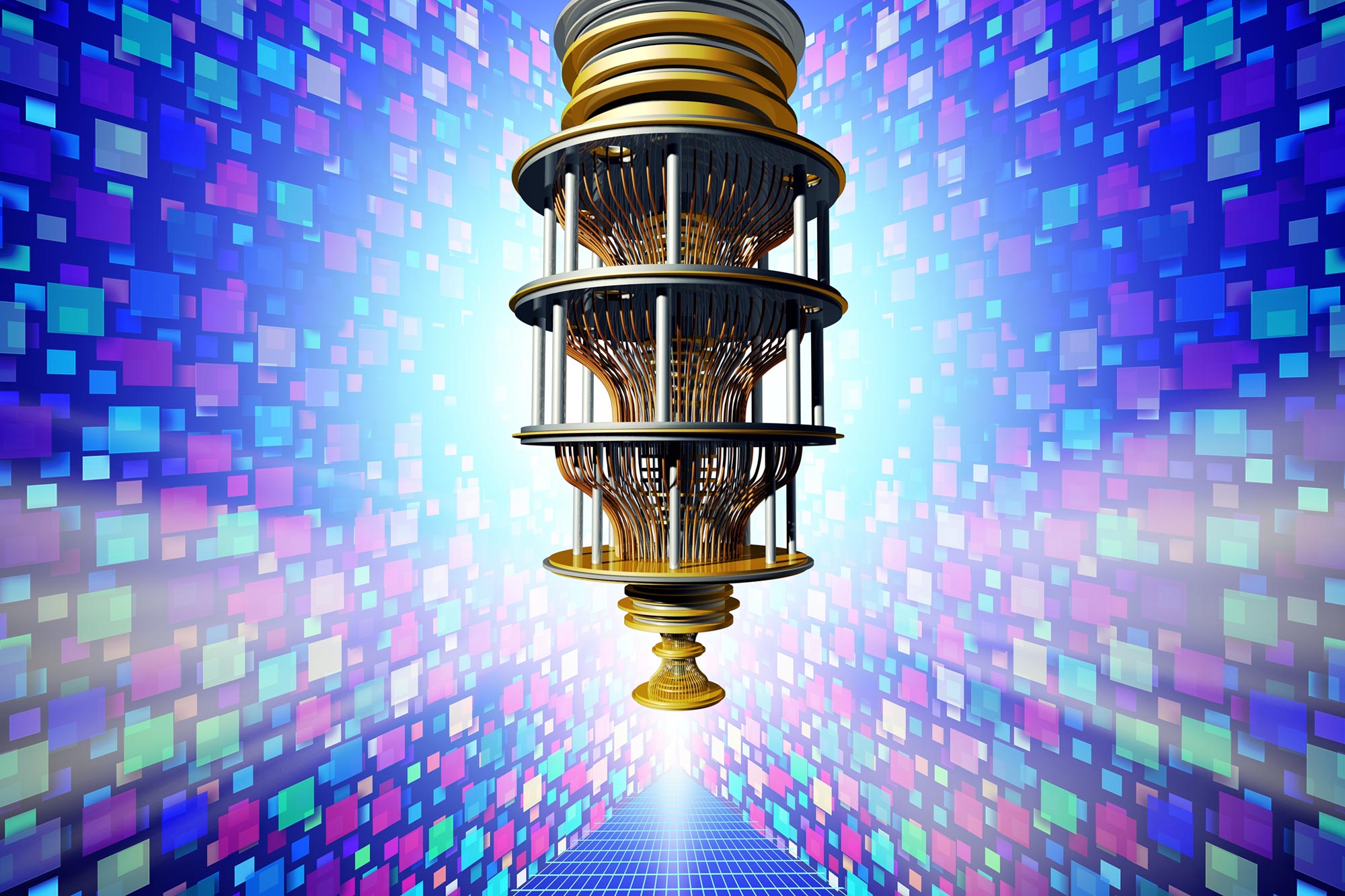
Physicists at the University of Vienna have discovered magnons with lifespans 100 times longer than previously measured.
For decades, magnons have shown enormous promise for quantum technologies, but one critical limitation has kept them from practical use: they disappear almost as soon as they form.
Now, an international team of physicists led by Andrii Chumak at the University of Vienna has increased magnon lifetimes by nearly two orders of magnitude, from just a few hundred nanoseconds to as long as 18 microseconds.
The researchers also discovered that this limit is set not by fundamental physics, but largely by material quality, pointing to a clear path toward even longer-lived magnons. The breakthrough could ultimately help enable highly compact quantum computers, potentially no larger than a 1-cent coin. The findings were published in Science Advances.
Why Magnons Matter
Magnons move through magnetic solids as small waves in magnetization, similar to ripples spreading across water after a stone is dropped into a pond. Unlike photons, which can move through empty space or optical fibers, magnons travel inside solid magnetic materials.
Their wavelengths can shrink to the nanometer scale, meaning magnonic circuits could, in principle, be built on chips no larger than those already used in today’s smartphones. Because a magnon is an excitation inside a solid, it also naturally interacts with many other fundamental quasiparticles, including phonons and photons. That makes magnons promising building blocks for hybrid quantum systems and quantum metrology.
The central challenge has been their short lifetime. This is the span during which magnons can reliably carry quantum information, and previous experiments reached only a few hundred nanoseconds at best. That was far too brief for practical quantum computation. The Vienna-led group has now reported a major step forward, measuring magnon lifetimes of up to 18 microseconds, almost 100 times longer than any previously observed value. At that timescale, magnons become more than brief signals. They begin to resemble long-lived, dependable carriers of quantum information, similar in function to the superconducting qubits used in many leading quantum processors today.
Extending Magnon Lifetimes
The breakthrough came from combining two approaches. First, the group used short-wavelength magnons rather than the conventional uniform type. These short-wavelength magnons are naturally less affected by defects on the crystal surface, the same defects that had shortened magnon lifetimes in earlier experiments. Second, ultra pure spheres of yttrium iron garnet (YIG) were cooled in a mixed-phase cryostat to just 30 millikelvin, only a tiny fraction of a degree above absolute zero. At such extreme temperatures, the thermal processes that normally destroy magnons are effectively frozen out.
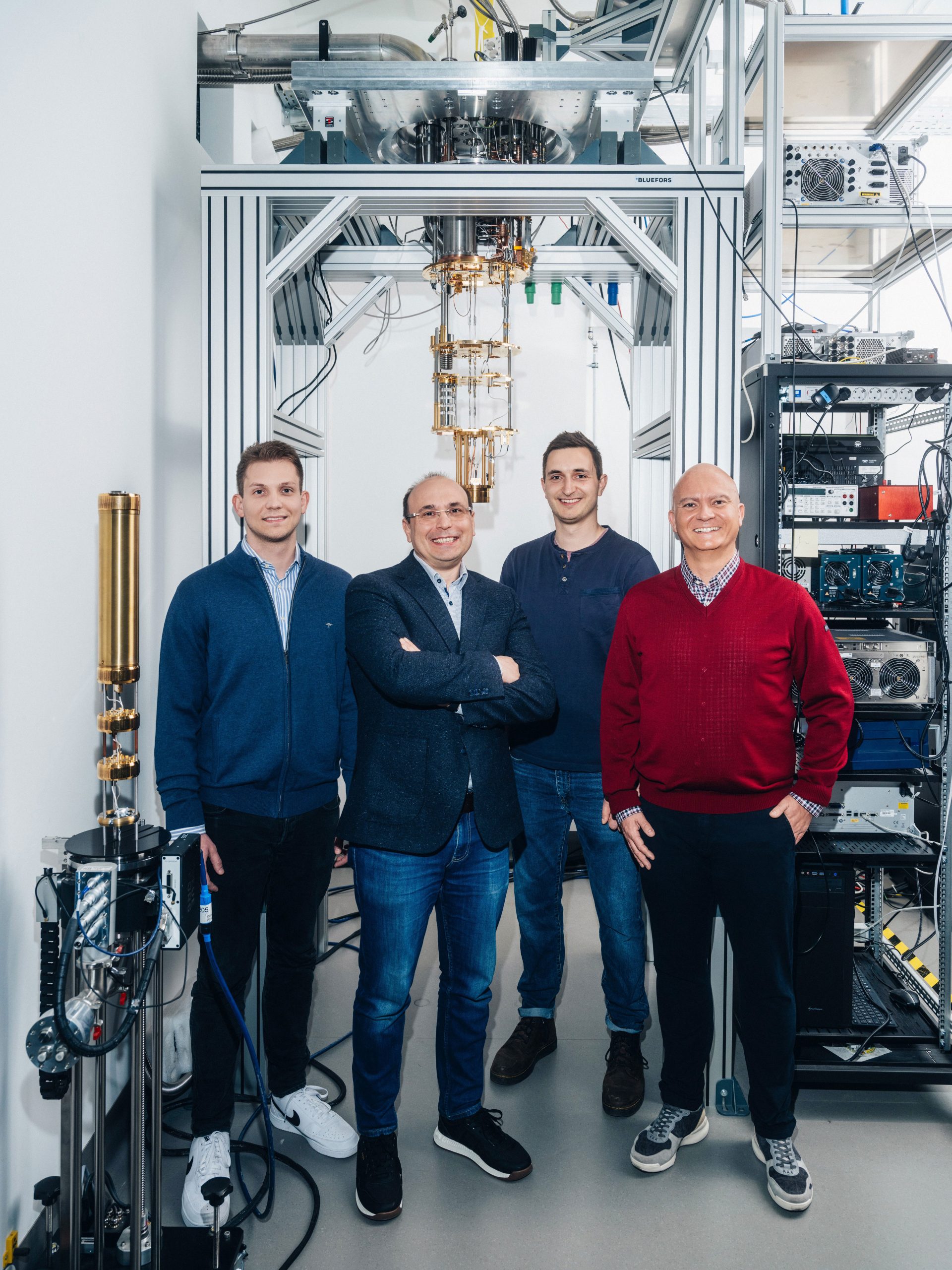
The most important finding was that the remaining limit on magnon lifetime does not come from a basic law of nature. Instead, it comes from tiny trace impurities in the crystal. Three spheres with different levels of purity were tested, and the pattern was clear: purer material allowed magnons to survive longer. Even the least pure sample exceeded all earlier records. That means the next advances may depend on better materials rather than new physics, leaving a clear path for further progress.
What this means for quantum technology
With lifetimes reaching 18 microseconds, magnons could shift from lossy intermediate links into durable quantum memories and low-loss communication channels on a chip. They may be able to connect hundreds of qubits along one shared pathway, creating a long-sought ‘quantum bus’ that could provide a missing piece for scalable quantum computers.
Because magnons exist in a solid and can couple to many different quantum systems, they could also act as universal translators in hybrid quantum architectures, helping technologies communicate that otherwise would not easily connect.
Reference: “Ultralong-living magnons in the quantum limit” by Rostyslav O. Serha, Kaitlin H. McAllister, Fabian Majcen, Sebastian Knauer, Timmy Reimann, Carsten Dubs, Gennadii A. Melkov, Alexander A. Serga, Vasyl S. Tyberkevych, Andrii V. Chumak and Dmytro A. Bozhko, 1 May 2026, Science Advances.
DOI: 10.1126/sciadv.aee2344
This research was funded in whole or in part by the Austrian Science Fund (FWF) project no. 10.55776/I6568 (A.V.C.) and Deutsche Forschungsgemeinschaft (DFG, German Research Foundation)—TRR 173—268565370 Spin+X (Projects B01 and B04) (A.A.S.)
The study is based on an experiment conducted by Rostyslav Serha as part of his doctoral thesis.
Never miss a breakthrough: Join the SciTechDaily newsletter.
Follow us on Google and Google News.
1 Comment
Thanks for the information.