
A beetle genus named after One Piece may have uncovered a missing chapter in the story of beetle evolution.
A newly discovered group of beetles has stretched the rules of taxonomy and earned a name inspired by one of anime’s most recognizable heroes.
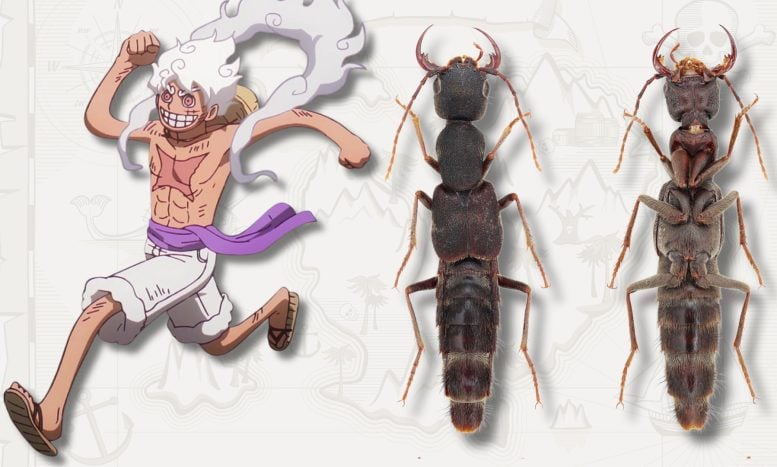
Scientists have named the genus Luffy after Monkey D. Luffy, the rubber-bodied protagonist of the manga and anime series One Piece. The choice was not based on popularity alone. These rove beetles have exceptionally long, slender mandibles, antennae, and mouthparts that give them a distinctly stretched appearance.
The resemblance immediately brought to mind Luffy’s ability to lengthen and reshape his body. Researchers formally described the genus and its first two known species in the peer-reviewed journal ZooKeys.
Two Species With One Piece Connections
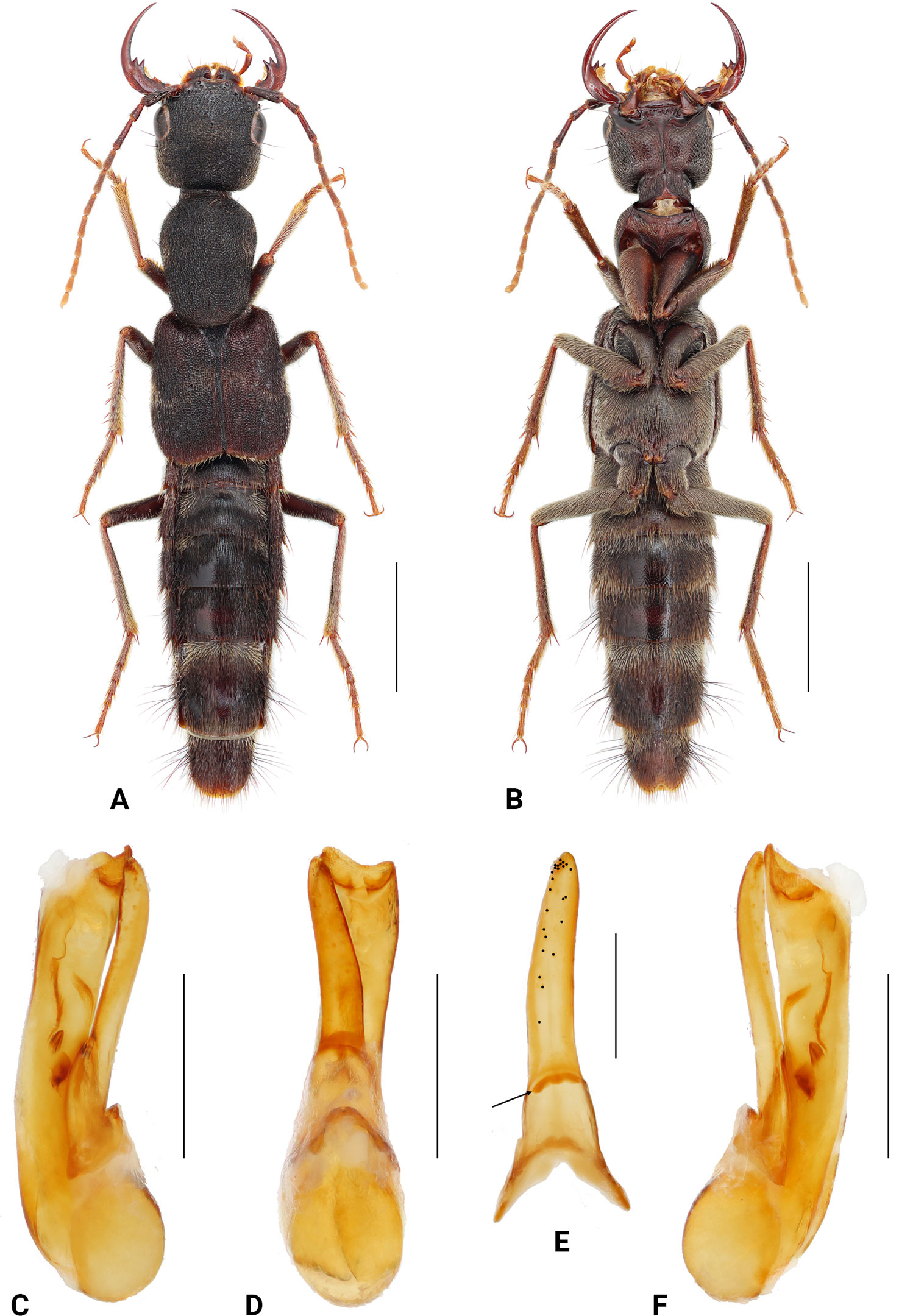
The genus currently includes Luffy schillhammeri and Luffy nika, two beetles found in the forests of Southeast Asia.
Luffy schillhammeri was collected in broadleaf forests in China’s Yunnan Province. Its species name honors Dr. Harald Schillhammer of the Natural History Museum Vienna, who has made major contributions to the study of rove beetles.
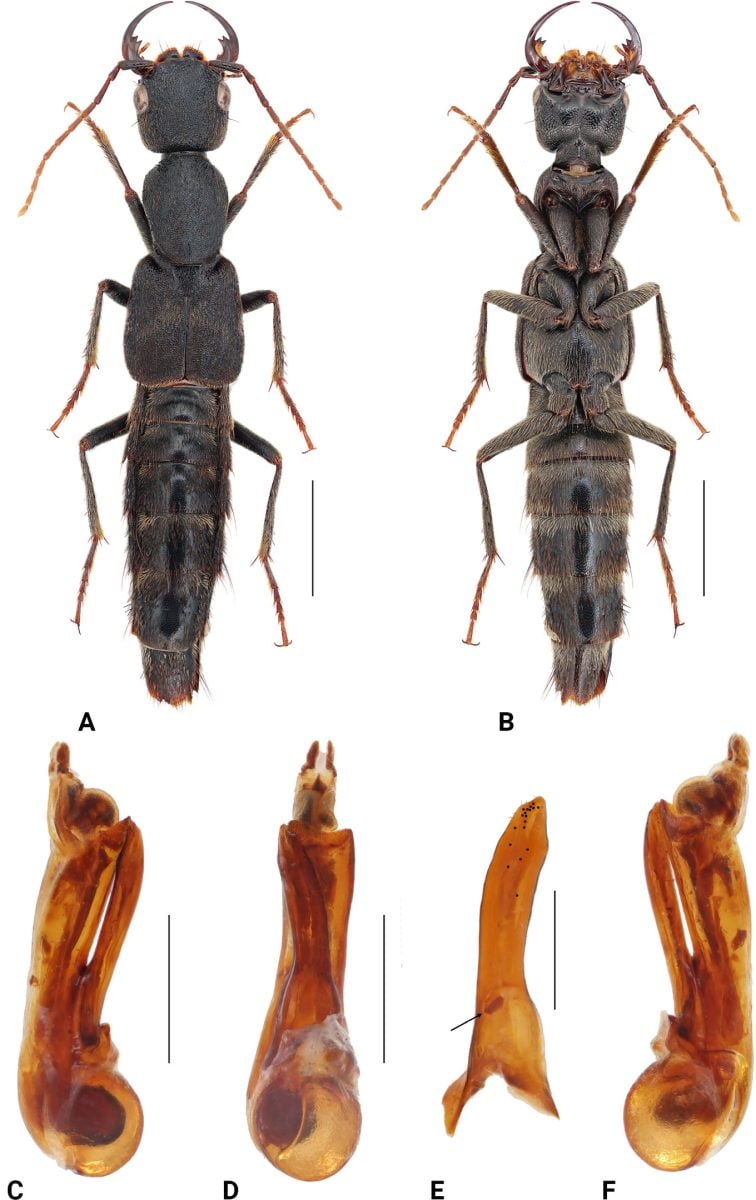
The second species, Luffy nika, was discovered in Louang Namtha in northern Laos. Its name refers to Luffy’s Devil Fruit awakening, “Hito Hito no Mi, Model: Nika” (also known as Gear 5).
That connection extends to the beetle’s appearance. Bands of white hair cover its wing cases and much of its body, echoing the white, smoke-like form associated with Luffy’s Nika transformation.
An Anime Name With Scientific Importance
Although the names may attract anime fans, the discovery addresses a serious question about beetle evolution.
Fang-Shuo Hu and Alexey Solodovnikov of the Natural History Museum of Denmark reviewed the known genera within the Ocypus group, a collection of closely related rove beetles. Their analysis also included Acupronotes, Apostenolinus, and Staphylinus, groups whose positions in the beetle family tree have remained uncertain or disputed.
Taxonomists do more than assign names to unfamiliar organisms. They compare anatomical traits to determine how species are related and where they belong within the tree of life. In this case, the researchers examined numerous specimens and focused on small but informative differences in the beetles’ jaws, mouthparts, and other structures.
Where Luffy Fits in Beetle Evolution
The work helped clarify the traits that define the “Eucibdelus lineage” (such as dorsal ridge teeth on the left mandible and a completely sclerotized labrum).
Luffy presents an unusual combination. Its left mandible has the characteristic dorsal ridge teeth, but its labrum is not completely sclerotized. It also possesses several features not seen together in the other groups.
Those mixed characteristics place the genus close to a major evolutionary dividing point. The researchers propose that Luffy is the sister group of the entire Eucibdelus lineage, meaning the two likely descended from a shared ancestral branch before following separate evolutionary paths.
“This genus exhibits a unique combination of characters intermediate between the Eucibdelus lineage and other members of the Ocypus group,” the researchers note in their study.
Pop Culture Brings Taxonomy to Life
The discovery therefore does more than add two names to the catalog of life. It fills a missing position in the classification of these beetles and gives scientists a clearer view of how the subtribe Staphylinina evolved.
Names inspired by popular culture can also give obscure organisms an audience they might never otherwise reach. In this case, the connection to One Piece offers an accessible entry point into taxonomy, a field essential for documenting biodiversity and recognizing species before they disappear.
Reference: “Luffy gen. nov., a new genus of Staphylinina (Coleoptera, Staphylinidae, Staphylininae), remarkable for understanding the Eucibdelus lineage” by Fang-Shuo Hu and Alexey Solodovnikov, 5 June 2026, ZooKeys.
DOI: 10.3897/zookeys.1281.198593
Never miss a breakthrough: Join the SciTechDaily newsletter.
Follow us on Google and Google News.
2 Comments
Naming animals or plants after contemporary fiction is childish and lacking insight. Names need to be relevant to future generations. Unless it is known that a particular cartoon character will be remembered in the next generations, the name is impractical and of little meaning to anyone other than those who follow that particular fiction. Life is real. Real knowledge is on a different channel.
If one of the best-selling book series in history cannot be remembered in the next generations. The series has already sold more than 600 million copies. The story is not over yet; the numbers are still climbing. If this kind of book cannot be remembered, then nothing can be remembered. If you don’t know, that is probably your problem. Sorry about that.