
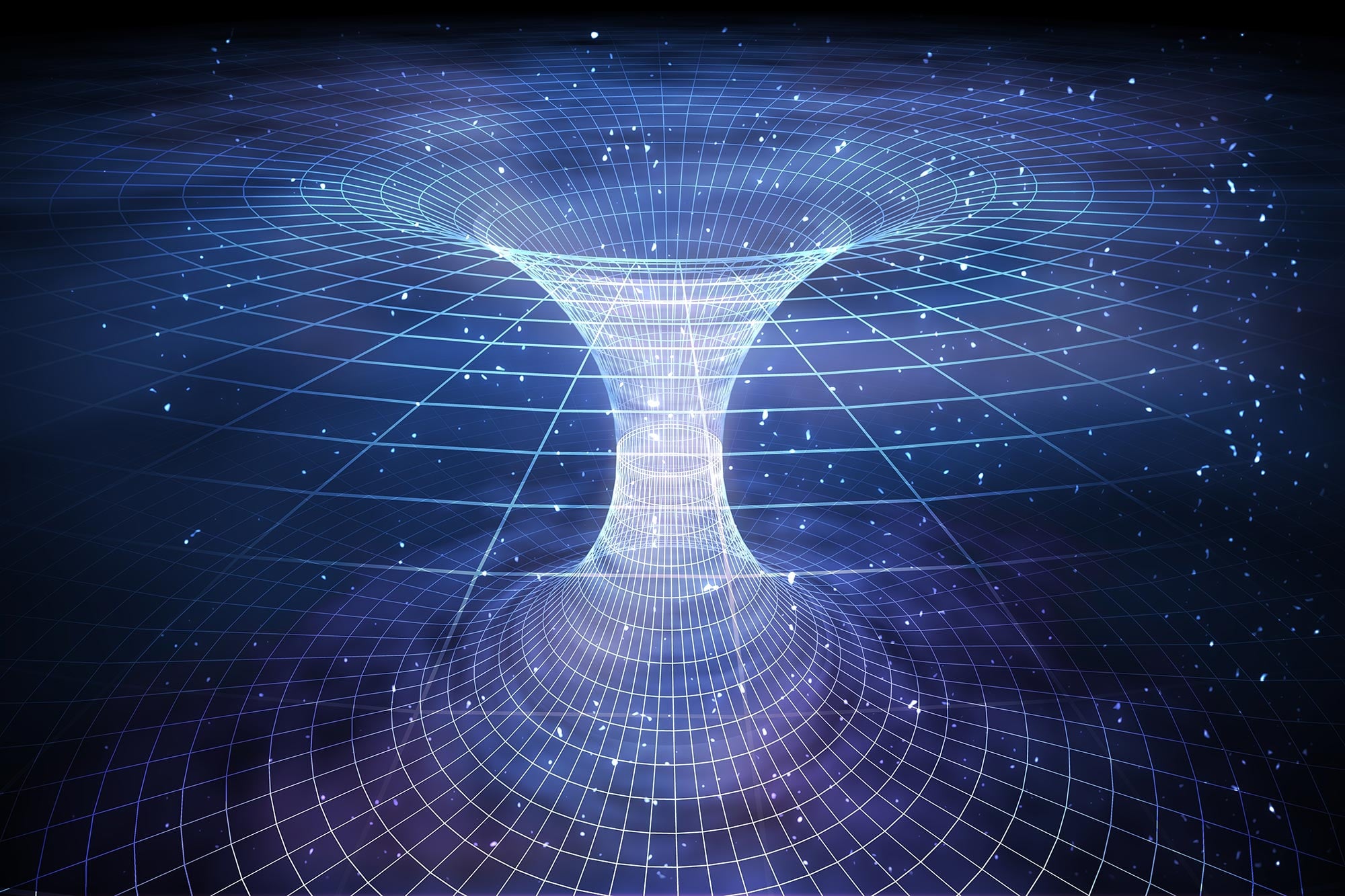
New research examines how gravity can be reconciled with thermodynamics through the Gravity from Entropy theory.
Galaxies, stars, planets, and life emerged as the Universe expanded and became more complex. Yet the second law of thermodynamics says that the total entropy of an isolated system should rise over time, creating a fundamental question: how can increasing cosmic organization coexist with a law commonly associated with growing disorder?
Einstein famously stated that “The second law of thermodynamics occupies a unique position among the laws of Nature,” expressing his belief that it ranks among physics’ most fundamental and durable principles. According to the second law, the total entropy within an isolated system tends to increase as time passes.
Cosmology therefore faces a persistent puzzle. The early Universe is generally thought to have begun in a low-entropy state before moving toward higher entropy. During that same history, however, matter assembled into increasingly elaborate structures, eventually producing galaxies, stars, planets, and life. Explaining how this order arose while entropy continued to grow remains an unresolved challenge.
A theory reframes the entropy puzzle
In a paper published in Physical Review D, Queen Mary University of London mathematician Professor Ginestra Bianconi examines the problem through Gravity from Entropy (GfE), a quantum gravity theory that uses statistical mechanics to derive gravity from the microscopic degrees of freedom within spacetime geometry.

Her analysis of the theory’s thermodynamic behavior finds that the Universe’s total entropy increases with time while its entropy per unit volume declines. This distinction leaves room for new explanations of how organized structures could develop locally even as overall entropy rises.
The idea that gravity and thermodynamics are closely connected dates to work by Jacob Bekenstein and Stephen Hawking in the 1970s. Their research established that black holes have entropy and release thermal radiation, pointing to a deeper relationship among spacetime, information, and heat.
Gravity emerges from spacetime information
Gravity from Entropy (GfE) describes gravity as emerging from an information-theoretic tension between the physical spacetime metric and another metric produced by matter fields and curvature. A metric is the mathematical structure used to describe distances and geometry within spacetime.
This interpretation appears in the GfE Lagrangian through the Quantum Geometric Relative Entropy (QGRE), which measures the relationship between the two metrics. At low energies and weak curvature, the theory’s gravitational equations reduce to General Relativity. Under stronger conditions, however, they begin to differ.
Outside that weak limit, the equations also generate a dynamical dark energy term. Because this contribution changes over time, it could potentially produce observations that allow physicists to test the theory.
Expansion separates total and local entropy
Professor Bianconi explored the thermodynamics of GfE in Friedmann–Robertson–Walker cosmological spacetimes, mathematical models used to describe an expanding and broadly uniform Universe.
The results indicate that the local geometric degrees of freedom follow a first law of thermodynamics. Within this description, the dynamical dark-energy term acts as internal energy, while the Quantum Geometric Relative Entropy (QGRE) represents local entropy per unit volume. Effective forms of temperature and pressure also arise naturally, suggesting that the quantum state behind GfE may have an inherent thermal character.
The local volume element defined by the physical metric plays a central role. As cosmic expansion increases this volume, the total entropy rises, but the amount of QGRE within each unit of volume falls. This separation between total and local entropy gives the theory its distinctive thermodynamic behavior.
A possible bridge remains theoretical
The framework suggests that gravity and spacetime may be fundamentally connected to both thermodynamics and information. If developed further, it could offer a new way to investigate relationships among gravity, quantum theory, cosmology, and the emergence of complexity.
The proposal remains at an early theoretical stage, but Professor Bianconi argues that it could help address long-standing divisions among general relativity, thermodynamics, quantum mechanics, and cosmology.
Hence, “This work reveals how the Gravity from Entropy theory can tackle the challenging question to reconcile the second principle of thermodynamics with the emergence of complexity in our Universe. These results may open new avenues for investigating the long-standing problem of reconciling the foundations of cosmological irreversibility, the emergence of complex structures, and ultimately life, with fundamental gravitational dynamics,” says Professor Bianconi.
Reference: “Thermodynamics of the gravity from entropy theory” by Ginestra Bianconi, 16 July 2026, Physical Review D.
DOI: 10.1103/26kn-thgp
Never miss a breakthrough: Join the SciTechDaily newsletter.
Follow us on Google and Google News.
29 Comments
The emperor has no clothes!
A rational theory of gravity has been formulated in my self-published book Building Blocks of Physical Reality at Barnes and Noble. The values of mass are rational numbers in order to satisfy four equivalent gravity equations
The laws of gravity were derived by Verline on 2010.
Verlinde in 2010.
What’s brilliant about treating space as a dynamic geometric medium is how naturally it resolves the entropy paradox without needing abstract math tricks.
In a standard fixed grid, you’d expect matter and energy to constantly diffuse into disorder. But as global space expands, the geometric volume grows faster than local energy can diffuse. This creates a mechanical buffer:
Expanding Volume: The baseline background opens up, creating high-clearance pathways across the grid.
Localized Compression: Instead of colliding into a chaotic heat jam, matter and energy packets are free to cluster along local pressure gradients, forming highly organized structures like galaxies and stars.
Equilibrium Relief: The excess thermal chatter from these dense clusters is easily shed into the expanding surrounding void.
Entropy does not mean that there cannot be areas of highly ordered structure; even increasing order within those areas. We tend to misjudge the vastness of spacetime totality. Even within the observable horizons of our universe, it’s not really that big.
“Not really that big”?
I’ll note that 90% of the observable Universe is unreachable from Earth even if you left today and could travel indefinitely at the speed of light.
Measuring led to relativity – which led to General Relativity – where this gal says a weaker GR has led to ever denser, stronger QGRE. Swinging from a baseline to higher degrees of scale. In concert with all of science, the true baseline is neglected; which is: humans go from what they were told to pursue research without reconnoiter. All wrong turns are the result.
What start as simple squiggles is never the subject that the squiggles are meant to represent. Careers go by while reality snickers.
May, could, might is surely a great way to explain what you obviously don’t understand
Rational theory of gravity together with the EED Hypothesis predict the fusion of a proton with an electron into a neutron at low plasma temperature and pressure but at high velocities: protons accelerated to 5% lightspeed while electrons accelerated to near lightspeed.
Existential Energy Dimensions (EEDs) replace spacetime dimensions in modern physics. EED Hypothesis postulates two distinct Hopf links as the building blocks of physical reality for a scalar quantum field as the square of energy. At zeroth EED, form the quantum vacuum fluctuations. At 1st EED, form gluons, neutrinos, electric and magnetic fields. At 2nd EED, form 2 by 2 symmetric Hadamard matrices. At 3rd EED, form 3 by 3 symmetric Hadamard matrices. Dark matter and dark energy are formed of 2 by 3 or 3 by 2 Hadamard matrices. All these forms are used to build higher EEDs.
EED Hypothesis can postdict the dimensionless mass ratio of proton over the electron within a percent of experimental value. For this to work both proton and electron must exist at the 6th EED. By the same method, free neutrons live at the 7th EED.
Probable EED of the muon is 27th EED. Probable EED of the tau lepton 64th EED. Probable EED of strange quark 95th EED
Probable EED of bottom quark 700th EED
Probable EED of charm quark 72nd EED
Probable EED of top quark is 984th EED
Photons can exist in different EEDs
Radio photons exist at the 2nd EED
IR photons exist at the 4th EED
Visible photons exist at the 6th EED
UV photons exist at the 8th EED
X-ray photons exist at the 12th EED
Gamma photons exist at the 16th EED
Higgs boson can exist in both odd and
even EEDs
In even EEDs give zero mass photons
In odd EEDs give minimum mass to
most elementary particles
The strong nuclear force manifested as the increase in EEDs while the weak nuclear force manifested as the decrease in EEDs.
The electromagnetic force manifested as the alternating states of odd EEDs and even EEDs. Electric fields exist in odd EEDs while magnetic fields exist in even EEDs.
The gravity force manifested as the sum or differences between the same EEDs. As matrices, only EEDs of the same orders can be added or subtracted together.
The scalar mass factor manifested as the products of the same EEDs or the products of 2×3 with 3×2 or the products of 3×2 with 2×3 Hadamard matrices. The former produces 2nd EED, the latter produces 3rd EED.
The SI unit for mass is the kilogram (symbol: kg) as detailed by the National Institute of Standard and Technology. In this sense, modern physics is partially based on a rational theory of gravity. However, Newton’s law of universal gravitation depends on two masses m1 and m2. If m1 exactly equal m2 then big G is identically zero. Sadly, the determination of G depends on the fact that m1 is not equal to m2. This limits the precise measurement of G.
In a Rational Theory of Gravity, the product of m1 and m2 is directly proportional to the sum or difference of m1 and m2 such that the proportionality constant is exactly 1 unit of mass. This is a true rational unit of mass.
Note that rationality is implied in the proportionality constant not on the arbitrary values of m1 and m2.
In Newton’s universal law of gravity, if m1 is equal to 1 kg and m2 is equal to 1 kg, the distance between them is 1 meter then the force of gravity is equal to big G, not zero, which contradict the premise of a Rational Theory of Gravity.
Since Newton’s law of universal gravitation is an inverse square law, gravity is inversely proportional to the square of the distance between m1 and m2. This contradicts the existence of dark matter and dark energy.
Starting with the 2nd EED, it can be mapped to form a concentric Hopf linkages. However, all EEDs greater than the 3rd, can be mapped to two distinct linkages: the 2-fold linkage and the 3-fold linkage. The former requires three concentric rings while the latter requires four concentric rings. One of these can represent the supersymmetric partner of the other. Moreover, EED is directly proportional to the spacetime curvature of GR. The Euclidean radius is inversely proportional to the radius of curvature of GR. All odd EEDs has a Hopf nucleus at its center.
The purpose of the Euclidean radii is to be able to draw the EED linkages on paper while the radii of curvature actually shrink toward zero approaching infinite curvature as the EEDs increase without bound as a spacetime singularity.
The fact that EED increases directly proportional to the spacetime curvature is the reason why elementary particles appear point-like.
The physical reality of distinct Hopf linkages is provided by a physical principle called Directional Invariance. This principle makes the tensorial nature of spacetime superfluous. In differential calculus these Hopf linkages represent infinitesimal torques as the time derivatives of the angular momenta. Since in QM, the angular momentum is a constant equals to Planck’s constant of action its time derivative is identically zero. This implies the existence of two opposite torques whose vector sum is zero representing two distinct Hopf links.
Mathematically speaking, each Hopf link is the scalar dot product of two infinitesimal torques representing the square of energy. Since torque is a pseudovector, A×B= -B×A where torque T=A×B or -T=-B×A. Hence, the scalar dot product of T1 and T2 gives two distinct forms of square of energy +E^2 and -E^2 representing two topologically distinct Hopf links.