
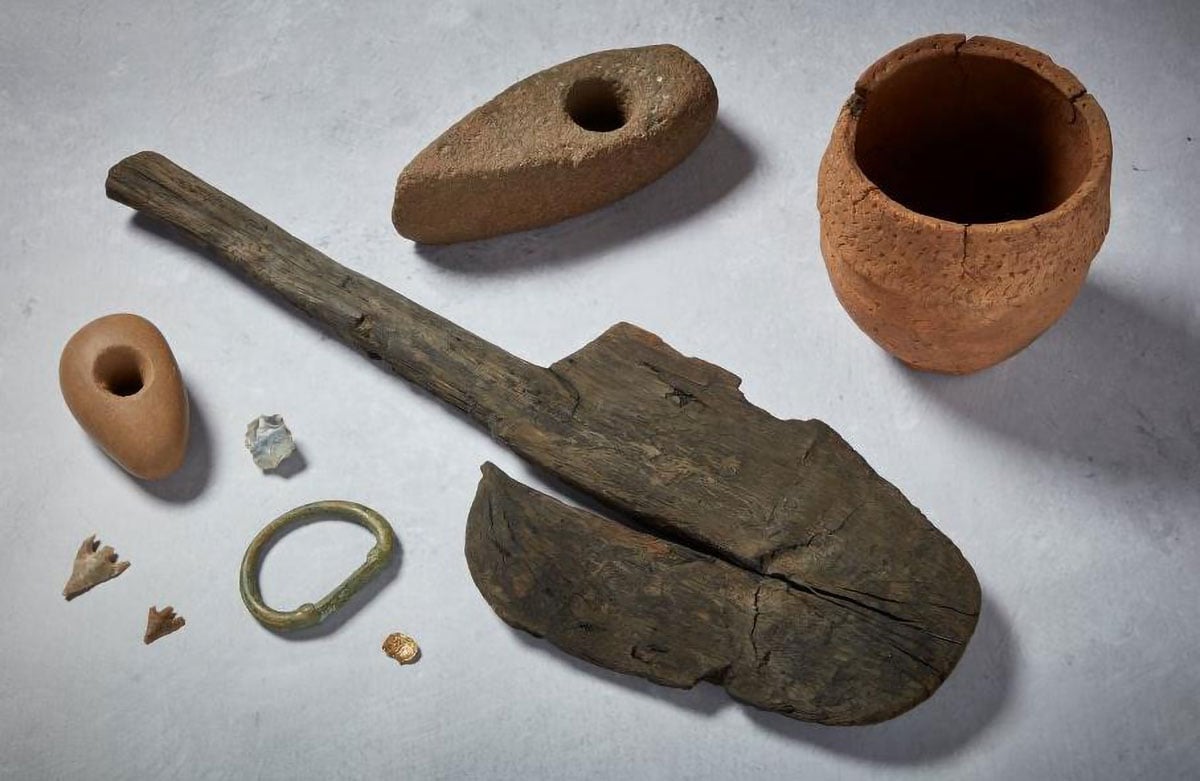
The exhibition reveals how prehistoric communities lived, adapted, and left traces across the Trent Valley.
Beneath the Trent Valley, artifacts, pollen, animal remains, and layers of sediment preserve evidence of communities that lived there thousands of years ago. A new exhibition at the University of Nottingham Museum brings those discoveries together, revealing how archaeological research is reshaping knowledge of one of Britain’s most important river landscapes.
Prehistoric Lives in the Trent Valley recently opened on July 24, 2026. Built on years of archaeological and paleoenvironmental research, the exhibition examines how prehistoric communities settled, survived, and adapted as the valley changed around them.
Through artifacts and environmental evidence, visitors can explore how the river influenced human life across thousands of years and how those communities left enduring marks on the landscape.
Landscape evidence deepens the human story
The exhibition was curated by Dr David Knight, Honorary Research Fellow in the Department of Classics and Archaeology and Head of Research at York Archaeology, along with York Archaeology’s Head of Geoarchaeology Dr Kristina Krawiec and Senior Researcher Dr Steve Malone. Their work emphasizes the value of interpreting archaeological discoveries alongside evidence from the surrounding natural environment.
Together, the curators bring decades of research into one of Britain’s most significant river systems, giving visitors an accessible view of the Trent Valley’s deep past.
Dr David Knight, Honorary Research Fellow in the Department of Classics and Archaeology and Head of Research at York Archaeology, said: “This exhibition provides an ideal opportunity to highlight a range of fascinating archaeological finds that have not previously been displayed. We hope that visitors will gain as a result a much deeper insight into the rich paleoenvironmental and archaeological heritage of the Trent Valley.”
Fragile remains reconstruct prehistoric life
By combining evidence from artifacts, sediments, pollen, animal remains and other environmental records, the experts are uncovering new insights into the daily lives of the valley’s earliest inhabitants, the landscapes they occupied and the ways in which these fragile remains have survived through time.
As well as celebrating the latest research, the exhibition demonstrates the value of protecting this unique archaeological resource, helping to ensure that the stories preserved beneath the Trent Valley continue to inform future generations.
Dr Clare Pickersgill, Keeper of the University of Nottingham Museum, said, “I am delighted that we can display this wonderful exhibition providing an insight into the Trent Valley and its inhabitants over this long period of time. We also look forward to welcoming visitors to our Festival of Archaeology event where they can find out more about prehistory.”
Visitors can examine the evidence firsthand
Prehistoric Lives in the Trent Valley, will be on display at the University of Nottingham Museum at Lakeside Arts, University of Nottingham, from Friday 24 July to Sunday 10 January 2027. Admission is free. Museum opening times are Thursday to Sunday, 12 noon to 4 pm.
Never miss a breakthrough: Join the SciTechDaily newsletter.
Follow us on Google and Google News.