
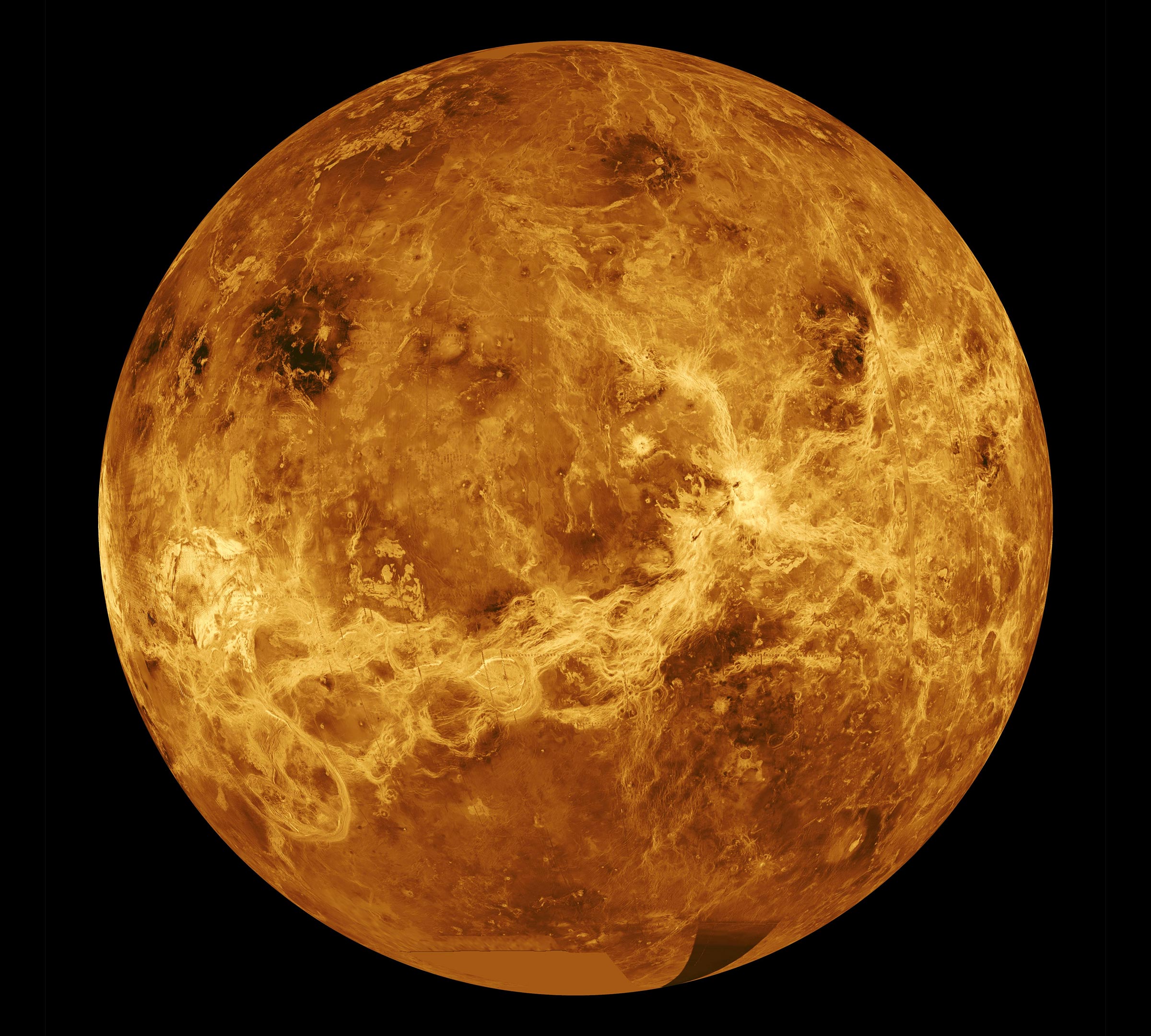
Venus may be reshaping its surface at this very moment.
New computer simulations suggest that enormous rift valleys are still forming across Venus, revealing that the scorching planet may be far more geologically active than scientists once believed.
The findings add to growing evidence that Venus is not the geologically dead world it was once thought to be. Active volcanoes have already been detected in decades-old spacecraft observations. Now, researchers say the planet’s vast rifts may offer another sign that heat and motion continue to transform its surface.
A Planet Similar to Earth, but Far More Hostile
Venus is often described as Earth’s twin because the two planets are similar in size, mass, and rocky composition. Their surfaces, however, could hardly be more different. Venus has no oceans, its atmosphere is dominated by carbon dioxide, and its average surface temperature is about 465 degrees Celsius (869 degrees Fahrenheit).
Earth’s crust is divided into moving tectonic plates. Venus does not appear to have the same global system, but its crust can still stretch, crack, and deform as heat rises from the interior. This process has created rift valleys that resemble structures such as the East African Rift, although some Venusian systems extend for nearly 10,000 kilometers (6,200 miles).
Because Venus lacks oceans and receives little rainfall, its landscape is not continually reshaped by water and erosion. Ancient and recent formations can therefore look deceptively similar, making their ages difficult to determine from spacecraft images alone.
Simulating Venus’s Enormous Rift Valleys
Many scientists had placed the formation of Venus’s major rifts more than 100 million years in the past. A team led by ETH Zurich geodynamicist Taras Gerya has now challenged that view using detailed computer simulations of how the planet’s crust responds as it is pulled apart.
Lead author Xi Yang conducted the work during his master’s studies under Gerya’s supervision. Working with Anna Gülcher, the researchers created the first high-resolution, three-dimensional simulations designed to reproduce the development of Venusian rifts. Earlier models were mostly two-dimensional and treated the planet’s crust and mantle more simply. The study was published in Nature Geoscience.
Rift Flanks Reveal Geological Age
The simulations revealed a possible geological clock hidden in the shape of the landscape.
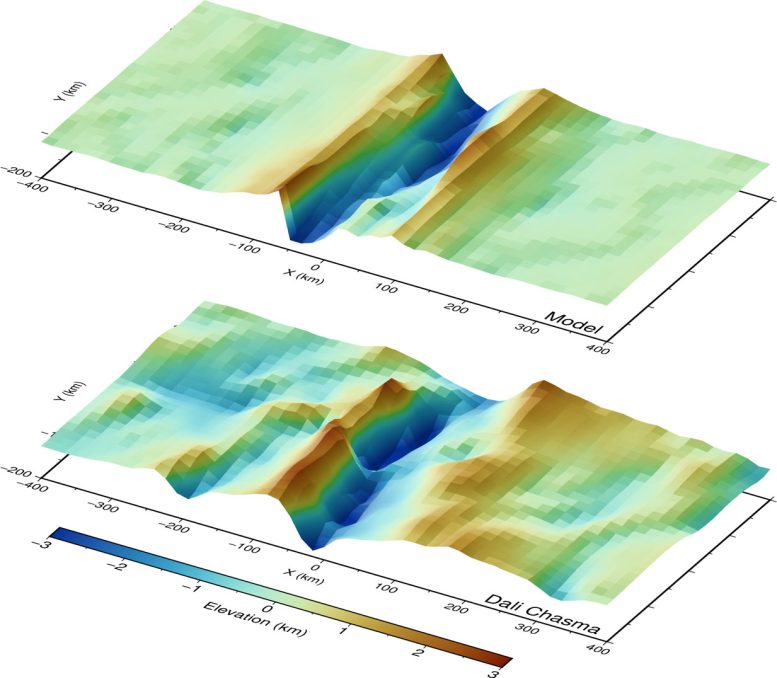
When a rift is young and actively spreading, material beneath the stretching crust pushes up broad ridges on either side of the valley. These raised areas, known as rift flanks, remain especially wide and steep while the crust is moving or shortly after the movement ends.
Over time, the ridges gradually sink and flatten as the crust relaxes. On Earth, wind, water, and ice would also wear them down. On Venus, where erosion is limited, the change appears to be driven largely by the slow adjustment of the crust itself.
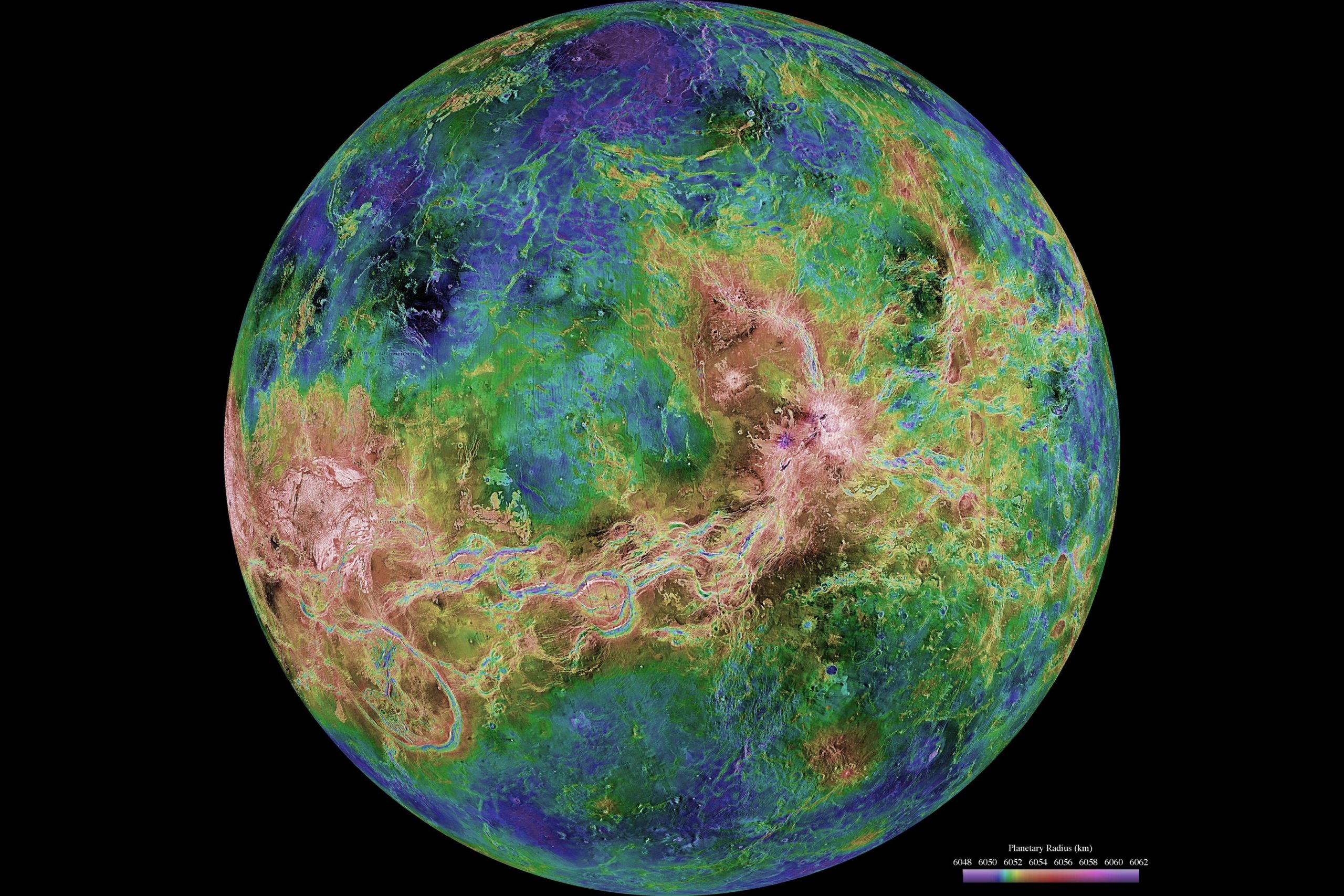
That distinction allowed the researchers to compare the simulated rifts with radar maps collected by NASA’s Magellan spacecraft in the early 1990s. Several regions, including Ganis Chasma, Dali Chasma, and Devana Chasma, contain broad, elevated flanks that closely resemble young rifts in the model.
Signs of Rapid Crustal Movement
The simulations indicate that these formations may still be active or may have stopped moving only within the past few tens of millions of years, a relatively brief interval in planetary history. They may also be spreading far faster than previously estimated, widening by about 3 to 10 centimeters (1.2 to 3.9 inches) per year.
That rate is comparable to the movement of some tectonic plates on Earth. Venus does not need Earth-style plate tectonics to produce it. Instead, hot material rising inside the planet may place enough stress on the rigid outer crust to pull large regions apart.
“The results help us to better assess the tectonic activity on Venus,” Gerya said.
Future Missions Target Venus’s Active Surface
The newly identified rift shapes give future spacecraft clear targets where ongoing deformation may be easiest to detect.
That opportunity is approaching. NASA’s VERITAS mission is designed to produce radar maps far more detailed than those returned by Magellan, while NASA’s DAVINCI probe will investigate the atmosphere and descend toward the surface. ESA’s EnVision orbiter, currently planned for launch in November 2031, will examine the planet from its interior to its upper atmosphere and study how geological activity affects the environment above it.
ETH geophysics professors Paul Tackley and Taras Gerya are contributing to EnVision with collaborators who are developing instruments for studying the Venusian surface.
Reference: “Recent active rifting on Venus revealed by wide rift flank uplifts” by Xi Yang, Taras V. Gerya and Anna J. P. Gülcher, 24 July 2026, Nature Geoscience.
DOI: 10.1038/s41561-026-02044-8
Never miss a breakthrough: Join the SciTechDaily newsletter.
Follow us on Google and Google News.
3 Comments
Given that Venus is so similar to Earth, is it so surprising that there *is* geological activity? A real surprise would be finding out that there is none.
“atmosphere is dominated by carbon dioxide”
You leave out the surface pressure is also 93 bar. The composition of the atmosphere is largely trivial when it’s 90x denser, when it comes to temperature.
“receives little rainfall”
There is no rainfall on Venus. Liquid water is impossible below 40-50km in altitude and water is so scarce that you won’t get enough to form any droplets.
“They may also be spreading far faster than previously estimated, widening by about 3 to 10 centimeters (1.2 to 3.9 inches) per year.”
Neither Magellan nor Earth-based radars have the resolution required to make centimeter-scale estimates of crustal motion. Earth based radars struggle to resolve at the kilometer scale.
Ultimately this isn’t an article about observed processes on Venus. It’s a sales pitch and call to action to use the video-game-level modelling the authors devised.
What about the theory that Venus was ejected from Jupiter as a comet about 3,000 years ago?
If this theory is correct, then how could anything on this planet be millions