
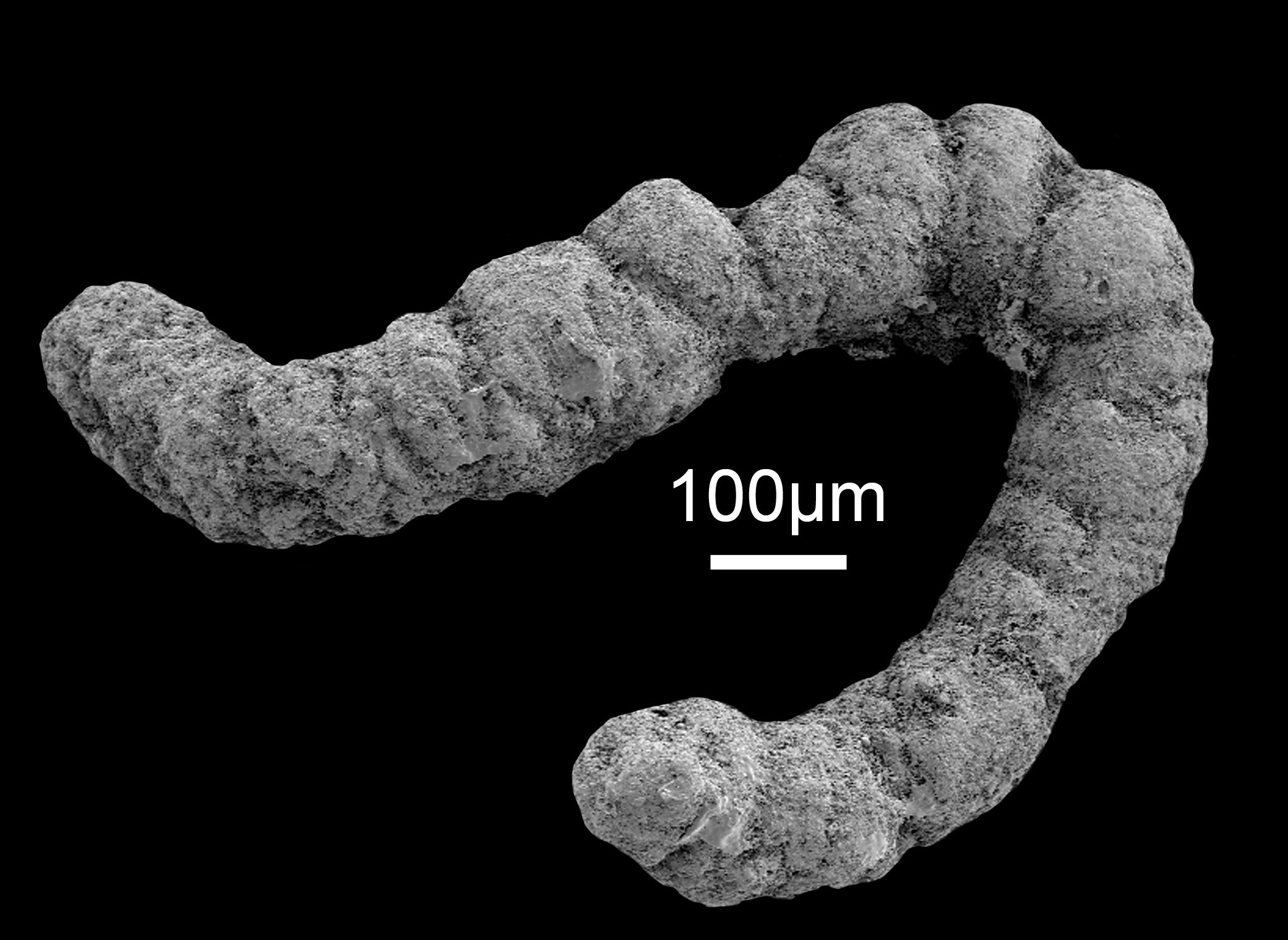
Ancient animal waste may have helped fuel the development and diversification of early marine ecosystems.
Tiny pellets of fossilized waste may preserve evidence of a major transformation in early animal life. An international study led by Flinders University proposes that excrement helped reshape ancient oceans during one of evolution’s most important turning points.
The researchers call this process the ‘fecal revolution.’ Their analysis suggests that growing quantities of animal waste redistributed organic matter and nutrients, helping marine ecosystems become more complex.
Writing in Trends in Ecology & Evolution, fossil and evolutionary researchers from Australia and Germany argue that this buildup contributed to the ‘Cambrian Explosion’ approximately 540 million years ago. During this relatively short interval, the first complex marine ecosystems developed and most major animal groups began to appear.
Primitive sea animals deposited fossilized pellets known as ‘coprolites’ throughout early Cambrian environments. By moving nutrients and carbon through the oceans, this waste may have created conditions that encouraged marine organisms to evolve and diversify.
The research presents an alternative perspective on the biological and environmental changes behind this rapid expansion of animal life.
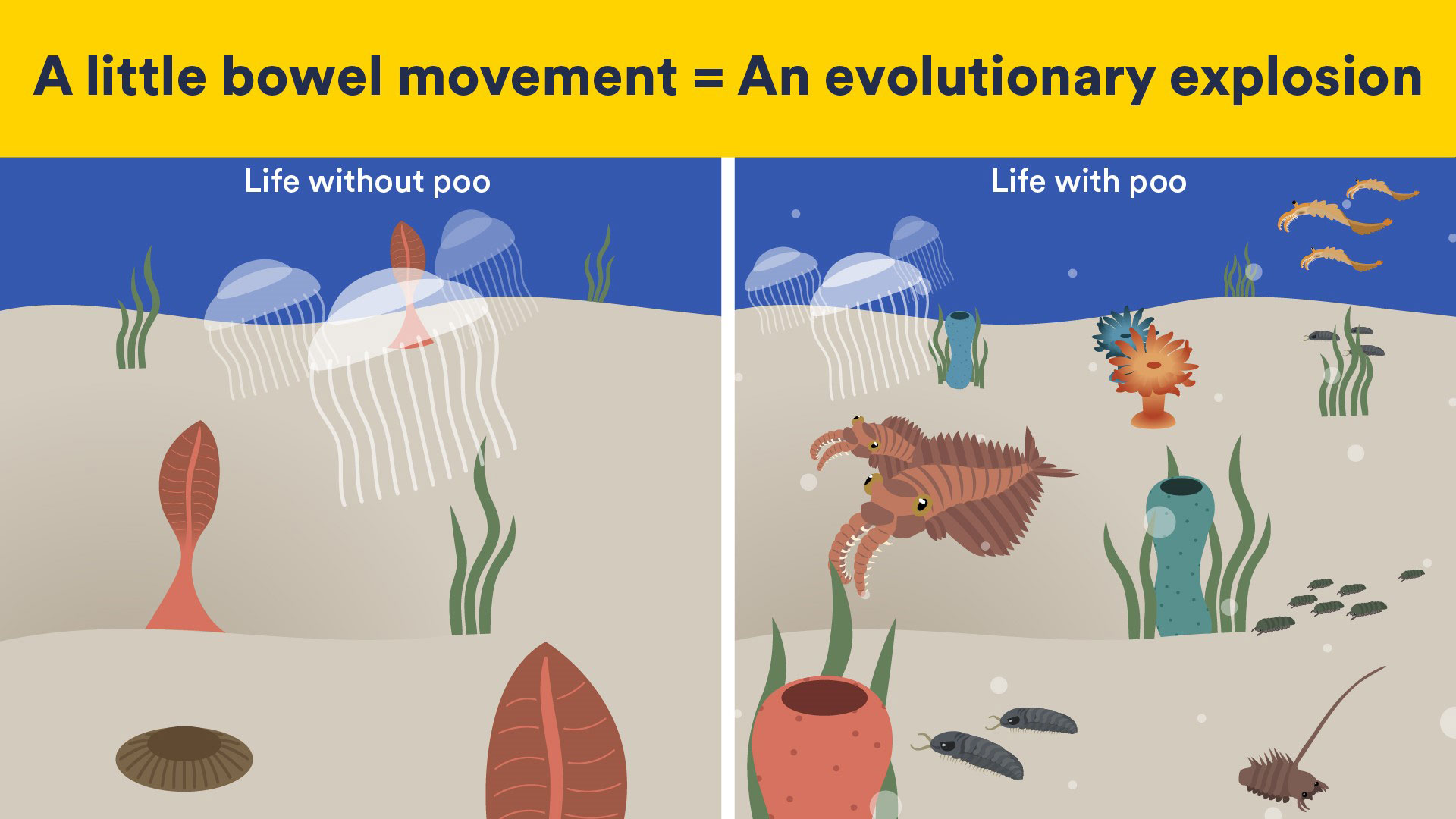
Ancient waste may have transformed oceans
“Next to rising oxygen levels and other contributing factors, the importance of feces in ancient ecosystems is often overlooked,” says Dr. Russell Bicknell, an Australian Research Council Early Career Researcher Award (DECRA) fellow at Flinders University’s College of Science and Engineering.
The researchers examined ancient diets, developing digestive systems, and trophic interactions, which describe how organisms obtain food and transfer energy through an ecosystem. Together, these changes may explain how increasing amounts of nutrients and organic material entered the oceans near the end of the Ediacaran Period and beginning of the Cambrian Period.
“We have considered these ancient diets, increasingly sophisticated digestive systems and trophic interactions as part of a much bigger picture to help explain how more organic matter and nutrients poured into the ancient oceans to accelerate ecosystem development at the end of the Ediacaran and early Cambrian periods.”
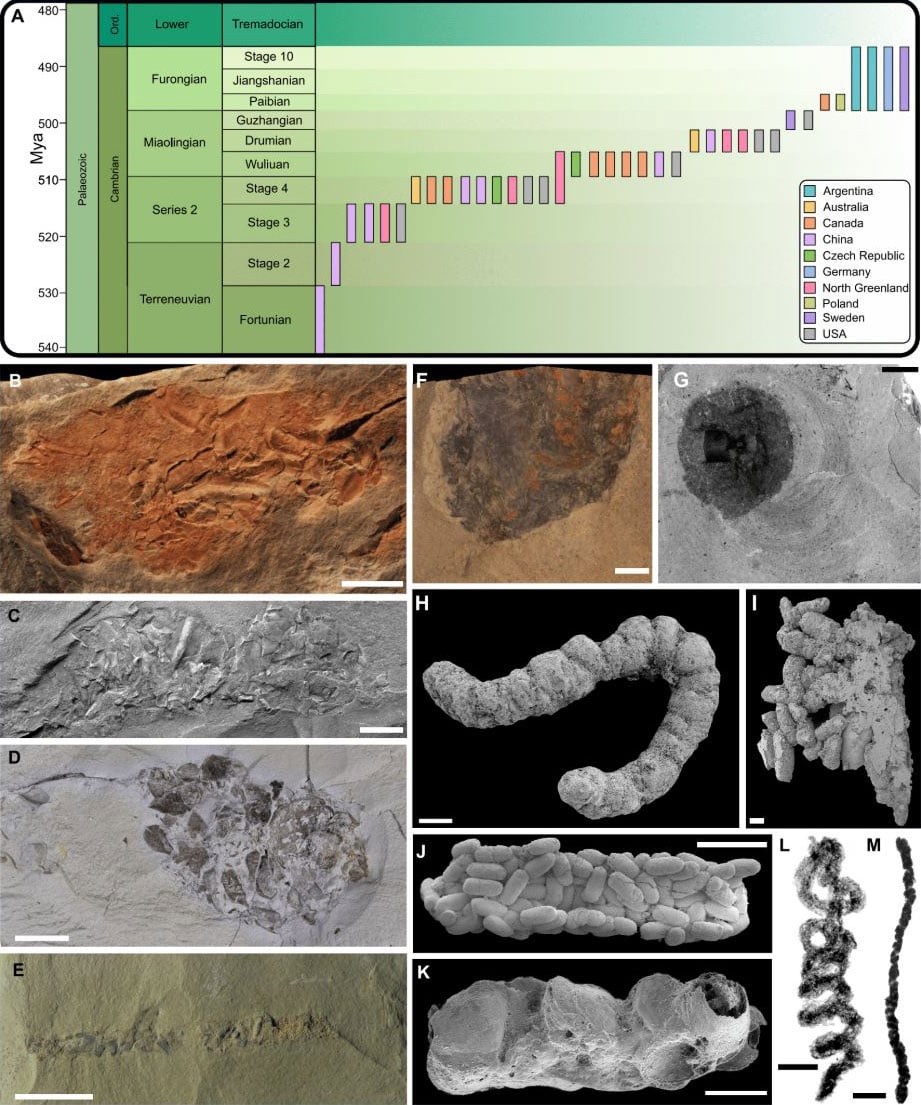
Fossils trace increasingly complex digestion
The earliest animals appeared approximately 600 million years ago during the Ediacaran Period. More elaborate digestive systems and the first fossilized coprolites then began appearing near the start of the Cambrian Period.
Dr. Bicknell and lead author Dr. Julien Kimmig of Germany’s Karlsruhe Institute of Technology (KIT) found that fossilized digestive systems and coprolites became increasingly varied in size, shape, and complexity as the Cambrian progressed. Their evidence comes from more than 35 fossil deposits worldwide.

“The fecal matter includes microscopic pellets through to centimeter-scale coprolites containing shells and other animal fragments,” says Dr Bicknell, an evolutionary biologist and paleobiologist who specializes in arthropods.
Some coprolites contain recognizable remains of prey, offering direct evidence of what early animals consumed. Their growing variety also reflects the emergence of more specialized feeding strategies and increasingly complex relationships between predators and prey.
“With this shift, we see increasingly complex digestive systems, particularly in early arthropods, which evolve specialized foreguts and digestive glands capable of processing a wider variety of food.
As animals processed a broader range of food, their waste moved organic carbon and nutrients into new parts of the marine environment. This circulation may have helped establish ecological processes that resemble those operating in modern oceans.
“It becomes clear in the fossil record that the evolution of feeding strategies aligns with the production and distribution of organic carbon and nutrients to start creating conditions we see in modern oceans and later on land where fertilizer today is used to produce our food,” adds Dr Bicknell.
Reference: “The Cambrian fecal revolution: Fueling the Cambrian Radiation” by Julien Kimmig and Russell D.C. Bicknell, 4 August 2026, Trends in Ecology & Evolution.
DOI: 10.1016/j.tree.2026.06.013
This research was funded through an Australian Research Council (grant DE250100256) and a MAT Program Postdoctoral Fellowship – both to Dr Bicknell.
Never miss a breakthrough: Join the SciTechDaily newsletter.
Follow us on Google and Google News.