
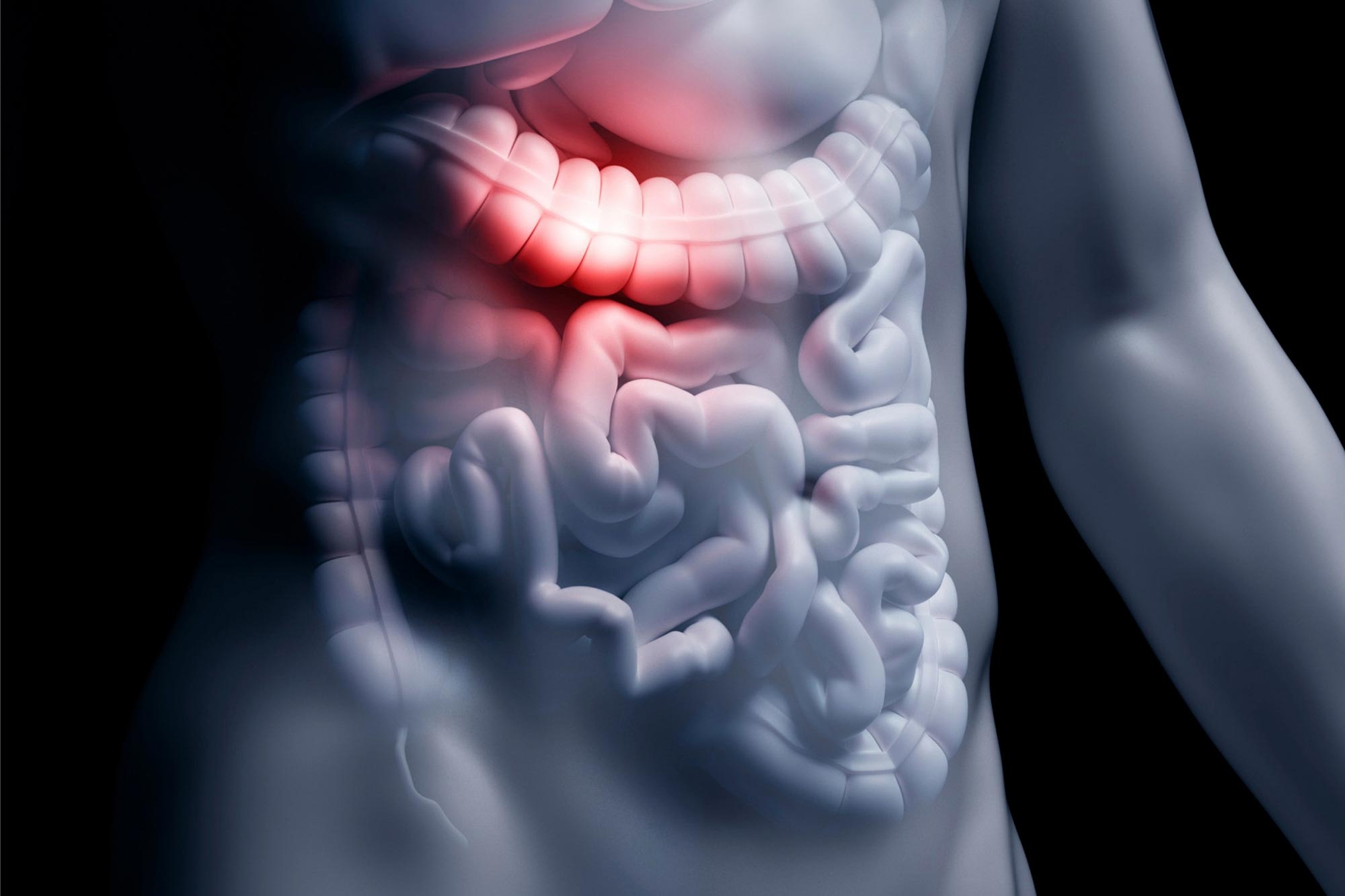
Gut bacteria produce a common compound called imidazole propionate, and a study found that higher levels are associated with dementia related changes in the brain.
A molecule made by gut bacteria could help explain why changes in the intestinal microbiome are connected to Alzheimer’s disease. Researchers report that higher levels of imidazole propionate, or ImP, are linked to greater Alzheimer’s risk and faster cognitive decline in people with dementia, raising the possibility that the compound itself could become a treatment target.
Nearly a decade ago, University of Wisconsin–Madison professors Barbara Bendlin and Federico Rey led research showing that people with Alzheimer’s disease have different communities of intestinal microbes than healthy individuals.
“Since then, we’ve been trying to figure out how this difference in the gut perhaps leads to changes in the brain,” says Bendlin, a professor of gerontology in the UW School of Medicine and Public Health.

A gut compound reaches the brain
In research published in Nature Communications, Bendlin, Rey, and their collaborators focused on imidazole propionate (ImP), a compound produced by certain gut bacteria that appears to contribute to brain changes associated with Alzheimer’s disease and related dementias. Production varies considerably between individuals, with some people generating much more ImP than others.
“ImP-producing bacteria are present in a large fraction of people, but they’re not very abundant in most people,” says Rey, a UW–Madison professor of bacteriology. “But something we have learned over the years is that a microbe doesn’t have to be abundant to have an impact on the host.”
After leaving the gut, ImP can circulate to other organs and has previously been implicated in type 2 diabetes and coronary artery disease. In mice, the researchers found that ImP reaching the brain increased the accumulation of two abnormal proteins associated with Alzheimer’s disease, beta-amyloid and tau.
“That process eventually results in the death of neurons, and in humans is a key feature of Alzheimer’s disease,” Rey says.
Higher ImP tracks faster cognitive decline
The researchers then measured ImP in blood samples from almost 1,200 participants in the Wisconsin Registry for Alzheimer’s Prevention and studies conducted through the Wisconsin Alzheimer’s Disease Research Center. People with higher ImP concentrations were much more likely to show markers associated with dementia related protein abnormalities and neuronal dysfunction.

“And because we have the results of cognitive tests these volunteers took over time, we can see that the people with the highest ImP levels also experienced much faster cognitive decline,” Rey says.
Another clue came from genetics. The researchers identified a genetic variant found in about 43% of participants that was associated with substantially higher blood levels of ImP. One possibility is that the variant changes how effectively the kidneys filter ImP from the blood so it can be eliminated from the body.
“This genetic variation has been associated with increased Alzheimer’s risk in large genetic studies before, and now we may understand why it’s connected,” Rey says.
ImP could become a treatment target
The findings raise the possibility that lowering ImP could eventually provide a way to reduce the risk of Alzheimer’s disease and related dementias. Altering ImP through diet alone may be difficult, however, because gut bacteria make the compound while metabolizing histidine, an amino acid that is essential for human health and found widely in common foods, particularly those rich in protein.
“Generally improving your diet would probably help,” Bendlin says. “But it’s not as easy as saying, ‘Stop eating eggs’ or ‘Don’t eat so much red meat.’ Because you need histidine, and it’s all over the place.”
Identifying a specific molecule in the bloodstream, along with a genetic factor associated with its concentration, gives researchers a more focused biological target to investigate.
“It could be just like cholesterol, where people with elevated cholesterol take a drug, a statin, that reduces their risk for heart disease,” Bendlin says. “If we can find an inhibitor that can help decrease the levels of ImP in the blood, that could hopefully reduce the risk of Alzheimer’s and the speed of cognitive decline for a significant number of people.”
Reference: “Gut bacterial metabolite imidazole propionate potentiates Alzheimer’s disease pathology” by Vaibhav Vemuganti, Jea Woo Kang, Qijun Zhang, Eric R. McGregor, James R. Hilser, Ruben Aquino-Martinez, Sandra Harding, Joseph Lawrence Harpt, Katharina R. Beck, Hailey Bussan, Jessamine F. Kuehn, Yuetiva Deming, Rachel Studer, Sterling C. Johnson, Sanjay Asthana, Henrik Zetterberg, Kaj Blennow, Corinne D. Engelman, Hooman Allayee, Rozalyn M. Anderson, Tyler K. Ulland, Fredrik Bäckhed, Barbara B. Bendlin and Federico E. Rey, 26 June 2026, Nature Communications.
DOI: 10.1038/s41467-026-74744-z
This research was supported in part by grants from the Wisconsin Partnership Program and the National Institutes of Health (R01AG070973, R01AG083883, R01AG092220, R21AG089348, R01HL168493, R01DK143650 and U54HL170326) and the U.S. Department of Agriculture (WIS03073).
Never miss a breakthrough: Join the SciTechDaily newsletter.
Follow us on Google and Google News.