
TRAF7 syndrome: The first 45 patients
An international multicenter study describes a rare disease characterized by a series of recognizable facial features, cardiac defects, and intellectual disability, which they propose to name as TRAF7 syndrome — according to the name of the gene that causes this pathology.
The study, published in the journal Genetics in Medicine, is led by a team of the Faculty of Biology of the University of Barcelona and the Institute of Biomedicine of the University of Barcelona (IBUB), the Rare Diseases Networking Biomedical Research Centre (CIBERER) and the Research Institute Sant Joan de Déu (IRSJD), in collaboration with experts from the French Institute of Health and Medical Research (INSERM).
In this research, the experts identified forty-five patients — who were not diagnosed before — with whom they could gain knowledge on this new syndrome, so far defined with an only previous article based on the study of seven people.
With the analysis of new patients, the authors described the clinical picture associated with the TRAF7 syndrome, featured by intellectual disability, motor delay, specific facial features, hearing loss, a heart congenital malformation — patent ductus arteriosus — and skeletal defects in fingers, neck, and chest.
Apart from defining the TRAF7 syndrome-associated phenotype spectrum, the authors of the new study analyzed the transcriptome — global expression analysis of all genes in a cell — of fibroblasts — the most common type of cell in the connective tissue — in several patients and controls. Therefore, it is possible to offer an explanation on the altered pathways in case the gene mutates and the disease originates.
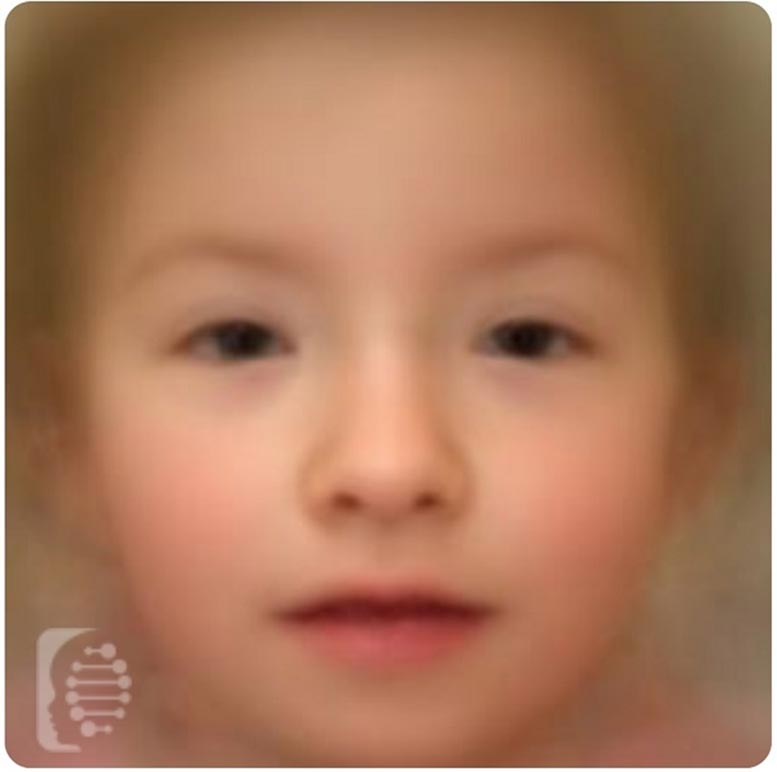
Among other features that can contribute to identify the affected patients are also the blepharophimosis (eyelids are horizontally shortened), short neck with back deviations, pectus carinatum (malformation in the chest where the chest wall is held in outward position), and macrocephaly.
Last, the team used a computer application — based on photographs of several patients — to get a robot portrait of the syndrome which could be of interest to the pediatricians who have to work with cases of this disease.
Reference: “Phenotypic spectrum and transcriptomic profile associated with germline variants in TRAF7” by Laura Castilla-Vallmanya MSc, Kaja K. Selmer MD, PhD, Clémantine Dimartino MSc, Raquel Rabionet PhD, Bernardo Blanco-Sánchez PhD, Sandra Yang MS, CGC, Margot R. F. Reijnders MD, PhD, Antonie J. van Essen MD, PhD, Myriam Oufadem MSc, Magnus D. Vigeland PhD, Barbro Stadheim MD, Gunnar Houge MD, PhD, Helen Cox MD, Helen Kingston MD, Jill Clayton-Smith MD, Jeffrey W. Innis MD, PhD, Maria Iascone PhD, Anna Cereda MD, Sara Gabbiadini MD, Wendy K. Chung MD, PhD, Victoria Sanders MS, CGC, Joel Charrow MD, Emily Bryant MS, CGC, John Millichap MD, Antonio Vitobello PhD, Christel Thauvin MD, PhD, Frederic Tran Mau-Them MD, Laurence Faivre MD, PhD, Gaetan Lesca MD, Audrey Labalme MSc, Christelle Rougeot MD, Nicolas Chatron MD, Damien Sanlaville MD, PhD, Katherine M. Christensen MS, CGC, Amelia Kirby MD, Raymond Lewandowski MD, Rachel Gannaway MS, CGC, Maha Aly MSc, Anna Lehman MD, Lorne Clarke MD, Luitgard Graul-Neumann MD, Christiane Zweier MD, PhD, Davor Lessel MD, Bernarda Lozic MD, PhD, Ingvild Aukrust PhD, Ryan Peretz MD, Robert Stratton MD, Thomas Smol MD, Anne Dieux-Coëslier MD, Joanna Meira MD, MSc, Elizabeth Wohler MS, Nara Sobreira MD, PhD, Erin M. Beaver MS, CGC, Jennifer Heeley MD, Lauren C. Briere MS, CGC, Frances A. High MD, PhD, David A. Sweetser MD, PhD, Melissa A. Walker MD, PhD, Catherine E. Keegan MD, PhD, Parul Jayakar MD, Marwan Shinawi MD, Wilhelmina S. Kerstjens-Frederikse MD, PhD, Dawn L. Earl ARNP, Victoria M. Siu MD, Emma Reesor BASc, Tony Yao BMSc, Robert A. Hegele MD, Olena M. Vaske PhD, Shannon Rego MS, Undiagnosed Diseases Network, Care4Rare Canada Consortium, Kevin A. Shapiro MD, PhD, Brian Wong MD, Michael J. Gambello MD, PhD, Marie McDonald MD, Danielle Karlowicz CGC, Roberto Colombo PhD, Alessandro Serretti MD, Lynn Pais MS, Anne O’Donnell-Luria MD, PhD, Alison Wray MD, Simon Sadedin PhD, Belinda Chong PhD, Tiong Y. Tan MBBS, PhD, John Christodoulou MD, PhD, Susan M. White MD, Anne Slavotinek MBBS, PhD, Deborah Barbouth MD, Dayna Morel Swols MS, CGC, Mélanie Parisot BTS, Christine Bole-Feysot PhD, Patrick Nitschké PhD, Véronique Pingault PhD, Arnold Munnich MD, PhD, Megan T. Cho MSc, CGC, Valérie Cormier-Daire MD, PhD, Susanna Balcells PhD, Stanislas Lyonnet MD, PhD, Daniel Grinberg PhD, Jeanne Amiel MD, PhD, Roser Urreizti PhD and Christopher T. Gordon PhD, 7 May 2020, Genetics in Medicine.
DOI: 10.1038/s41436-020-0792-7
Laura Castilla Vallmanya, researcher of the UB, IBUB, CIBERER and IRSJD, is the first signer of the study, coordinated by Roser Urreizti, also member of the mentioned institutions, and Christopher T. Gordon, from INSERM and the Sorbonne University of Paris. Other participants in the study are experts from research centers in Norway, United States, the Netherlands, United Kingdom, Italy, Canada, Germany, Croatia, Brazil and Australia.
Never miss a breakthrough: Join the SciTechDaily newsletter.
Follow us on Google and Google News.