
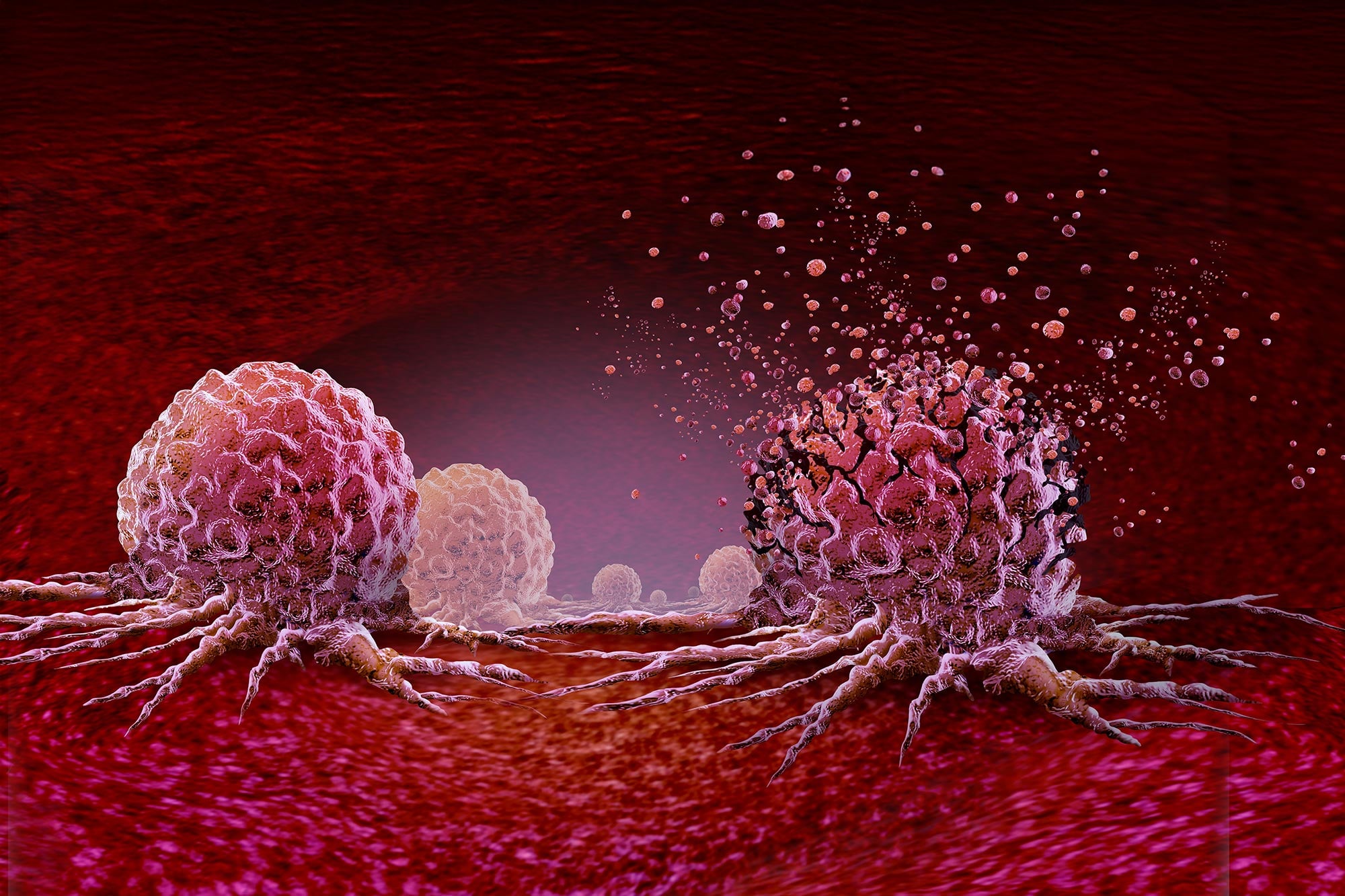
Pancreatic tumors vanished in roughly half of mice given an experimental mRNA therapy and did not return for up to a year after treatment stopped.
Researchers at UMass Chan Medical School developed an experimental treatment for pancreatic cancer that uses a cocktail of messenger RNAs (mRNA) to activate immune defenses, break through the protective tissue surrounding tumors, and help immune cells recognize cancer cells as threats. Inspired by work at the school’s RNA Therapeutics Institute and advances in COVID vaccines, the approach combines several immune signals and tumor-associated antigens in a single formulation.
The study, published in Nature Communications, combined mRNAs encoding five immune cytokines with three tumor-associated antigens in one injectable treatment. Approximately 50 percent of mice with pancreatic ductal adenocarcinoma experienced complete tumor regression and remained disease-free for a year, including after therapy was discontinued.
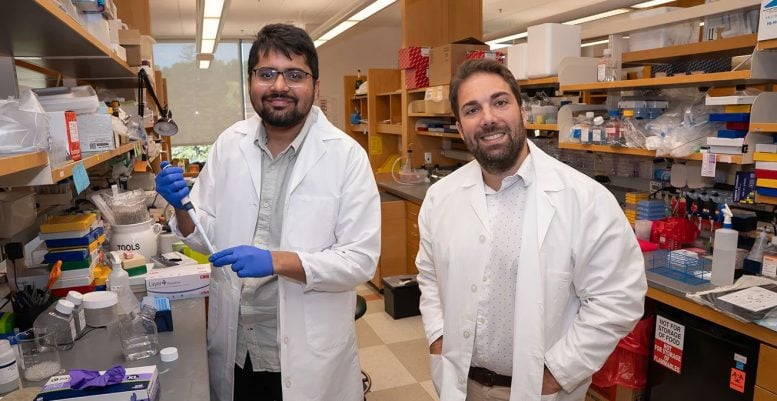
“It’s unheard of to get a response like this in these models of pancreatic cancer,” said Dr. Parikh, a recent PhD graduate from the Ruscetti Lab. “There have been a lot of drugs tried in the lab that have had good initial responses in mice, but ultimately the cancer always comes back. This is the only study I’ve seen that has achieved durable tumor protection.”
A Rare Response in Pancreatic Cancer
Results in mice do not guarantee that a treatment will succeed in people, particularly against a cancer as biologically complex as pancreatic ductal adenocarcinoma. Ruscetti nevertheless believes the strategy is promising enough to pursue toward clinical testing.
Dr. Ruscetti, associate professor of molecular, cell & cancer biology, added, “Going from mice into patients takes a huge effort and is never a sure thing. However, if there was one approach I had to bet on being successful, this is the one. And that’s what we’re doing.”
Pancreatic ductal adenocarcinoma is the most common and aggressive form of pancreatic cancer. It begins in the narrow ducts that carry digestive fluids out of the pancreas. Early symptoms are often subtle or absent, allowing tumors to grow or spread to other organs before they are detected. The five-year survival rate is 3 percent for stage IV disease and 13 percent when all stages are combined.
Why Immunotherapy Often Falls Short
Immunotherapies have transformed care for certain cancers by directing the body’s defenses against malignant cells. Pancreatic tumors, however, have largely resisted these treatments because they create an unusually hostile environment around themselves.
One major obstacle is a thick layer of fibrotic tissue surrounding the tumor. This structure functions like a castle wall, limiting the ability of immune cells to reach and attack the cancer. Even when immune cells enter, they must remain active long enough to mount a defense and distinguish tumor cells from healthy tissue.
“All these steps are lacking in pancreatic cancer,” said Ruscetti. “That’s where the mRNA comes into play.”
Delivering Immune Signals Where They Matter
Cytokines are small signaling proteins, including interleukins, interferons, and tumor necrosis factors, that recruit and activate immune cells. Researchers experimented with cytokines as cancer treatments during the 1980s and 1990s, but the drugs often stimulated immune activity throughout the body. The resulting system-wide reactions could cause dangerous side effects while still failing to eliminate most tumors.
Scientists now have a clearer understanding of which cytokines mobilize immune responses against particular threats, including pancreatic cancer. The remaining challenge is delivering the right signals where they are needed. “What we need is a way to get these immune signals to the tumor so they can do their job,” said Ruscetti.
mRNA offers a temporary set of genetic instructions that cells can translate into proteins. Rather than supplying cytokine and antigen proteins directly, the experimental treatment instructs cells to produce them. The cytokine mRNAs are intended to activate an immune attack, while the tumor antigen mRNAs help immune cells “see” pancreatic cancer as foreign material that should be removed.
After the mice received the combination of five cytokine mRNAs and three tumor antigen mRNAs, the researchers observed less fibrotic material around the tumors and increased tumor cell necrosis. These findings indicate that the treatment both weakened the tumor’s physical defenses and promoted cancer cell death.
Immune Memory May Keep Cancer Away
Approximately half of the treated mice achieved complete remission that continued for up to one year after treatment stopped. The prolonged protection suggests that their immune systems may have developed a long-term “memory” of the cancer cells, potentially allowing them to recognize and attack the disease if it returned.
Researchers could potentially change the mRNA sequences to produce cytokines and antigens suited to other tumors, creating different versions of the treatment for cancers that resist existing immunotherapies.
“This is a first-of-its-kind approach combining cytokine mRNAs with tumor-associated antigen mRNA that could pave the path for effective immunotherapy for pancreatic ductal adenocarcinomas,” said Parikh. “Beyond this cancer, this mRNA immunotherapy strategy has the capacity to be modular and can potentially be used as a platform to treat other types of immune-resistant cancers simply by swapping out different mRNA sequences.”
Reference: “Multiplexed cytokine and antigen mRNA administration generates durable anti-tumor immunity against pancreatic cancer” by Chaitanya N. Parikh, Kelly D. DeMarco, Nikita Bhalerao, Hadiya K. Giwa, Griffin I. Kane, Ronnie W. Dinnell, Boyang Ma, Haruka Mori, Meghan L. Brassil, Katherine C. Murphy, Zhen Zhao, Calvin Johnson, Shriram Ramani, Lin Zhou, Loretah Chibaya, Youwei Qiao, Kai Hu, Lihua Julie Zhu, Brian C. Lewis, Wen Xue, Jason R. Pitarresi, Prabhani U. Atukorale and Marcus Ruscetti, 19 June 2026, Nature Communications.
DOI: 10.1038/s41467-026-74574-z
Initial funding for the study was provided by the Worcester-based Pancreatic Cancer Alliance, a patient advocacy group that supports pancreatic cancer research at UMass Chan. Researchers are now developing a potential IND-ready product of the cocktail in preparation for future clinical trials.
Never miss a breakthrough: Join the SciTechDaily newsletter.
Follow us on Google and Google News.