
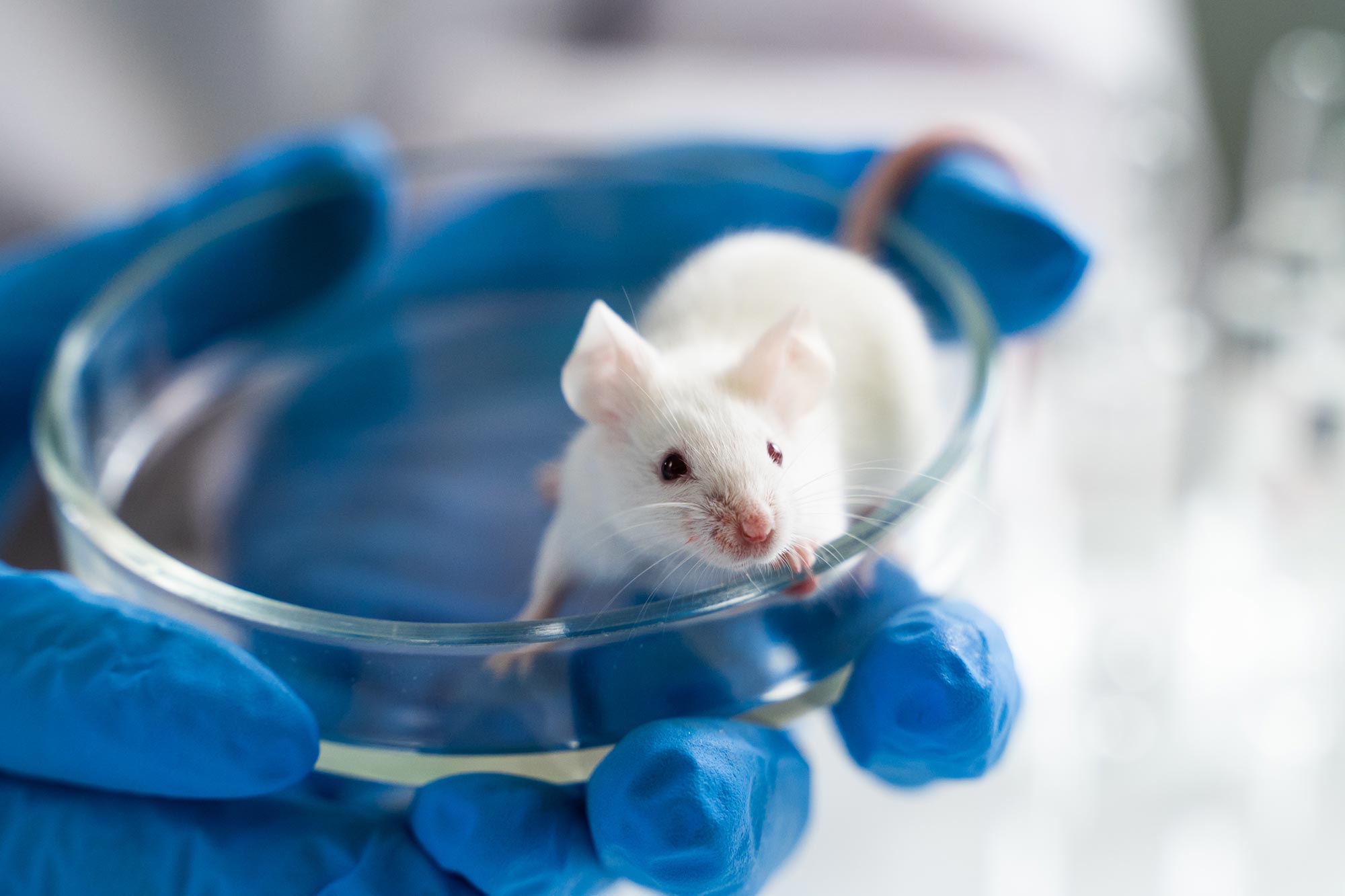
A study involving 100 pairs of mice produced unexpected results that surprised researchers.
Mice bred to be unusually athletic might be expected to pay a biological price, perhaps by living shorter lives or producing fewer offspring. But after more than three decades of research, UC Riverside scientists found no such penalty in mice selected for exceptionally high activity.
The result challenges a central idea in evolutionary biology: that organisms face unavoidable trade-offs when allocating limited energy. In theory, energy spent becoming faster, stronger, or more active leaves less available for maintaining the body, extending lifespan, or reproducing.
To test that expectation, researchers compared ordinary mice with “high runner” mice selectively bred to run extraordinary distances. Given access to exercise wheels, these animals can cover as much as three times the daily distance of unaltered mice. The researchers tracked both how long the animals lived and how many offspring they produced.
“We did expect to find a reproductive cost for this athletic behavior,” said Theodore Garland, a distinguished professor of evolution, ecology, and organismal biology who led the research team, along with doctoral student Natalie Whitehead.
Instead, the high runner and control lines produced the same average number of litters. “We also thought the runners wouldn’t live as long, but they did,” Garland said. The findings are reported in a new Behavior Genetics paper.
Three decades found no expected trade-off
The work grew out of an animal selection experiment that began in 1993 and has now continued for more than 30 years, making it one of the longest-running projects of its kind. Garland noted that studies following reproduction across an animal’s lifetime are uncommon because they demand years of monitoring, substantial laboratory space, and sustained resources. The project was supported by the National Science Foundation.
During the breeding experiment, mouse pairs were housed under standard laboratory conditions and had unlimited access to food and water. The high runner mice were not given running wheels during this phase, although earlier research has shown that they remain considerably more active than control mice even without wheels. Investigators followed every litter from birth to weaning, counted the offspring that survived across each pair’s lifetime, and recorded when both mothers and fathers died.
The results do not directly apply to humans
Garland emphasized that the findings should not be treated as evidence about human athletes. Some research has suggested that certain groups of elite athletes may live longer than average, but human exercise patterns are influenced by genetics, culture, family background, education, and many other environmental factors that are difficult to disentangle. Laboratory mice, in contrast, can be studied under tightly controlled conditions.
“These are mice. They aren’t humans,” Garland said. “In people, it would take decades to conduct a comparable study, and there are all kinds of environmental and cultural factors that can influence the results.”
The researchers also found no relationship between the lifespans of the male and female members of each breeding pair.
“Going into the study, we thought that if one animal died, the other might die soon after due to some sort of grief, loneliness or heartbreak, a phenomenon for which there is some evidence in human beings,” Garland said.
“An alternative hypothesis was that, if a pair did not get along, then the death of one might lead to a ‘free at last!’ response in the survivor. Of course, both things might occur, depending on the pair, leading the two effects to cancel out.”
Garland said future laboratory rodent studies might be able to separate these possibilities more clearly.
One explanation for the missing trade-off is that the mice never faced an energy shortage. With food always available, they may have been able to consume enough extra energy to support elevated activity while still maintaining reproduction and survival, rather than having to divert resources from one function to another.
Another possibility is that the high-runner mice evolved metabolic efficiencies or other “evolutionary countermeasures” that helped them tolerate unusually high activity. The current experiment, however, was not designed to determine whether such adaptations occurred.
Evolutionary trade-offs may not be inevitable
More broadly, the results suggest that biological trade-offs may not always be as unavoidable as evolutionary theory often assumes.
“When people see a negative relationship between two traits, they often assume there’s an unavoidable biological trade-off,” Garland said. “But another possibility is simply that natural selection never favored having both traits at high levels. In this system, we bred mice for extraordinary activity, and we didn’t find evidence that they had to pay for it with shorter lives or fewer offspring.”
Reference: “Selective Breeding for Voluntary Wheel-Running Behavior in Mice is not Associated with Reduced Lifetime Reproductive Success or Lifespan Under Long-Term Paired Breeding Conditions” by Natalie N. Whitehead, Nicole E. Schwartz, Chenkun Jiang, Haley M. Read, Natalie C. Holt and Theodore Garland Jr., 12 August 2026, Behavior Genetics.
DOI: 10.1007/s10519-026-10277-x
Funding was provided by U.S. National Science Foundation grant IOS-2038528 to TG and NCH.
Never miss a breakthrough: Join the SciTechDaily newsletter.
Follow us on Google and Google News.