
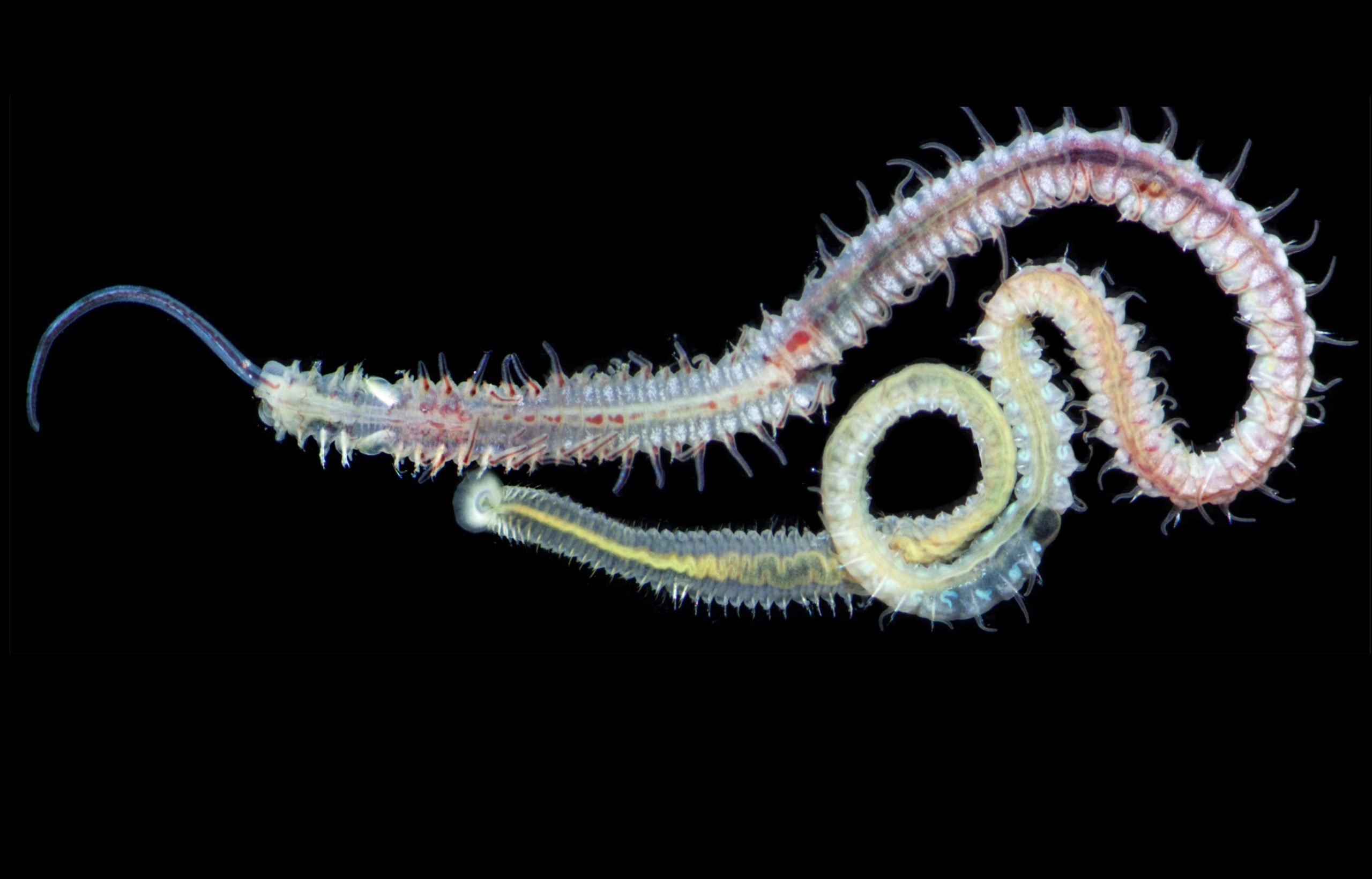
Rare fossils reveal that worms managed to survive multiple mass extinction events.
A recent scientific investigation has revealed a surprising discovery: a parasite that still targets modern oysters began infecting shellfish hundreds of millions of years before the age of dinosaurs came to an end.
The study, published in iScience, examined 480-million-year-old fossil shells from a Moroccan site famous for its remarkably preserved marine life. Using high-resolution 3D imaging, researchers peered inside the fossils and uncovered a set of distinctive patterns carved both along the surface and within the shells.
“The marks weren’t random scratches,” said Karma Nanglu, a UC Riverside paleobiologist who led the research. “We saw seven or eight of these perfect question mark shapes on each shell fossil. That’s a pattern.”
“It took us a while to figure out the mystery behind these peculiar-looking traces. It was as if they were taunting us with their question mark-like shape,” said Javier Ortega-Hernandez, paper co-author, Harvard evolutionary biologist and curator at the university’s Museum of Comparative Zoology where the fossils used in this study reside.
“But as often happens, we came across the answer while deep in obscure literature before our eureka moment,” he said.
After careful analysis, the researchers concluded that the markings were created by a type of soft-bodied marine bristle worm that still exists in modern oceans. These worms, members of a group known as spionids, make their homes on mussels and oysters. Although they do not consume their hosts directly, their burrowing activity weakens the shells and causes lasting damage.
“They parasitize the shells of bivalves like oysters, not the flesh of the animals themselves,” said Nanglu. “But damaging their shells may increase oyster death rates.”
Life and Parasitism in the Ancient Seas
The shells examined in the study belonged to an early relative of modern clams that thrived during the Ordovician, a period of rapid ecological change.
“This is a time when ocean ecosystems got more intense,” Nanglu said. “You see the rise of mobility, predation, and, clearly, parasitism.”
The researchers considered the possibility that the question marks on the fossils were made by the shellfish themselves or by some other kind of organism. But the evidence was strongest for the spionid explanation.
“There’s one image in particular, from a study of modern worms, that shows exactly the same shape inside a shell,” Nanglu said. “That was the smoking gun.”
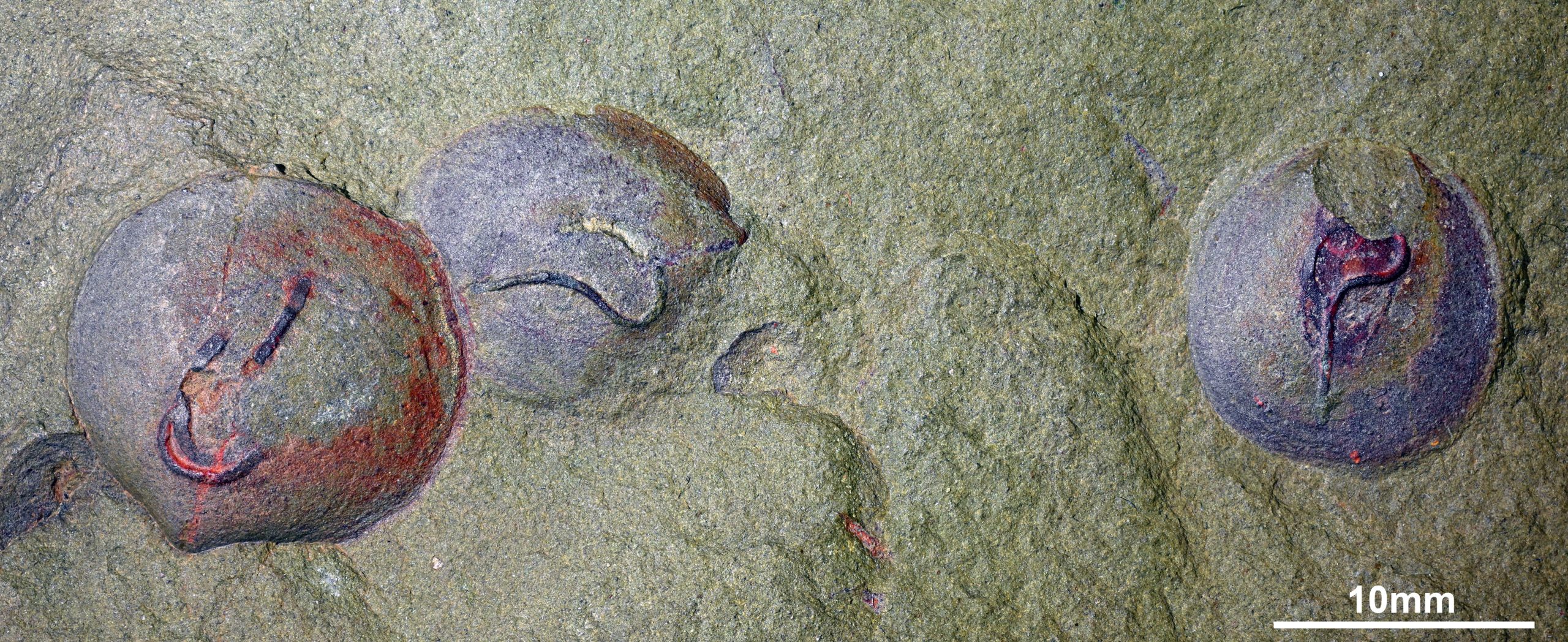
Beyond the thrill of identification, the discovery offers a rare evolutionary insight.
“This group of worms hasn’t changed its lifestyle in nearly half a billion years,” Nanglu said. “We tend to think of evolution as constant change, but here’s an example of a behavior that worked so well, it stayed the same through multiple mass extinction events.”
To get a look inside these question mark-shaped traces, the researchers used a method similar to a medical CT scan but much more detailed, called micro-CT scanning. This revealed another discovery, that more bivalves with more parasites were hidden from view inside the rock, where the fossil layers were stacked like a multilayered cake.
“We never would’ve seen this without the scanner,” Nanglu said.
How the Ancient Parasite Lived
The parasite’s life cycle also offered a key clue to its identity. It appears to have followed a consistent pattern: beginning life as a larva, settling onto a host shell at a specific time and place, then dissolving a small area to anchor itself. As it grew, it burrowed farther into the shell, forming the distinctive question mark shape.
No other known animal creates this exact pattern. “If it’s not a spionid, then it’s something we’ve never seen before,” Nanglu said. “But it would have to have evolved the same behavior, in the same place, in the same way.”
The same shell-burrowing behavior seen in the fossils still affects oysters today. Though spionid worms don’t feed on the animals directly, the structural damage they cause can lead to higher mortality in commercial fisheries.
“This parasite didn’t just survive the cutthroat Ordovician period, it thrived,” Nanglu said. “It’s still interfering with the oysters we want to eat, just as it did hundreds of millions of years ago.”
The fossil site in Morocco is renowned for offering snapshots of long-lost behavior. Other finds include animals on the remains of squid-like creatures, providing rare evidence of ancient inter-species interactions frozen in time.
“You’re lucky to get any record of an animal from that long ago,” Nanglu said. “But to see evidence of two animals interacting? That’s gold.”
Reference: “A 480-million-year-old parasitic spionid annelid” by Karma Nanglu, Madeleine E. Waskom, Sarah R. Losso and Javier Ortega-Hernández, 14 October 2025, iScience.
DOI: 10.1016/j.isci.2025.113721
Never miss a breakthrough: Join the SciTechDaily newsletter.
Follow us on Google and Google News.