
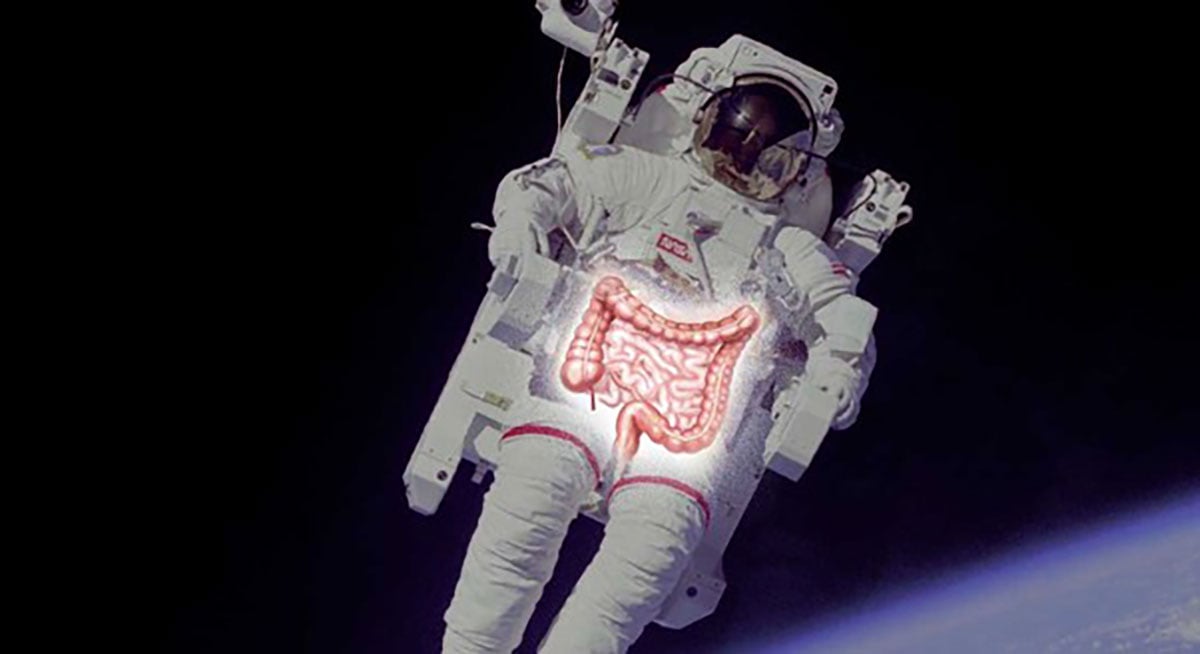
Many things change in space, including how the intestines function. Constipation is a known side effect of space travel, but until now, little has been known about why it happens.
Constipation is a familiar problem for astronauts, but the biological reason it develops during spaceflight has remained uncertain.
Researchers from the University of Copenhagen working with NASA have now found evidence of what may change in the digestive system when gravity disappears. They analyzed blood samples from 52 astronauts who spent months aboard the International Space Station and detected gastrointestinal changes that appeared within weeks of leaving Earth.
“We see changes in astronauts’ blood samples that indicate that the gut bacteria begin to ferment protein to a greater extent than usual within weeks after the astronauts arrive in space, and this change continues until they are back on Earth,” says joint first author and associate professor at the Department of Nutrition, Exercise and Sports, Giorgia La Barbera.
Slower digestion may shift gut metabolism
Protein fermentation occurs when bacteria in the gut begin breaking down protein rather than fiber after dietary fiber has been depleted. The process is not unique to spaceflight and also occurs in many people on Earth.
“The lack of gravity in space probably causes food to move more slowly through the intestine, and this fits with the fact that we are seeing signs of increased protein fermentation. This may also help explain constipation in astronauts,” says co-author of the article Henrik Roager, who is also an associate professor at the Department of Nutrition, Exercise and Sports.
Gut changes may affect more than digestion
The finding emerged from an investigation of metabolites in astronauts’ blood. These small molecules circulating through the bloodstream provide clues about how the body’s metabolism is functioning and can reflect factors such as diet and intestinal activity.
That matters because changes inside the gut may have effects beyond digestion, potentially influencing other parts of the body, including the brain.
“We know that products of protein fermentation are often associated with negative health consequences, such as kidney damage, potential effects on mood or reduced ability to focus, among others,” says Lars Ove Dragsted, senior author of the study and professor at the Department of Nutrition, Exercise and Sports.
Longer missions may need gut countermeasures
As space agencies prepare for longer crewed missions to the Moon and destinations farther away, the researchers say understanding these intestinal changes could become increasingly important.
“When we plan for longer journeys in space – for example to Mars countermeasures may be needed to mitigate negative effects of space travel on the intestines,” says Giorgia La Barbera.
“Our findings can inform potential interventions – either directly through increasing dietary fiber, supplementation with prebiotics or other types of treatments that promote peristalsis and decrease gut transit time. This would help reduce protein fermentation and thus provide a healthy gut environment and avoid negative health consequences,” adds Henrik Roager.
Bedridden patients may face similar effects
The possible implications are not limited to astronauts. The researchers suggest the findings may also be relevant to people on Earth whose movement is severely restricted.
“You can use this knowledge to help bedridden patients. They also experience constipation and likely also have increased protein fermentation that may aggravate health conditions,” concludes Lars Ove Dragsted, senior author of the paper.
Reference: “Longitudinal metabolomics profiles reveal increased gut microbial protein fermentation during Spaceflight” by Giorgia La Barbera, Jan Stanstrup, Sara R. Zwart, Scott M. Smith, Henrik M. Roager and Lars Ove Dragsted, 29 June 2026, Nature Communications.
DOI: 10.1038/s41467-026-74979-w
Never miss a breakthrough: Join the SciTechDaily newsletter.
Follow us on Google and Google News.
4 Comments
Well, bedridden patients make the ideal earthbound test subjects. Raw or cooked rolled oats would make a good starting point. High fiber with some protein. Slower absorption rates due to coating of the intestine walls. This may help offset the slower movement within the intestines.
you feed them highly processed garbage and call it nutrition. of course it’s going to give them gas, stinky farts and other problems. make them eat taco bell once a week, it’ll clean em out nice and proper.
Call DoorDash for a delivery!
NASA might consider adapting a weight loss device. Consider a belt worn for about an hour after meals. The device could induce a downward (with respect to the person) oscillation. Such a device could be worn by astronauts and bedridden patients.