
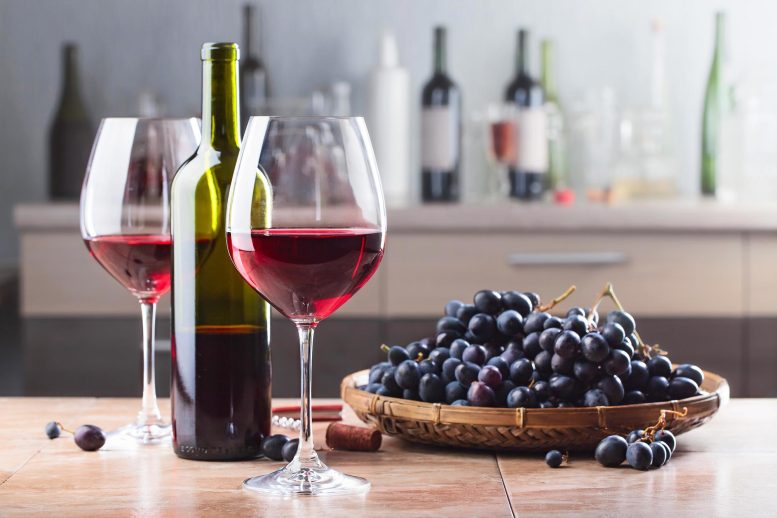
A new study from the University of Copenhagen revealed that eating a diet rich in antioxidants may actually counteract many of the health benefits of exercise, including reduced blood pressure and cholesterol in older men.
In older men, a natural antioxidant compound found in red grapes and other plants – called resveratrol – blocks many of the cardiovascular benefits of exercise. This is the surprising result from a research project from the University of Copenhagen published today in The Journal of Physiology.
The research unusually suggests that eating a diet rich in antioxidants may actually counteract many of the health benefits of exercise, including reduced blood pressure and cholesterol.
Resveratrol has received widespread attention as a possible anti-aging compound and is now widely available as a dietary supplement; much has been made of its role in explaining the cardiovascular health benefits of red wine, and other foods.
In contrast to earlier studies in animals in which resveratrol improved the cardiovascular benefits of exercise, this study in humans has provided surprising and strong evidence that in older men, resveratrol has the opposite effect.
New view on antioxidants
What is emerging is a new view that antioxidants are not the fix for everything, and that some degree of oxidant stress may be necessary for the body to work correctly. This pivotal study suggests that reactive oxygen species, generally thought of as causing aging and disease, may be a necessary signal that causes healthy adaptations in response to stresses like exercise. So too much of a good thing (like antioxidants in the diet) may actually be detrimental to our health.
“We studied 27 healthy, physically inactive men around 65 years old for 8 weeks. During the 8 weeks all of the men performed high-intensity exercise training and half of the group received 250 mg of resveratrol daily, whereas the other group received a placebo pill (a pill containing no active ingredient). The study design was double-blinded, thus neither the subjects nor the investigators knew which participant that received either resveratrol or placebo”, says Ph.D. student Lasse Gliemann, University of Copenhagen, who was one of the researchers in the study.
He continues: “We found that exercise training was highly effective in improving cardiovascular health parameters, but resveratrol supplementation attenuated the positive effects of training on several parameters including blood pressure, plasma lipid concentrations and maximal oxygen uptake.”
“We were surprised to find that resveratrol supplementation in aged men blunts the positive effects of exercise training on cardiovascular health parameters, in part because our results contradict findings in animal studies”, adds professor Ylva Hellsten, the leader of the project, and she continues: “It should be noted that the quantities of resveratrol given in our research study are much higher than what could be obtained by intake of natural foods.
This research adds to the growing body of evidence questioning the positive effects of antioxidant supplementation in humans.
Reference: “Resveratrol Blunts the Positive Effects of Exercise Training on Cardiovascular Health in Aged Men” by Lasse Gliemann, Jakob Friis Schmidt, Jesper Olesen, Rasmus Sjørup Biensø, Sebastian Louis Peronard, Simon Udsen Grandjean, Stefan Peter Mortensen, Michael Nyberg, Jens Bangsbo, Henriette Pilegaard and Ylva Hellsten, 7 August 2013, The Journal of Physiology.
DOI: 10.1113/jphysiol.2013.258061
Never miss a breakthrough: Join the SciTechDaily newsletter.
Follow us on Google and Google News.
1 Comment
You see man and his unwisdom advise people to drink wine and eat grapes for health but it is counterintuitive that these things can damage you also.
That’s why many vitamins and mineral supplements aggravate cancer growth.