
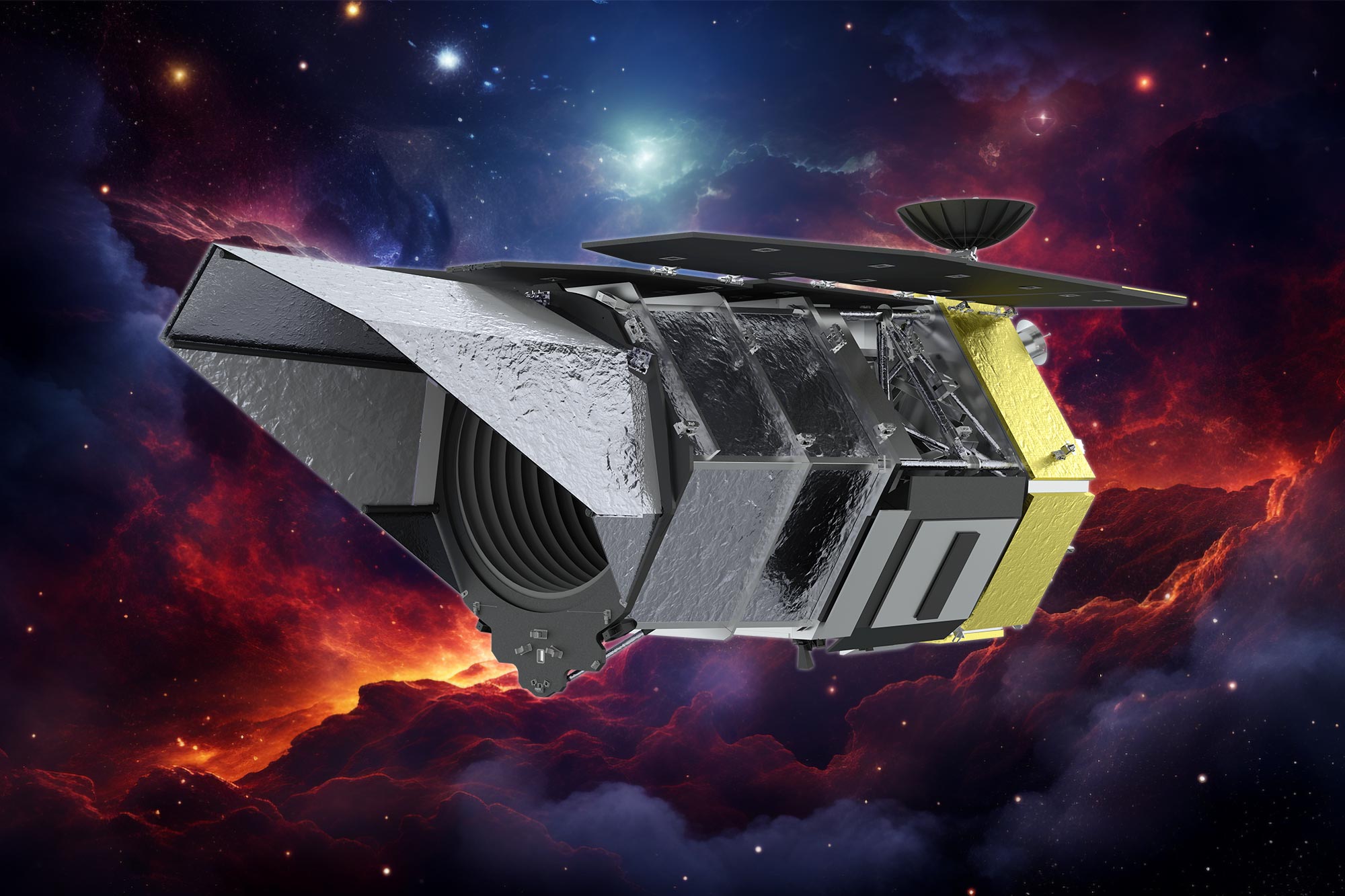
NASA’s Nancy Grace Roman Space Telescope has cleared a key milestone ahead of launch after mission managers from NASA and SpaceX completed a Flight Readiness Review at Kennedy Space Center in Florida.
During the review, teams examined the spacecraft, rocket, mission systems, and overall launch status. After receiving updates from across the mission, managers certified Roman to move into its final phase of launch preparations.
Roman Targets an August 30 Launch
NASA and SpaceX are aiming to launch Roman no earlier than 7:26 a.m. EDT Sunday, August 30. The observatory will ride to space aboard a SpaceX Falcon Heavy rocket from Launch Complex 39A at Kennedy Space Center.
A Flight Readiness Review is one of the final major checks before a mission can proceed toward liftoff. Engineers and mission leaders use the review to confirm that the spacecraft, launch vehicle, ground systems, and supporting teams are prepared for the next steps.
Over the coming days, Roman will be moved while enclosed inside Falcon Heavy’s fairing, the protective shell that surrounds a spacecraft during launch. Teams will transport the encapsulated observatory to SpaceX’s hangar at pad 39A, where technicians will connect it to the Falcon Heavy rocket.
Once that work is complete, the fully assembled launch vehicle will be moved out to the launch pad for the final preparations before liftoff.
A New Telescope Built to Survey the Universe
Roman is NASA’s newest space telescope and is designed to give astronomers a much broader view of the cosmos. Its observations will help scientists investigate how the universe has evolved over billions of years and explore one of modern astronomy’s biggest mysteries: what is causing the expansion of the universe to accelerate.
The telescope will also study exoplanets, which are planets orbiting stars beyond our solar system. By surveying large regions of the sky, Roman is expected to help researchers learn more about the variety of planetary systems throughout the galaxy.
Together, those capabilities are intended to give scientists new tools for studying both the large-scale history of the universe and the distant worlds scattered throughout it.
Never miss a breakthrough: Join the SciTechDaily newsletter.
Follow us on Google and Google News.