
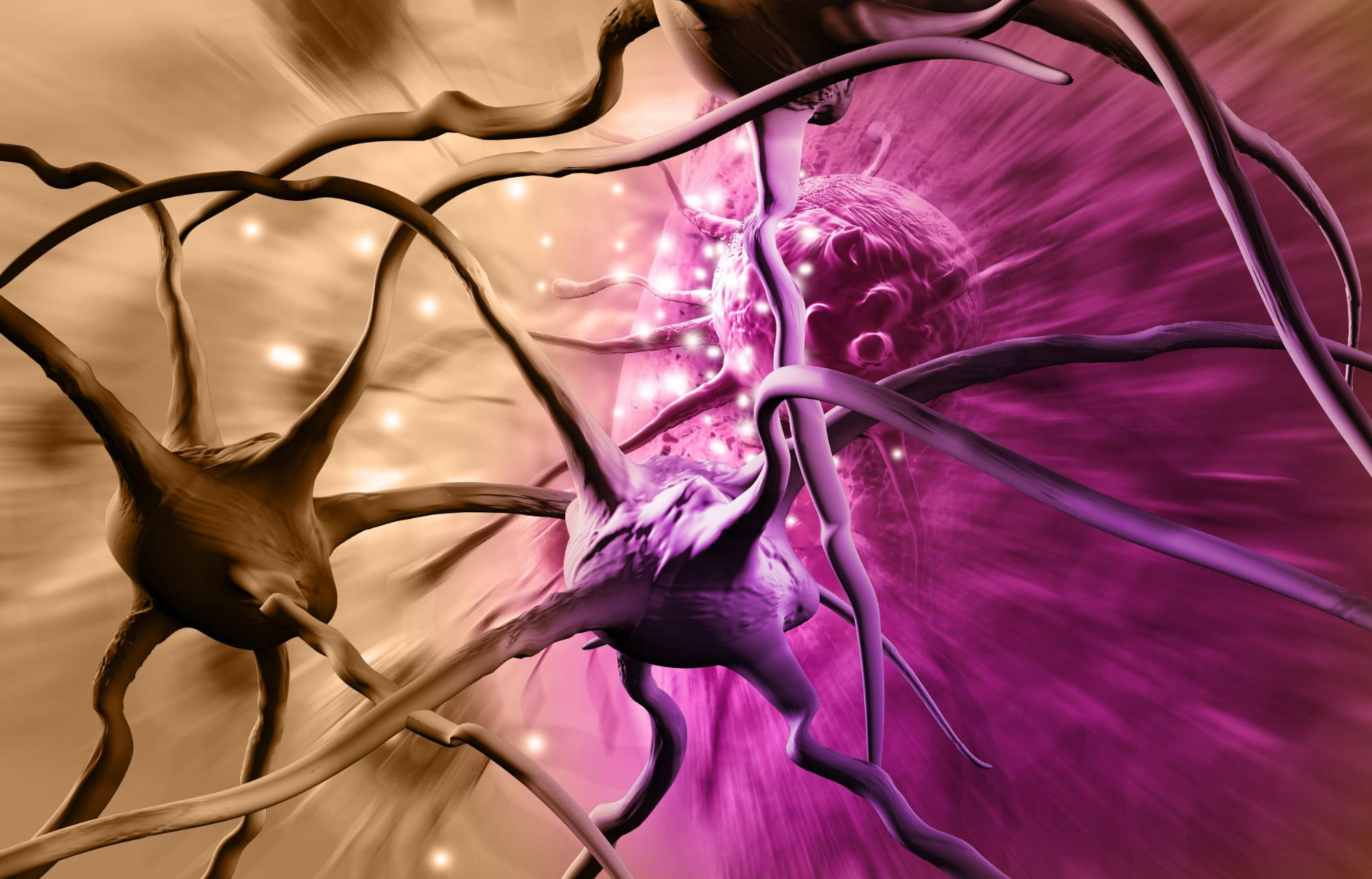
A preclinical study links a protein to triple-negative breast cancer’s ability to spread to the brain and evade the brain’s immune defenses.
Triple-negative breast cancer is more likely than many other breast cancers to spread to the brain, where treatment options are limited, and outcomes are often poor.
Researchers at Wake Forest University School of Medicine have identified a possible contributor in SIRPα, a protein best known for regulating immune cells. Their experiments suggest that it also works inside cancer cells, changing both their behavior and the response of the brain’s immune defenses.
Across several preclinical models, reducing or blocking SIRPα slowed tumor growth, decreased the amount of cancer in the brain, and delayed the development of brain metastases, tumors formed by cancer spreading from elsewhere. It also reversed some of the changes that helped cancer cells evade the immune response.
“The biology of brain metastasis is incredibly complex, and we urgently need better ways to prevent and treat it,” said David R. Soto-Pantoja, Ph.D., corresponding author and associate professor of cancer biology at Wake Forest University School of Medicine. “Our findings suggest that SIRPα helps make tumor cells more aggressive while also changing the brain environment in ways that help those cells survive.”
Higher SIRPα levels linked to poorer outcomes
Triple-negative breast cancer, or TNBC, is an aggressive disease that lacks three common markers used to guide treatment. Analyzing human breast cancer data and patient tumor samples, the researchers found elevated SIRPα levels in TNBC cells, especially in tumors that had reached the brain, and linked higher levels to poorer patient outcomes.
To investigate the biology behind those observations, the team conducted experiments involving breast cancer cells, immune cells, and mitochondria, the structures that produce energy within cells. Their preclinical models were designed to reproduce breast cancer’s spread to the brain. The study, by Tsai YT and colleagues, was recently published in Neuro-Oncology.
Fibronectin may weaken the brain’s defenses
The experiments showed that SIRPα increased cancer cells’ production of fibronectin, a protein that provides structure and support around cells. Repeated exposure to fibronectin appeared to reduce the ability of microglia, immune cells that help protect the brain, to trigger inflammation and attack the cancer cells.
“One of the most intriguing findings was that the tumor cells appeared to weaken the response of the brain’s immune cells,” Soto-Pantoja said. “This creates a more favorable environment for cancer cells to grow and survive, and SIRPα appears to play an important role in that process.”
Targeting SIRPα beyond immune cells
In cancer cells with high levels of SIRPα, mitochondria broke into smaller pieces through a process called mitochondrial fission. This change made the cells more mobile and more likely to spread in the study models.
Most experimental treatments involving the CD47-SIRPα signaling pathway have focused on its role in immune cells. The findings suggest that targeting SIRPα could also interfere with processes inside cancer cells, potentially offering an additional treatment effect. Understanding the connections among cancer cells’ energy-producing machinery, their surrounding structural environment, and the brain’s immune response could inform research for patients whose TNBC has spread or is at high risk of spreading to the brain.
The results remain preclinical, and additional studies are needed before this approach can be evaluated in patients. The investigators plan to examine how SIRPα functions inside cancer cells, whether it can be targeted safely, and whether blocking it could improve the effects of existing immunotherapies or other treatments for TNBC brain metastases.
Reference: “Cancer-intrinsic SIRPα Signaling Triggers Mitochondrial Fission and Immune Tolerance to Promote TNBC Breast-to-Brain Metastasis” by Yu-Ting Tsai, Jessica D Mackert, Adam Wilson, Mitra Kooshki, Valerie Payne, Jamie J Sagastume, Ashley Szymonski, Brian Westwood, Lance D Miller, Pierre L Triozzi, Dawen Zhao, Linda Metheny-Barlow, Masaki Terabe, Katherine L Cook, Glenn J Lesser and David R Soto-Pantoja, 31 August 2026, Neuro-Oncology.
DOI: 10.1093/neuonc/noag202
This research was supported by the American Society for Radiation Oncology-Breast Cancer Research Foundation Career Development Award to End Breast Cancer; National Cancer Institute grant R21CA249349; the Lewis-Michael Miracle Fund; an Atrium Health Wake Forest Baptist Comprehensive Cancer Center Brain Tumor Center of Excellence Pilot Award; American Cancer Society Post-Baccalaureate Training Program grant 11000003871; and the National Cancer Institute Intramural Research Program grant ZIA BC 011877.
Never miss a breakthrough: Join the SciTechDaily newsletter.
Follow us on Google and Google News.