
Close Menu
    Facebook X (Twitter) Instagram
    SciTechDaily
    • Biology
    • Chemistry
    • Earth
    • Health
    • Physics
    • Science
    • Space
    • Technology
    Facebook X (Twitter) Pinterest YouTube RSS
    SciTechDaily
    Home»Health»New Study Shows Resistance to Cancer Drugs Runs Deeper Than a Single Gene
    Health

    New Study Shows Resistance to Cancer Drugs Runs Deeper Than a Single Gene

    By Bill Hathaway, Yale UniversityOctober 20, 2016No Comments3 Mins Read
    Facebook Twitter Pinterest Telegram LinkedIn WhatsApp Email Reddit
    Share
    Facebook Twitter LinkedIn Pinterest Telegram Email Reddit
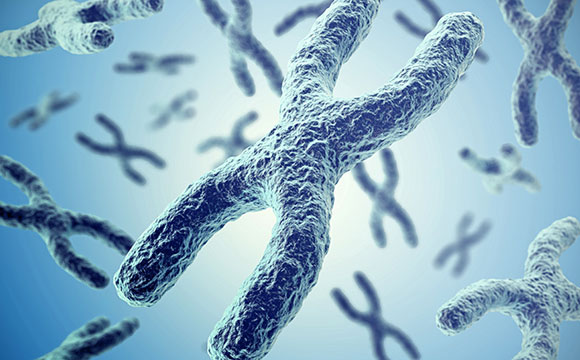
    Resistance to Cancer Drugs Runs Deeper Than a Single Gene
    A recent study suggests that searching for individual genes to predict breast cancer therapy responses may not be effective. Yale researchers recommend focusing on abnormalities in networks of genes instead.

    A new study from Yale University shows that resistance to cancer drugs runs deeper than a single gene.

    Searching for more individual genes to predict responses to breast cancer therapy may not work, a new study suggests. Instead, scientists and clinicians need to pay attention to abnormalities in networks of genes, Yale researchers report in a paper published in the journal Annals of Oncology.

    The Yale team studied all the genes of 200 patients who had HER2-positive breast cancer (about 15% of breast cancers have too many copies of the HER2 gene). About half of the patients responded very well to HER2-targeted therapy, but half did not, researchers reported. However, they were not able to find a single gene abnormality that could serve as a biomarker to predict treatment outcomes for all patients.

    “If we keep looking for one marker at a time, we will not find a clinically useful marker to guide treatment selection for these drugs,” said Dr. Lajos Pusztai, a researcher at the Yale Cancer Center and senior author of the study.

    However, they did find abnormalities in several dozens of genes in a single molecular network that aid in transmitting chemical information from the HER2 molecule on the cell surface to the interior of the cell. The presence of these abnormalities predicted which patients would be resistant to standard therapies. Only a few patients, however, shared the same individual abnormalities, and the network was affected at different genetic locations in different patients.

    “You can look at these treatment-resistant cancers like a broken car — there are many different ways for a car to break down but the outcome is the same: The car is not working,” Pusztai said.

    He said a diagnostic test that can pinpoint abnormalities in this network of genes might help customize treatment. A new generation of drugs to treat women with HER2-positive breast cancer are now available and are effective, but are also extremely costly, Pusztai said. “We could save this new generation of drugs for those who really need it and treat women who don’t with therapies that are less intense.”

    Reference: “Pathway level alterations rather than mutations in single genes predict response to HER2-targeted therapies in the neo-ALTTO trial” by W. Shi, T. Jiang, P. Nuciforo, C. Hatzis, E. Holmes, N. Harbeck, C. Sotiriou, L. Peña, S. Loi, D.D. Rosa, S. Chia, A. Wardley, T. Ueno, J. Rossari, H. Eidtmann, A. Armour, M. Piccart-Gebhart, D.L. Rimm, J. Baselga and L. Pusztai, January 2017, Ann Oncol.
    DOI: 10.1093/annonc/mdw434

    Never miss a breakthrough: Join the SciTechDaily newsletter.
    Follow us on Google and Google News.

    Breast Cancer Cancer Oncology Yale University
    Share. Facebook Twitter Pinterest LinkedIn Email Reddit

    Related Articles

    Immune Therapy Drug Prolongs Survival in Advanced Lung Cancer Patients

    Yale Researchers Discover New Complexities Behind Drug Resistance

    MRI May Lead to Overdiagnosis of Cancer

    A New Paradigm for Cancer Research, One That Focuses on Improving Efficacy and Value

    Rare ALK Genetic Mutation Extends Cancer Survival

    Cavity Shaving Reduces the Risk of a Second Mastectomy

    A Real-Time Blood Test for Cancer Tumors

    Ultrasound Can Detect Cancers Missed by Mammography

    New Drug Combination Delays Breast Cancer Progression

    Leave A Reply Cancel Reply

    • Facebook
    • Twitter
    • Pinterest
    • YouTube

    Don't Miss a Discovery

    Subscribe for the Latest in Science & Tech!

    Trending News

    Your Blood Pressure Reading Could Be Wrong Because of One Simple Mistake

    Astronomers Stunned by Ancient Galaxy With No Spin

    Physicists May Be on the Verge of Discovering “New Physics” at CERN

    Scientists Solve 320-Million-Year Mystery of Reptile Skin Armor

    Scientists Say This Daily Walking Habit May Be the Secret to Keeping Weight Off After Dieting

    New Therapy Rewires the Brain To Restore Joy in Depression Patients

    Giant Squid Detected off Western Australia in Stunning Deep-Sea Discovery

    Popular Sugar-Free Sweetener Linked to Liver Disease, Study Warns

    Follow SciTechDaily
    • Facebook
    • Twitter
    • YouTube
    • Pinterest
    • Newsletter
    • RSS
    SciTech News
    • Biology News
    • Chemistry News
    • Earth News
    • Health News
    • Physics News
    • Science News
    • Space News
    • Technology News
    Recent Posts
    • One of the World’s Most Popular Weedkillers May Be Fueling Deadly Superbugs
    • Scientists Create Laser “Whirlpools” That Spin Tiny Cells Without Touching Them
    • Scientists Discover “Hidden” Materials That Could Transform Clean Energy and Batteries
    • Scientists Just Measured an Energy Pulse Smaller Than a Trillionth of a Billionth of a Joule
    • 540-Million-Year-Old Fossils Reveal a Huge Surprise About Early Life on Earth
    Copyright © 1998 - 2026 SciTechDaily. All Rights Reserved.
    • Science News
    • About
    • Contact
    • Editorial Board
    • Privacy Policy
    • Terms of Use

    Type above and press Enter to search. Press Esc to cancel.