
Close Menu
    Facebook X (Twitter) Instagram
    SciTechDaily
    • Biology
    • Chemistry
    • Earth
    • Health
    • Physics
    • Science
    • Space
    • Technology
    Facebook X (Twitter) Pinterest YouTube RSS
    SciTechDaily
    Home»Technology»Heme Molecule May Be The Key To More Effficient Batteries
    Technology

    Heme Molecule May Be The Key To More Effficient Batteries

    By William Weir, Yale UniversityOctober 19, 2016No Comments3 Mins Read
    Facebook Twitter Pinterest Telegram LinkedIn WhatsApp Email Reddit
    Share
    Facebook Twitter LinkedIn Pinterest Telegram Email Reddit
    Lithium-Oxygen (Li-O2) Batteries
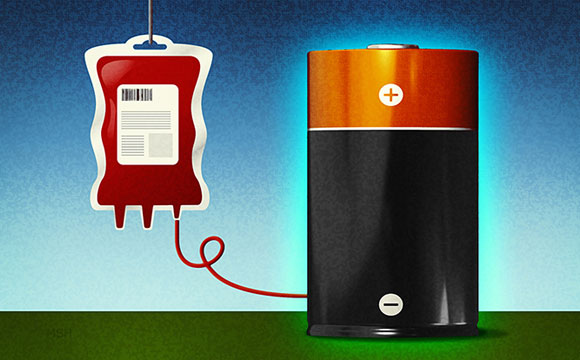
    A blood oxygen-transporting molecule may hold the key to creating the next generation of batteries.

    New research from Yale University shows that a molecule that transports oxygen in blood could be key to developing the next generation of batteries.

    Lithium-oxygen (Li-O2) batteries have emerged in recent years as a possible successor to lithium-ion batteries — the industry standard for consumer electronics — due to their potential for holding a charge for a very long time. Electronic devices would go for weeks without charging, for instance; electric cars could travel four to five times longer than the current standard.

    But before this could happen, researchers need to make the Li-O2 batteries efficient enough for commercial application and prevent the formation of lithium peroxide, a solid precipitate that covers the surface of the batteries’ oxygen electrodes. One obstacle is finding a catalyst that efficiently facilitates a process known as oxygen evolution reaction, in which lithium oxide products decompose back into lithium ions and oxygen gas.

    The Yale lab of Andre Taylor, associate professor of chemical and environmental engineering, has identified a molecule known as heme that could function as a better catalyst. The researchers demonstrated that the heme molecule improved the Li-O2 cell function by lowering the amount of energy required to improve the battery’s charge/discharge cycle times.

    The results appear in Nature Communications. The lead author is Won-Hee Ryu, a former postdoctoral researcher in Taylor’s lab, who is now an assistant professor of chemical and biological engineering at Sookmyung Women’s University in South Korea.

    The heme is a molecule that makes up one of the two parts of hemoglobin, which carries oxygen in the blood of animals. Used in a Li-O2 battery, Ryu explained, the molecule would dissolve into the battery’s electrolytes and act as what’s known as a redox mediator, which lowers the energy barrier required for the electrochemical reaction to take place.

    “When you breathe in air, the heme molecule absorbs oxygen from the air to your lungs and when you exhale, it transports carbon dioxide back out,” Taylor said. “So it has a good binding with oxygen, and we saw this as a way to enhance these promising lithium-air batteries.”

    The researchers added that their discovery could help reduce the amount of animal waste disposal.

    “We’re using a biomolecule that traditionally is just wasted,” said Taylor. “In the animal products industry, they have to figure out some way to dispose of the blood. Here, we can take the heme molecules from these waste products and use it for renewable energy storage.”

    Ryu noted that by using recyclable biowaste as a catalyst material, the technology is both effective and could be preferential in developing green energy applications.

    Reference: “Heme biomolecule as redox mediator and oxygen shuttle for efficient charging of lithium-oxygen batteries” by Won-Hee Ryu, Forrest S. Gittleson, Julianne M. Thomsen, Jinyang Li, Mark J. Schwab, Gary W. Brudvig and André D. Taylor, 19 October 2016, Nature Communications.
    DOI: 10.1038/ncomms12925

    Never miss a breakthrough: Join the SciTechDaily newsletter.
    Follow us on Google and Google News.

    Battery Technology Biomedical Engineering Chemical Engineering Green Technology Yale University
    Share. Facebook Twitter Pinterest LinkedIn Email Reddit

    Related Articles

    Yale Engineers Develop Plant-Derived Material to Purify Water

    A New Design Strategy for Better Lithium Oxygen Batteries

    SEAS Engineers Develop More Efficient Solar Cells

    Engineers at SEAS Develop a Microelectronic Device That Mimics Functions of Real Cells

    Plant Dye Purpurin Creates Eco-Friendly Battery

    Zinc Anode Battery System, Alternative for Nickel Cadmium Batteries

    Automated System Has Promising Uses in Battery and Fuel Cell Production

    MIT Researchers Design Inexpensive Liquid Batteries With Distinct Layers

    Lithium Iron Phosphate Batteries Could Lead to Cheaper, More Efficient Solar Energy

    Leave A Reply Cancel Reply

    • Facebook
    • Twitter
    • Pinterest
    • YouTube

    Don't Miss a Discovery

    Subscribe for the Latest in Science & Tech!

    Trending News

    JWST Finds a “Star” 100 Billion Times Brighter Than Any Star Should Be

    Scientists Find a Hidden Biological Link Across Different Forms of Autism

    Astronomers Discover a Ghostly River of Stars That Could Reveal Dark Matter

    Why Is Colorectal Cancer Rising in People Under 50? New Clues Point to the Environment

    Quantum Fluctuations Break a Crystal’s Symmetry Rules

    Why Does an Irregular Heartbeat Strike 40 Years Early in Some People?

    Scientists Reveal How ADHD Could Fuel Creative Thinking

    Scientists Find Just 3 Minutes of Sprinting Can Transform Blood Chemistry

    Follow SciTechDaily
    • Facebook
    • Twitter
    • YouTube
    • Pinterest
    • Newsletter
    • RSS
    SciTech News
    • Biology News
    • Chemistry News
    • Earth News
    • Health News
    • Physics News
    • Science News
    • Space News
    • Technology News
    Recent Posts
    • Common Plant Chemical Linked to Widespread Organ Damage in Aquatic Animals
    • Scientists Discover a Hidden Baobab Species in Madagascar
    • Dogs and Humans May Share a Surprising Biological Secret to Longevity
    • A 150-Million-Year-Old Dinosaur Flight Mystery May Finally Have an Answer
    • Giant Crocodylians Ruled South America’s Ancient Food Chain
    Copyright © 1998 - 2026 SciTechDaily. All Rights Reserved.
    • Science News
    • About
    • Contact
    • Editorial Board
    • Privacy Policy
    • Terms of Use

    Type above and press Enter to search. Press Esc to cancel.