
Close Menu
    Facebook X (Twitter) Instagram
    SciTechDaily
    • Biology
    • Chemistry
    • Earth
    • Health
    • Physics
    • Science
    • Space
    • Technology
    Facebook X (Twitter) Pinterest YouTube RSS
    SciTechDaily
    Home»Space»Hubble Space Telescope Peers Through Giant Elliptical Galaxy’s Layers
    Space

    Hubble Space Telescope Peers Through Giant Elliptical Galaxy’s Layers

    By NASAMay 24, 2022No Comments2 Mins Read
    Facebook Twitter Pinterest Telegram LinkedIn WhatsApp Email Reddit
    Share
    Facebook Twitter LinkedIn Pinterest Telegram Email Reddit
    Hubble Elliptical Galaxy NGC 474
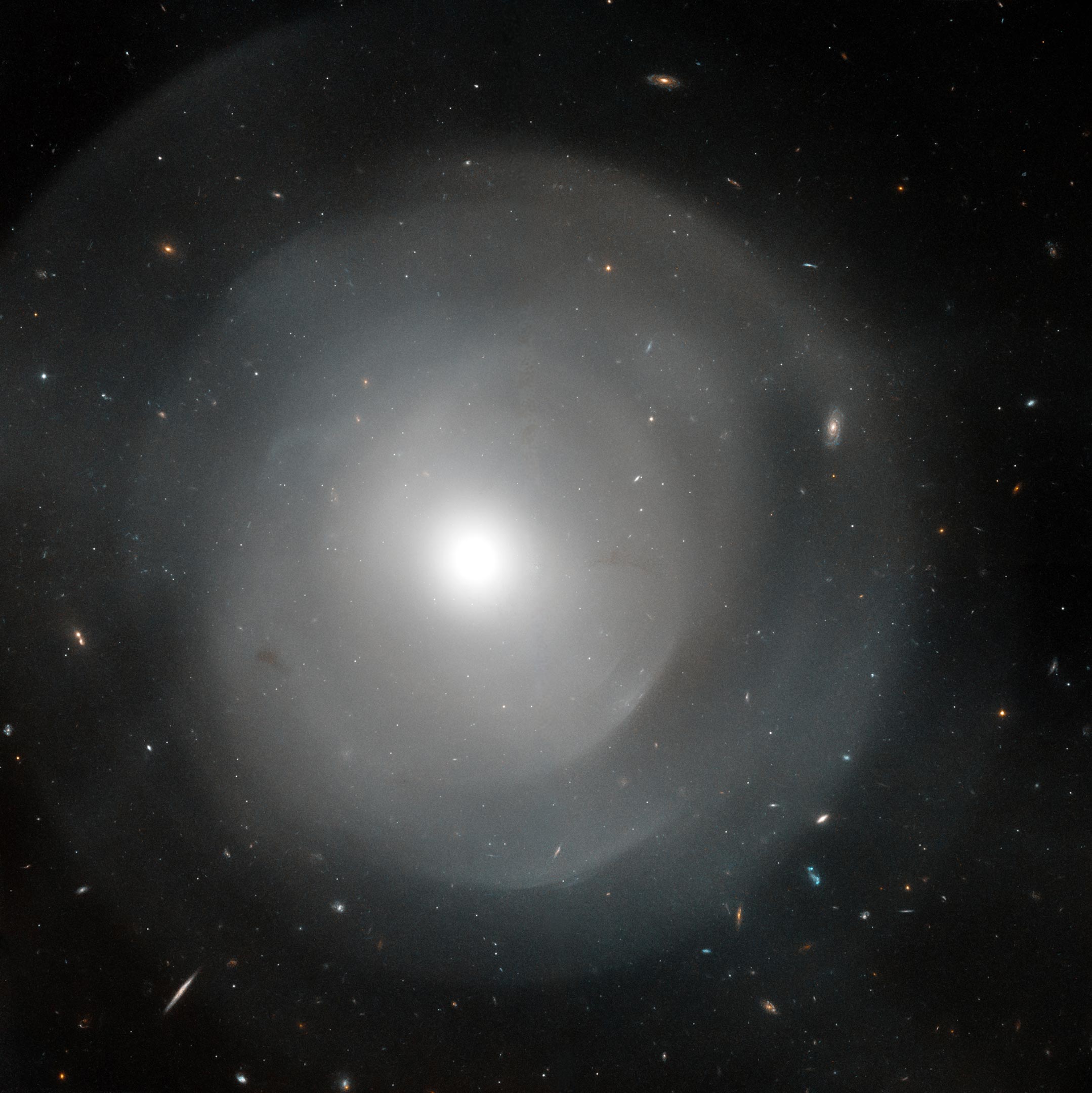
    Hubble Space Telescope image of NGC 474, a gigantic elliptical galaxy NGC 474 located about 100 million light-years from Earth. Credit: NASA, ESA, and D. Carter (Liverpool John Moores University); Image processing: G. Kober (NASA Goddard/Catholic University of America)

    This new NASA Hubble Space Telescope image captures the central region of the enormous elliptical galaxy NGC 474. Located around 100 million light-years from Earth, NGC 474 spans approximately 250,000 light-years across – that’s 2.5 times larger than our own Milky Way galaxy!

    Along with its gigantic size, NGC 474 has a series of complex layered shells that surround its spherical-shaped core. The origin of these shells is unknown, but astronomers theorize that they may be the aftereffects of the giant galaxy absorbing one or more smaller galaxies. In a similar manner to how a pebble creates ripples on a pond when dropped into the water, the absorbed galaxy creates waves that form the shells.

    Elliptical Galaxy NGC 474
    Most elliptical galaxies are associated with galaxy clusters, but NGC 474 is in a relatively empty part of space. Only a much smaller spiral galaxy, NGC 470, is nearby and visible in the Digital Sky Survey image above. This beautiful spiral will likely succumb to NGC 474’s gravitational pull billions of years from now, possibly creating even more complex shells around the giant elliptical. Credit: NASA, ESA, D. Carter (Liverpool John Moores University), DSS; Image processing: G. Kober (NASA Goddard/Catholic University of America)

    About 10% of elliptical galaxies have shell structures, but unlike the majority of elliptical galaxies, which are associated with galaxy clusters, shelled ellipticals usually lie in relatively empty space. It may be that they’ve cannibalized their neighbors.

    The image was created using data from Hubble’s Advanced Camera for Surveys. Additional gap-filling data was provided by Hubble’s Wide Field and Planetary Camera 2 and Wide Field Camera 3. The color blue represents visible blue light while the color orange represents near-infrared light that is just out of the range of human vision.

    Never miss a breakthrough: Join the SciTechDaily newsletter.
    Follow us on Google and Google News.

    Astronomy Hubble Space Telescope NASA
    Share. Facebook Twitter Pinterest LinkedIn Email Reddit

    Related Articles

    Hubble Reveals a Star Disk Three Times Hotter Than the Sun’s Surface

    A Star’s Unexpected Heatwave: FU Orionis Challenges Astrophysics Models

    NASA’s Hubble Reveals How the LMC Defied Galactic Destruction

    Legendary Star’s Smooth Disk Mystifies Astronomers, Challenges Planet Formation Theories

    Cosmic Horror Unveiled: NASA Reveals “Blood-Soaked Eyes” Staring From Deep Space [Video]

    Spanning 248 Billion Miles: Stunning Hubble Timelapse Captures a Star’s Violent Eruptions

    Jupiter’s Great Red Spot Enigma: Unexplained Oscillations Baffle Astronomers

    Unlocking Uranus: NASA’s Dual Observations Pave the Way to Discovering New Worlds

    Astronomers Baffled by Black Hole Jets Igniting Star Explosions

    Leave A Reply Cancel Reply

    • Facebook
    • Twitter
    • Pinterest
    • YouTube

    Don't Miss a Discovery

    Subscribe for the Latest in Science & Tech!

    Trending News

    Bone-Strengthening Discovery Could Reverse Osteoporosis

    Scientists Uncover Hidden Trigger Behind Stem Cell Aging

    Scientists Find Way to Reverse Fatty Liver Disease Without Changing Diet

    Could Humans Regrow Limbs? New Study Reveals Promising Genetic Pathway

    Scientists Reveal Eating Fruits and Vegetables May Increase Your Risk of Lung Cancer

    Scientists Reverse Brain Aging With Simple Nasal Spray

    Scientists Uncover Potential Brain Risks of Popular Fish Oil Supplements

    Scientists Discover a Surprising Way To Make Bread Healthier and More Nutritious

    Follow SciTechDaily
    • Facebook
    • Twitter
    • YouTube
    • Pinterest
    • Newsletter
    • RSS
    SciTech News
    • Biology News
    • Chemistry News
    • Earth News
    • Health News
    • Physics News
    • Science News
    • Space News
    • Technology News
    Recent Posts
    • Alzheimer’s Symptoms May Start Outside the Brain, Study Finds
    • Cancer’s Secret Weapon? Scientists Reveal How Tumors “Learn” To Survive Treatment
    • Millions Take This Popular Supplement – Scientists Discover a Concerning Link to Heart Failure
    • What Makes Rubber So Strong? Scientists Finally Solve 100-Year-Old Mystery
    • Scientists Decode Mysterious Magnetic “Maze Domains” To Boost EV Efficiency
    Copyright © 1998 - 2026 SciTechDaily. All Rights Reserved.
    • Science News
    • About
    • Contact
    • Editorial Board
    • Privacy Policy
    • Terms of Use

    Type above and press Enter to search. Press Esc to cancel.