
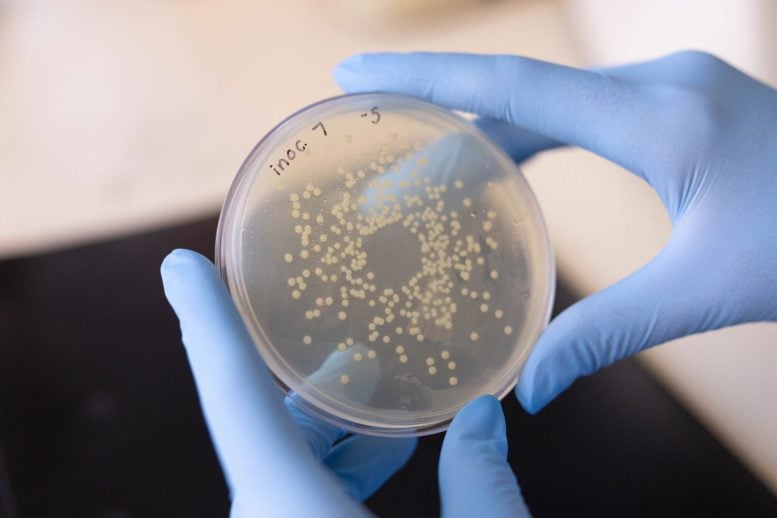
The body turns copper into a weapon against urinary tract infections, and scientists hope to strengthen that defense against bacteria that resist antibiotics.
Researchers at the Texas A&M College of Veterinary Medicine and Biomedical Sciences (VMBS) are investigating how the immune system deploys copper against urinary tract infections (UTIs) and how bacteria survive the assault. Their goal is to identify weaknesses that could help treat infections increasingly resistant to antibiotics.
The project, supported by a $1.48 million grant from the National Institutes of Health (NIH), builds on previous findings from Dr. Sarguru Subash, an associate professor in the VMBS Department of Veterinary Pathobiology. His laboratory showed that the body raises copper levels in the urinary tract during infection to help kill invading bacteria.
How Copper Becomes an Immune Weapon
Copper has two very different roles: people and animals need it in small amounts, but under the right conditions, it is toxic to bacteria. The immune system uses that toxicity as part of its early, or innate, response to infection.
Specialized immune cells can engulf bacteria and expose them to a mixture of antimicrobial substances that includes copper. During UTIs, copper levels also rise in urine, according to Subash’s earlier research.
Bacteria, however, have their own protective systems. Because copper occurs naturally in their surroundings, many have evolved ways to pump it out or limit its harmful effects. The new project will investigate the genetic mechanisms that allow bacteria causing UTIs to tolerate increased copper and continue growing.
“We know that copper plays an important role, but that also raises so many questions about how these pathogens adapt to the presence of increased copper,” Subash said. “If we better understand how the bacteria overcome the host-imposed copper resistance, then we can develop therapies that make the bacteria more susceptible to copper and, more broadly, to everything that the immune system throws at them.”
Stopping Bacteria From Gripping the Bladder
The team is also exploring preliminary evidence that copper may disrupt fimbriae, the hairlike structures bacteria use to attach to cells lining the bladder. Interfering with those structures could weaken an infection without relying solely on killing the bacteria.
Attachment is crucial because the urinary tract already has a simple physical defense: the flow of urine. Bacteria that cannot hold firmly to the bladder lining are more likely to be flushed out, Subash explained.
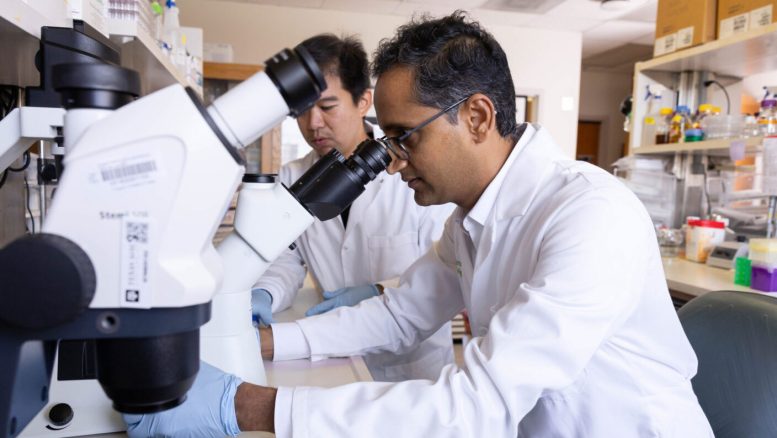
Copper’s effectiveness also depends on the other defenses acting alongside it. “Bacteria do have adaptations, but when it’s presented in the context of this cocktail, the bacterial defense mechanisms are not as effective,” Subash said. “Sometimes the balance tips in favor of the host, so we can control the infections. Other times, the balance tips in favor of pathogens. As a result, we get clinical disease.”
Delivering Copper Without Damaging Cells
The researchers will examine the body’s side of the interaction as well, focusing on ceruloplasmin, a protein containing copper. Subash’s previous findings suggest it may help deliver copper during a UTI.
That delivery requires careful control. At high concentrations, copper can damage the body’s own cells, so its transport and storage are tightly regulated. The team will study how ceruloplasmin mobilizes copper during infection and how that process contributes to controlling bacteria.
Examining both copper delivery and bacterial resistance should give the researchers a fuller picture of the point where immune defenses meet an invading organism. It could also help them identify ways to strengthen those defenses through treatment.
Developing Treatments That Work With Immunity
The laboratory has already identified an experimental antimicrobial compound that becomes more effective when copper is present. The next step is to modify and test related compounds, looking for candidates that could work alongside the body’s existing defenses.
This strategy could offer another route for treating infections as bacteria become increasingly resistant to antibiotics. Rather than considering a drug’s effect on bacteria in isolation, the researchers want to understand how its activity combines with the immune response.
“We are very interested in understanding the basic aspects of how the immune system controls pathogens so we can develop next-generation antimicrobials that not only are focused on directly killing bacteria but also work synergistically with the immune system,” Subash said.
A copper-dependent treatment ready for clinical use is still probably years away, Subash cautioned. The current project is an early step toward identifying potential options for difficult-to-treat UTIs.
Potential Benefits Beyond Human UTIs
Some bacteria that cause UTIs can also infect other parts of the body. Discoveries about how they withstand copper could therefore help guide research into treatments for other bacterial infections.
The findings could also matter in veterinary medicine, where recurring UTIs affect animals such as dogs. Before pursuing those applications, the team is concentrating on how the body deploys copper and how bacteria counter it.
“The main innovative aspect of this project is looking comprehensively at how the pathogen responds and how the host uses copper and then tying together both of these basic science discoveries with a translational goal,” Subash said. “It’s a full circle.”
Never miss a breakthrough: Join the SciTechDaily newsletter.
Follow us on Google and Google News.