
Close Menu
    Facebook X (Twitter) Instagram
    SciTechDaily
    • Biology
    • Chemistry
    • Earth
    • Health
    • Physics
    • Science
    • Space
    • Technology
    Facebook X (Twitter) Pinterest YouTube RSS
    SciTechDaily
    Home»Space»NASA Releases Statement on Possible Subsurface Martian Lake
    Space

    NASA Releases Statement on Possible Subsurface Martian Lake

    By Andrew Good, Jet Propulsion LaboratoryJuly 26, 2018No Comments2 Mins Read
    Facebook Twitter Pinterest Telegram LinkedIn WhatsApp Email Reddit
    Share
    Facebook Twitter LinkedIn Pinterest Telegram Email Reddit
    NASA Statement on Subsurface Lake near Martian South Pole
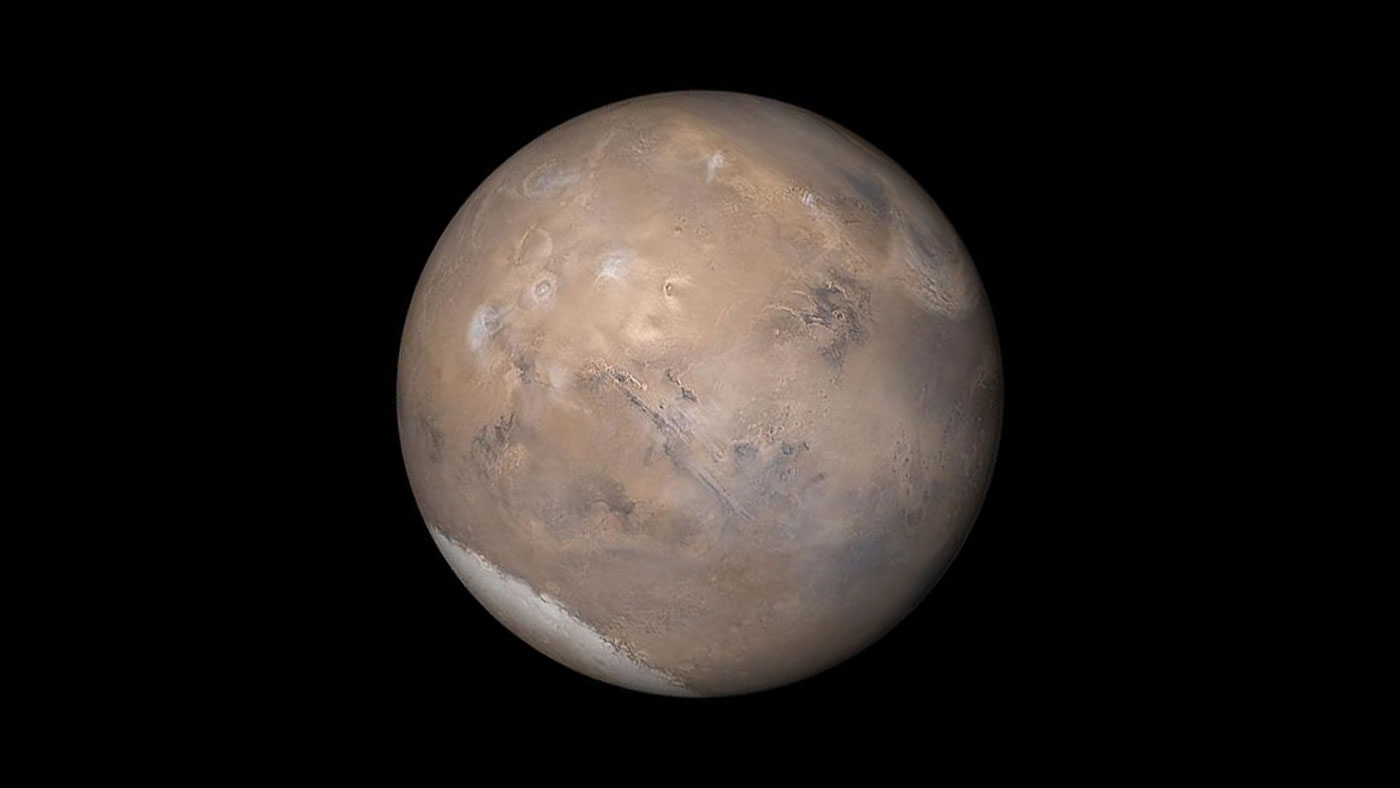
    The view of Mars shown here was assembled from MOC daily global images obtained on May 12, 2003. Credit: NASA/JPL/Malin Space Science System

    A new paper published in Science this week suggests that liquid water may be sitting under a layer of ice at Mars’ south pole.

    The finding is based on data from the European Mars Express spacecraft, obtained by a radar instrument called MARSIS (Mars Advanced Radar for Subsurface and Ionosphere Sounding). The Italian Space Agency (ASI) led the development of the MARSIS radar. NASA provided half of the instrument, with management of the U.S. portion led by the agency’s Jet Propulsion Laboratory in Pasadena, California. 

    The paper, authored by the Italian MARSIS team, outlines how a “bright spot” was detected in radar signals about 1 mile (about 1.5 kilometers) below the surface of the ice cap in the Planum Australe region. This strong radar reflection was interpreted by the study’s authors as liquid water — one of the most important ingredients for life in the Universe.

    “The bright spot seen in the MARSIS data is an unusual feature and extremely intriguing,” said Jim Green, NASA’s chief scientist. “It definitely warrants further study. Additional lines of evidence should be pursued to test the interpretation.”

    “We hope to use other instruments to study it further in the future,” Green added.

    One of those instruments will be on Mars later this year. NASA’s InSight lander will include a heat probe that will burrow down as far as 16 feet (5 meters) below the Martian surface. The probe, built by the German Aerospace Center (DLR), will provide crucial data on how much heat escapes the planet and where liquid water could exist near its surface.

    “Follow the Water” has been one of the major goals of NASA’s Mars program. Water is currently driving NASA’s exploration into the outer solar system, where ocean worlds — like Jupiter’s moon Europa and Saturn’s moon Enceladus — hold the potential to support life. Even protoplanets like Ceres may explain how water is stored in rocky “buckets” that transport water across the solar system.

    Never miss a breakthrough: Join the SciTechDaily newsletter.
    Follow us on Google and Google News.

    Astronomy Mars Planetary Science
    Share. Facebook Twitter Pinterest LinkedIn Email Reddit

    Related Articles

    Researchers Found a Surprisingly Realistic Way To Mine Asteroids for Mars

    An Unexpected Planetary Neighbor May Play a Surprising Role in Earth’s Climate Cycles

    New Clues Suggest Mars Once Had a Vast Northern Ocean

    Mystery Ozone Surge Discovered in Mars’s Winter Darkness

    Perseverance Rover Captures Elusive Martian Aurora for a Second Time

    NASA’s Curiosity Readies for First Drive on Mars

    Color HiRISE Image of Curiosity Rover on Mars

    First 360-Degree Color Panorama From NASA’s Curiosity Mars Rover

    A Connection Between Volatiles in the Subsurface of Mars and the Impact Process

    Leave A Reply Cancel Reply

    • Facebook
    • Twitter
    • Pinterest
    • YouTube

    Don't Miss a Discovery

    Subscribe for the Latest in Science & Tech!

    Trending News

    Scientists Built a Programmable Chip That Can Slow Light on Command

    The Backyard “Silly Sprinkler” That Cracked One of Physics’ Biggest Puzzles

    This Common Sleep Habit Could Be Making You Gain Weight

    Mathematician Offers New Solution to a Fundamental Cosmic Paradox

    Scientists Turn Plastic Waste Into Clean Hydrogen Fuel

    Long COVID Brain Scans Reveal Damage to Dopamine Neurons

    Scientists Warn a Silent Oxygen Crisis Is Spreading Through Earth’s Waters

    James Webb Telescope Discovers Hidden Giant Planet in Famous Star System

    Follow SciTechDaily
    • Facebook
    • Twitter
    • YouTube
    • Pinterest
    • Newsletter
    • RSS
    SciTech News
    • Biology News
    • Chemistry News
    • Earth News
    • Health News
    • Physics News
    • Science News
    • Space News
    • Technology News
    Recent Posts
    • Scientists Test Natural Compounds Against Sarcoma: Which One Shows the Most Promise?
    • Singapore Has the World’s Longest, Healthiest Lives – but It Comes With a Hidden Cost
    • Scientists Discover the First Contagious Cancer in a Freshwater Animal
    • NASA Astronaut Comes Home After 3,856 Orbits of Earth
    • A Rare and Deadly Cancer May Have an Unexpected New Vulnerability
    Copyright © 1998 - 2026 SciTechDaily. All Rights Reserved.
    • Science News
    • About
    • Contact
    • Editorial Board
    • Privacy Policy
    • Terms of Use

    Type above and press Enter to search. Press Esc to cancel.