
Close Menu
    Facebook X (Twitter) Instagram
    SciTechDaily
    • Biology
    • Chemistry
    • Earth
    • Health
    • Physics
    • Science
    • Space
    • Technology
    Facebook X (Twitter) Pinterest YouTube RSS
    SciTechDaily
    Home»Space»Stunning Hubble Image of Spiral Galaxy Messier 100
    Space

    Stunning Hubble Image of Spiral Galaxy Messier 100

    By MATHIAS JÄGER, ESA/HUBBLEDecember 10, 2018No Comments2 Mins Read
    Facebook Twitter Pinterest Telegram LinkedIn WhatsApp Email Reddit
    Share
    Facebook Twitter LinkedIn Pinterest Telegram Email Reddit
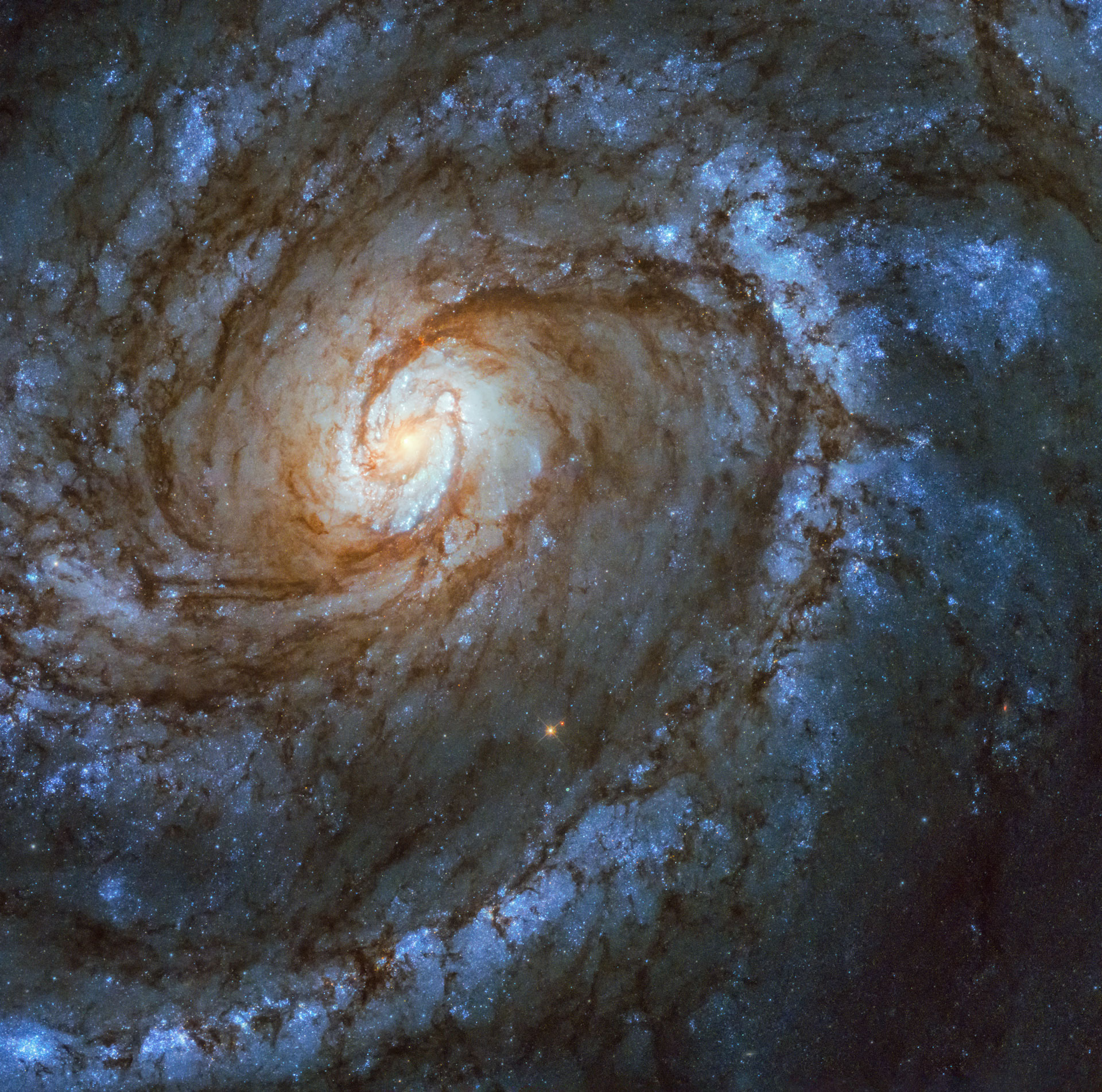
    Stunning Spiral Galaxy Messier 100
    This stunning spiral galaxy is Messier 100 in the constellation Coma Berenices. Credit: NASA, ESA

    This stunning spiral galaxy is Messier 100 in the constellation Coma Berenices, captured here by the NASA/ESA Hubble Space Telescope — not for the first time. Among Hubble’s most striking images of Messier 100 are a pair taken just over a month apart, before and after Servicing Mission 1, which took place 25 years ago in December 1993.

    After Hubble was launched, the astronomers and engineers operating the telescope found that the images it returned were fuzzy, as if it were out of focus. In fact, that was exactly what was happening. Hubble’s primary mirror functions like a satellite dish; its curved surface reflects all the light falling on it to a single focal point. However, the mirror suffered from a defect known as a spherical aberration, meaning that the light striking the edges of the mirror was not traveling to the same point as the light from the center. The result was blurry, unfocused images.

    To correct this fault, a team of seven astronauts undertook the first Servicing Mission in December 1993. They installed a device named COSTAR (Corrective Optics Space Telescope Axial Replacement) on Hubble, which took account of this flaw of the mirror and allowed the scientific instruments to correct the images they received. The difference between the photos taken of Messier 100 before and after shows the remarkable effect this had, and the dramatic increase in image quality.

    COSTAR was in place on Hubble until Servicing Mission 4, by which time all the original instruments had been replaced. All subsequent instrumentation had corrective optics built in.

    This new image of Messier 100 taken with Hubble’s Wide Field Camera 3 (WFC3), demonstrates how much better the latest generation of instruments is compared to the ones installed in Hubble after its launch and after Servicing Mission 1.

    Links

    • Messier 100 shows improvements of Hubble
    • Messier 100 seen 1993 with WFPC1
    • Messier 100 seen 1994 with WFPC2

    Never miss a breakthrough: Join the SciTechDaily newsletter.
    Follow us on Google and Google News.

    Astronomy Hubble Space Telescope
    Share. Facebook Twitter Pinterest LinkedIn Email Reddit

    Related Articles

    A Morphing Spiral Galaxy Amongst Friends

    Hubble Views Magnificent Lopsided Galaxy NGC 2276

    Hubble Captures Fantastic Detail of Eponymous Spiral Galaxy NGC 691

    Spectacular Image Captured by Hubble Shows a Strangely Contorted Spiral Galaxy

    A Distant Spiral in Virgo: Extraordinary Detail Seen in a Galaxy 150 Million Light-Years Away From Earth

    Magnetic Monsters: Hubble Tracks Down Location of Mysterious Radio Signals From Intergalactic Space

    A Menagerie of Galaxies: Hubble Captures a Cluster With Galaxies of All Shapes and Sizes

    How Habitable Are Planets That Orbit Red Dwarfs – The Most Common Type of Stars in the Galaxy?

    Cosmic Silver Lining: Hubble Spots V565 Surrounded by Four Prominent Diffraction Spikes

    Leave A Reply Cancel Reply

    • Facebook
    • Twitter
    • Pinterest
    • YouTube

    Don't Miss a Discovery

    Subscribe for the Latest in Science & Tech!

    Trending News

    Scientists Discover Gut Signal That Turns Off Sugar Cravings

    Scientists Discover Rogue Gene That Could Unlock New Cancer Treatments

    Constantly Tired? Scientists Say These Vitamin Deficiencies May Be Why

    A Surprising Discovery Inside Fish Could Change What We Know About the Ocean

    Scientists May Have Finally Solved the Mystery of the Strange Hum Heard Around the World

    A Cannibal Star Finally Solves One of Astronomy’s Biggest Mysteries

    Scientists Finally Uncover How a “Forever Chemical” Causes Birth Defects

    Scientists Uncover the Earliest Brain Changes That May Predict Alzheimer’s Decades Before Symptoms

    Follow SciTechDaily
    • Facebook
    • Twitter
    • YouTube
    • Pinterest
    • Newsletter
    • RSS
    SciTech News
    • Biology News
    • Chemistry News
    • Earth News
    • Health News
    • Physics News
    • Science News
    • Space News
    • Technology News
    Recent Posts
    • The Laser That Once Filled a Lab Now Fits on a Tiny Chip
    • Scientists Recreate a Nuclear Fireball and Uncover Fallout’s Hidden Chemistry
    • The Next Computing Revolution May Come From Stacking Chips Like Skyscrapers
    • These Tiny Gut Particles Could Be Accelerating Aging Throughout the Body
    • Cancer’s “Undruggable” Protein Has a Dangerous New Superpower
    Copyright © 1998 - 2026 SciTechDaily. All Rights Reserved.
    • Science News
    • About
    • Contact
    • Editorial Board
    • Privacy Policy
    • Terms of Use

    Type above and press Enter to search. Press Esc to cancel.