
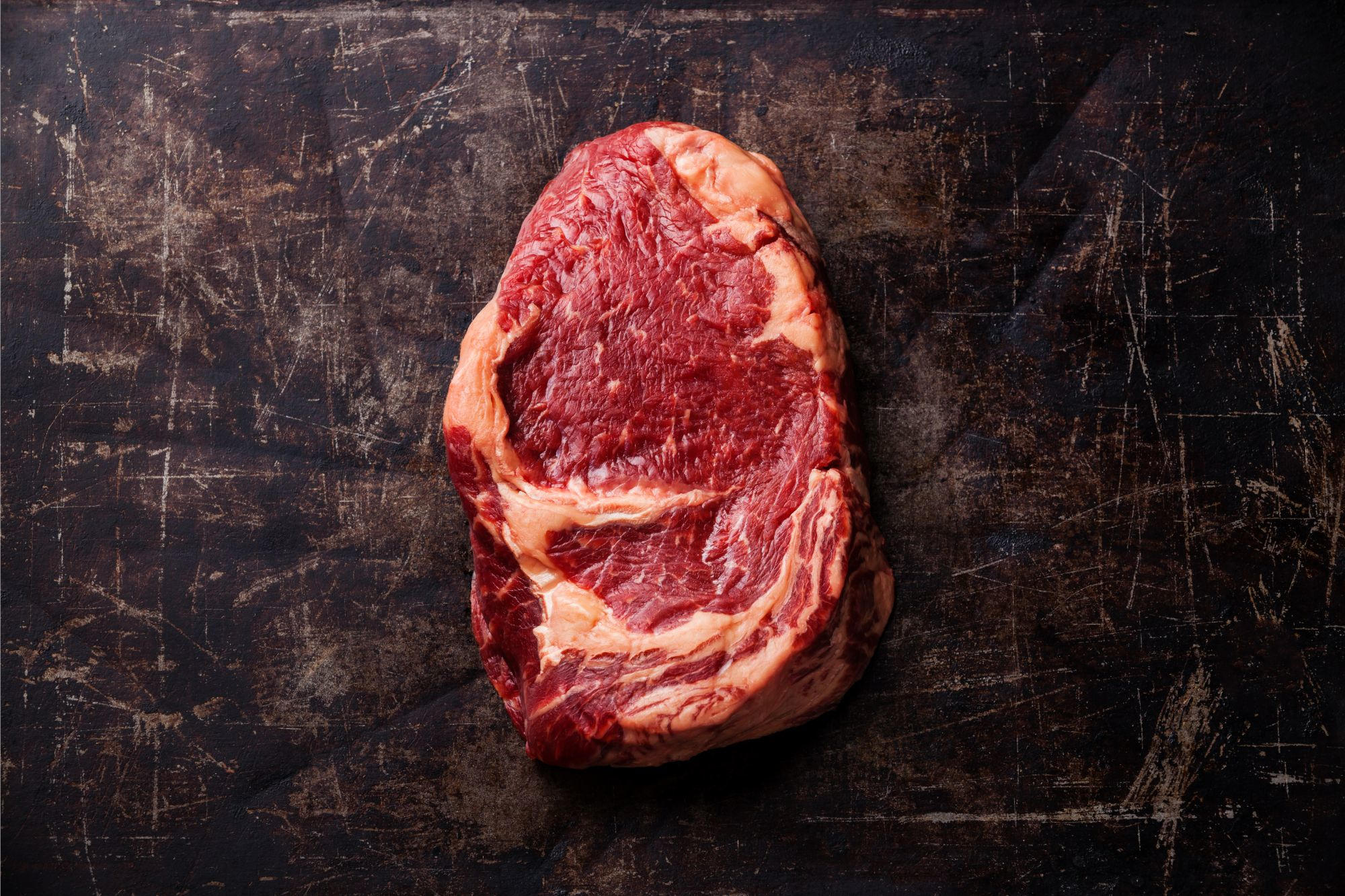
Red meat may have helped shape the human species, but today’s appetite for it is taking a growing toll on human health and the planet.
An interdisciplinary review published in The Quarterly Review of Biology examines how red meat changed from a valuable source of concentrated nutrition into a contributor to chronic disease and ecological damage. Juston Jaco, Kalyan Banda, Ajit Varki, and Pascal Gagneux brought together roughly three million years of hominin dietary history with evidence from archaeology, epidemiology, and molecular biology.
Their central argument is not that meat was inherently harmful or that humans were never adapted to eat it. Instead, the authors emphasize how dramatically its availability, composition, production, and cultural role have changed. Occasional access to animal tissue within a varied ancestral diet bears little resemblance to the large portions and processed products common in many modern societies.
What Early Humans Really Ate
In a recent paper, the researchers trace meat consumption to before the emergence of the genus Homo. Archaeological evidence suggests that early hominins incorporated animal foods into diets that were still dominated by plants.
The prized parts of a carcass may not have resembled the steaks and roasts celebrated today. Fat, bone marrow, organs, and brain tissue probably offered greater nutritional value than lean muscle because they packed more calories and supplied essential lipids. Those nutrients may have been particularly important for supporting the energy-intensive development of the infant brain.
“The cultural prominence of red meat in modern Euro-American diets, typically centered on steaks and roasts, reflects ideals and biases that influence assumptions about early hominin diets,” the authors write. Modern preferences, in other words, can distort attempts to reconstruct what our ancestors actually sought and consumed.
Dietary Flexibility Fueled Human Success
The review also challenges the familiar claim that eating meat by itself drove the expansion of the human brain. Protein is not especially energy dense and is not the brain’s preferred fuel. Human success is more plausibly tied to the ability to exploit many different foods, including plants, fat-rich animal tissues, and other resources that varied across seasons and environments.
That flexibility became especially valuable as early humans spread into unfamiliar habitats. Rather than depending on a single ideal diet, hominins survived by adjusting what they ate to local conditions. This adaptability, rather than a universal meat-centered menu, may be one of the most important lessons from human dietary evolution.
Agriculture introduced a major nutritional shift roughly 10,000 to 12,000 years ago. Farming created more reliable food supplies and supported population growth, but it also replaced diverse diets with a narrower dependence on staple grains. This loss of dietary variety contributed to nutritional deficiencies, including iron deficiency, because cereal-heavy diets provided less readily absorbed iron. Such deficiencies had been comparatively rare among hunter-gatherers.
Abundance Brings New Health Risks
Today, meat is no longer an occasional nutritional prize for much of the world. It is the foundation of a global industry valued at $1.3 trillion, with further growth expected, particularly in low- and middle-income countries. Industrial production has made red meat available at a frequency and scale that have no close parallel in humanity’s evolutionary past.
Large epidemiological studies consistently associate greater consumption of red and processed meat with higher risks of cardiovascular disease, type 2 diabetes, colorectal cancer, and death from all causes. The International Agency for Research on Cancer classifies processed meat as a Group 1 carcinogen, meaning there is sufficient evidence that it can cause cancer in humans. Unprocessed red meat is classified as probably carcinogenic.
The review also explores a less familiar biological explanation for some of these associations. The authors call it “xenosialitis,” a diet-mediated inflammatory response involving N-glycolylneuraminic acid (Neu5Gc). Humans lost the ability to make this sugar molecule approximately two million years ago, but it remains abundant in commonly eaten red meats.
After red meat is consumed, Neu5Gc can become incorporated into human tissues. Because the immune system recognizes the molecule as foreign, antibodies may repeatedly attack cells containing it. The resulting chronic low-grade inflammation could promote atherosclerosis, accelerate colorectal cancer progression, and possibly contribute to cognitive decline.
The Planetary Cost of Meat
The health debate is only one part of the argument. Industrial livestock production generates roughly 15 percent of global greenhouse gas emissions while also driving deforestation and contaminating water. Heavy antibiotic use in animal agriculture can further encourage the emergence and spread of drug-resistant bacteria.
The authors do not argue that everyone must eliminate red meat. Their broader point is that evolutionary history cannot be used as a simple defense of modern consumption. A food can be valuable when scarce, nutritionally strategic, and eaten within a diverse diet yet become damaging when produced industrially and consumed in large quantities.
“The nature, scale, and context of red meat consumption today differ drastically from those of our evolutionary past,” the authors conclude. The dietary flexibility that once helped humans thrive may now offer a path forward, allowing societies to rely less heavily on red meat without pretending it played no role in humanity’s past.
Reference: “Red Meat in Human Evolution, Health, and Disease: From A Blessing to A Curse?” by Juston Jaco, Kalyan Banda, Ajit Varki and Pascal Gagneux, 7 May 2026, The Quarterly Review of Biology.
DOI: 10.1086/741185
Never miss a breakthrough: Join the SciTechDaily newsletter.
Follow us on Google and Google News.
6 Comments
Everyone already knows this. But, beef is also a nutrients dense food. Excellent protein, rich source of B vitamins, and it’s delicious. Just like everything, consume in moderation. My wife and I, we have a leanhamburger based meal once every two weeks, and split a trimmed off NY Strip steak, every two weeks. Flank steak fajitas once every 2 to 3 weeks. The rest of the time, it’s lean chicken and fish. Once a week, we don’t consume any meat. We eat out of our gardens. Peppers, Squash, Herbs,etc. Stop worrying about living forever, it’s not going to happen.
I don’t “know this” because it’s not true. Lean chicken and fish are vastly inferior protein sources. Almost all commercial chicken is fed toxic grain-heavy diet and the fat is inflammatory. Fish is a known allergen and the oceans are polluted toilets. Red meat is the optimal staple food for humans.
Well, it is either red meat or the lack of exercise in people who spend their days seated in front of a computer filling out spreadsheets in the day and munching on snacks at night sitting in front of a TV.
Not much new here, just reiterating the idea that a varied diet is best.
Note the preference among early humans for fat-rich organ and brain tissues and meats. The recent advice to avoid fats in meat, such as pork, removes an essential nutriment which the body needs to produce the insulation of nervous connections throughout the body, especially in the tissues of the brain. Early folk cracked bones to extract fat-laden and delicious substances, and they understood its value. Today’s populations yearn for meat protein in excess, and can do with less.
Fatty ruminant meat was the human staple food across all of history, till agriculture shifted things toward grains, beans, veg. And with that shift came the emergence of metabolic disease, shrinking brains, shrinking skeletal stature, narrow jaws with crooked impacted teeth, and other deformities. “Meat is bad for the environment” is not science, it’s a social engineering project to enable human control agendas. Plant heavy diets promote malnourishment and deficiencies, GI disease (think beans and gas), oxalate toxicity, anemia, cognitive degeneration, depression, muscle wasting, frailty, and more. Plants were ALWAYS fallback or starvation foods for humans. Crop agriculture was never about health, it was an expedient and survival adaptation.