
Close Menu
    Facebook X (Twitter) Instagram
    SciTechDaily
    • Biology
    • Chemistry
    • Earth
    • Health
    • Physics
    • Science
    • Space
    • Technology
    Facebook X (Twitter) Pinterest YouTube RSS
    SciTechDaily
    Home»Biology»Marine Bacteria Use Bioluminescence to Lure Zooplankton and Fish
    Biology

    Marine Bacteria Use Bioluminescence to Lure Zooplankton and Fish

    By SciTechDailyFebruary 28, 20121 Comment2 Mins Read
    Facebook Twitter Pinterest Telegram LinkedIn WhatsApp Email Reddit
    Share
    Facebook Twitter LinkedIn Pinterest Telegram Email Reddit
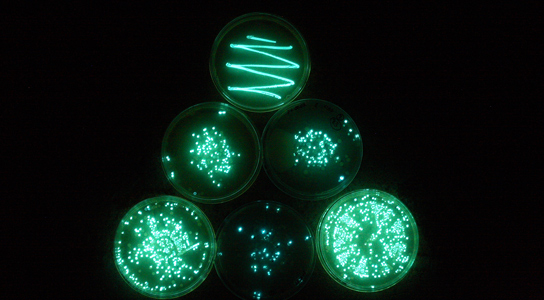
    glowing-bacteria-petri-dish
    Glowing bacteria in petri dish.

    Many creatures in the sea glow in the depths of the deepest trenches of the oceans. Bioluminescence is even observed in some marine bacteria, which emit a steady light once they have attained a certain level of concentration of organic particles in ocean waters, which is known as quorum sensing.

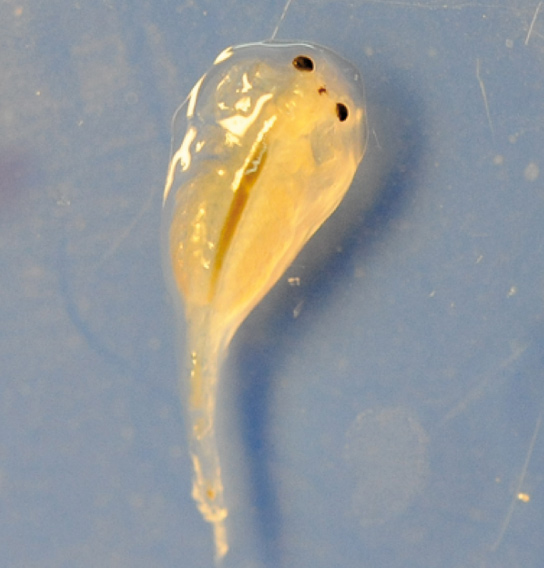
    In a new article published in the journal Proceedings of the National Academy of Sciences (PNAS), researchers at the Hebrew University of Jerusalem discovered that light emitted by the bacteria attracts predators, generally zooplankton, which ingest the bacteria but are unable to digest them. The bacteria continue to grow inside the zooplankton, which are then attacked by their own predators, fish, which can easily spot the glowing zooplankton.
    glowing-zooplankton

    In the laboratory, nocturnal fish easily ingested glowing plankton, while they were not attracted to the zooplankton which had undergone genetic mutations to prevent the glowing.

    The bacteria even survived the passage through the fish. Once they reach the digestive system, the marine bacteria have reached their goal, since it’s full of nutrients.

    The phenomenon of quorum sensing that regulates the bacterial bioluminescence explains that zooplankton realize that the light in the water indicates the presence of a rich source of organic material, material on which the bacteria grow. The zooplankton take the risk of becoming glowing themselves, since food is rare and exposing themselves to the relatively rare presence of predatory fish is worthwhile.

    Reference: “Bacterial bioluminescence as a lure for marine zooplankton and fish” by Margarita Zarubin, Shimshon Belkin, Michael Ionescu and Amatzia Genin, 27 December 2011, Proceedings of the National Academy of Sciences.
    DOI: 10.1073/pnas.1116683109

    Never miss a breakthrough: Join the SciTechDaily newsletter.
    Follow us on Google and Google News.

    Bacteria Bioluminescence Fish Marine Biology Plankton Quorum-sensing Zooplankton
    Share. Facebook Twitter Pinterest LinkedIn Email Reddit

    Related Articles

    Baltic Herring Turn Predators: A Stunning Evolutionary Shift

    Fish Feast on Jellyfish: Surprising Discovery Challenges Marine Food Web Beliefs

    The Role of Bioluminescence in Nature

    A Mystery Solved: Why Does Coral Glow?

    How Deep-Sea, Ultra-Black Fish Disappear – Science Behind Skin That Absorbs More Than 99.5% of Light

    Bioluminescent Bacteria Kill Rivals and Establish Symbiosis in Squid Using Genetic Regulatory Factors

    Marine Bacteria Are Not Homogenous Populations in the Ocean

    Nopili Goby, The Waterfall Climbing Fish

    European Catfish Learn to Catch Pigeons

    1 Comment

    1. Madanagopal.V.C. on December 26, 2012 10:24 pm

      These are similar to our gut bacteria living inside animals for their life time. Bio luminescence of these marine bacteria in the deepest oceans devoid of any light directs them to the guts of fishes by luring them to eat them and pass on to their guts for the survival of these bacteria amidst a mountain of food sources organic in their guts. Thank You.

      Reply
    Leave A Reply Cancel Reply

    • Facebook
    • Twitter
    • Pinterest
    • YouTube

    Don't Miss a Discovery

    Subscribe for the Latest in Science & Tech!

    Trending News

    1.4-Million-Year-Old Footprints Reveal a Giant Human Relative

    Astronomers May Have Found the First Moon Beyond Our Solar System

    Underwater Cameras Expose the Secret Lives of Whale Sharks

    Why Dreaming Leaves the Brain Running Low on Energy

    CERN Experiments Detect Signs of the Universe’s Primordial Matter

    Study Finds a Surprising Link Between Gut Microbes and Aging

    Frequent Cannabis Users Wake Up With More “Stress Hormone”

    Scientists Reveal Hidden DNA Traces in the Shroud of Turin

    Follow SciTechDaily
    • Facebook
    • Twitter
    • YouTube
    • Pinterest
    • Newsletter
    • RSS
    SciTech News
    • Biology News
    • Chemistry News
    • Earth News
    • Health News
    • Physics News
    • Science News
    • Space News
    • Technology News
    Recent Posts
    • World’s First Photonic Time Crystal Can Reshape Light in Trillionths of a Second
    • Meteorite That Smashed Through a New Jersey Roof Hid an Ancient Chemical Secret
    • Astronomers Find Ancient Black Holes Shining With the Power of a Trillion Suns
    • These “Good” Immune Cells Could Hold the Key to Spinal Cord Regeneration
    • New Research Questions Decades of Low-Fat Dairy Advice
    Copyright © 1998 - 2026 SciTechDaily. All Rights Reserved.
    • Science News
    • About
    • Contact
    • Editorial Board
    • Privacy Policy
    • Terms of Use

    Type above and press Enter to search. Press Esc to cancel.