
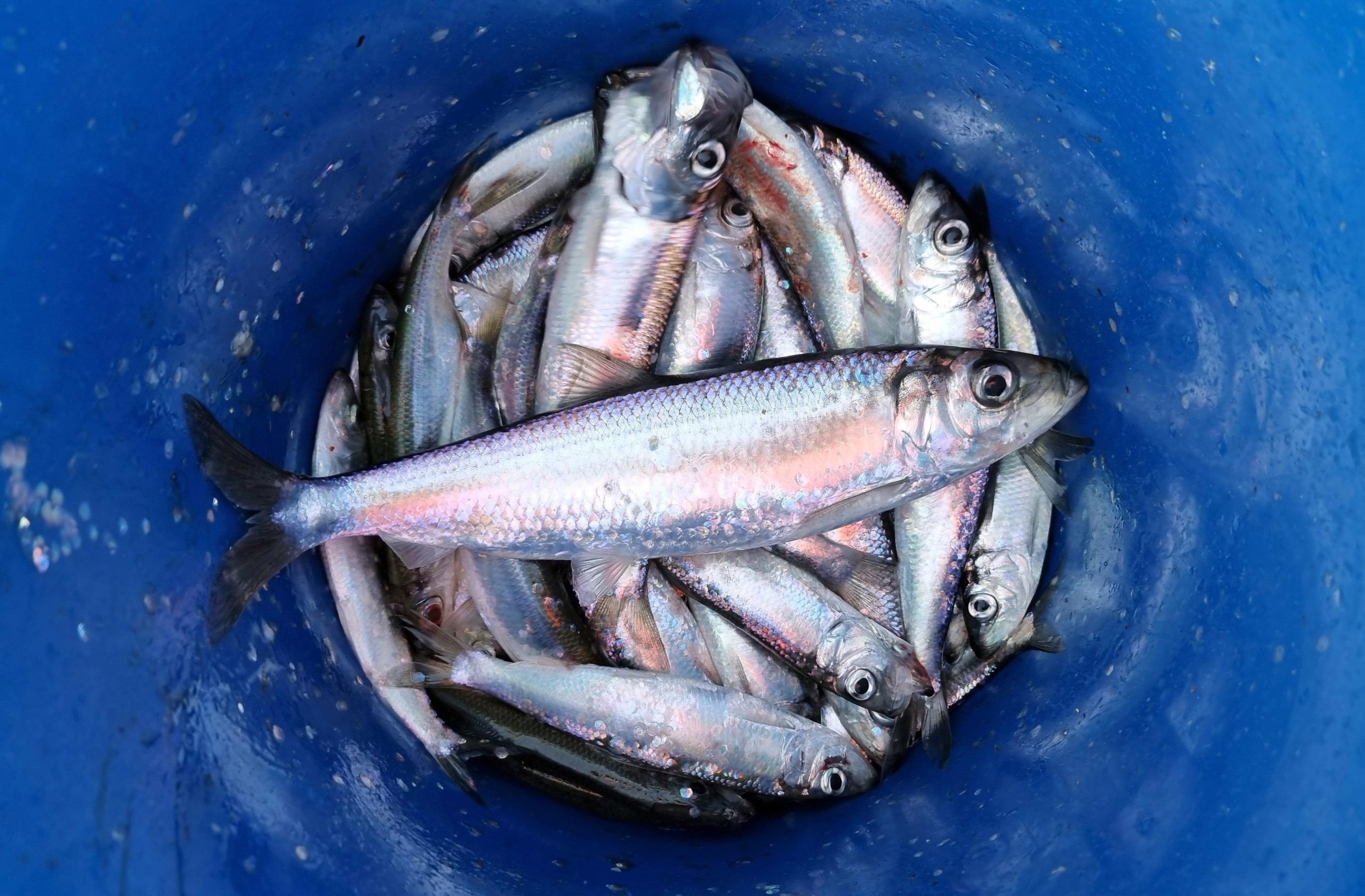
A new study reveals a genetically distinct type of Baltic herring that thrives on a fish diet, unlike its Atlantic counterpart.
This adaptation has likely occurred due to the unique conditions of the Baltic Sea and the absence of larger predatory fish, presenting a special opportunity for the local ecosystem and fisheries.
Atlantic and Baltic Herring: Keystone Species
Atlantic and Baltic herring, known for their plankton-based diet, play a vital role in the ecosystems of the northern Atlantic Ocean and the Baltic Sea. These fish serve as a crucial connection between plankton and higher-level predators, including larger fish, seabirds, marine mammals, and even humans.
A new study published today (December 23) in Nature Communications by researchers at Uppsala University (Sweden) has revealed a surprising discovery: the evolution of genetically distinct, fish-eating herring in the Baltic Sea. This unique population has emerged in the relatively young Baltic Sea, which has existed for only about 8,000 years since the end of the last glaciation.
Earlier research by the same group identified that herring populations are divided into various ecotypes, each genetically adapted to specific environmental factors such as climate, salinity, and preferred spawning seasons. This new finding adds an unexpected twist to the ecological and evolutionary story of Baltic herring.
Discovery of a Unique Baltic Herring Population
Linnaeus, the founder of taxonomy and professor in Uppsala in the 18th century, defined the Baltic herring as a subspecies of the Atlantic herring adapted to the brackish water in the Baltic Sea. The Baltic herring is much smaller and has less fat than the Atlantic herring.
The current project was initiated when the principal investigator was informed by a local fisherman at the coast northeast of Uppsala that there is a special type of herring “that always spawns just before midsummer and which is as big as the Atlantic herring,” thus much larger than the common plankton-eating Baltic herring.

The Genetic Mystery of Large Herring
“When I learned that the locals are aware of a specific population of very large Baltic herring that always spawns in the same area year after year, I decided to sample and explore their genetic constitution. Now we know that this is a genetically unique population that must have evolved over hundreds, if not thousands, of years in the Baltic Sea,” says Leif Andersson, Professor at the Department of Medical Biochemistry and Microbiology at Uppsala University, who led the study.
The researchers carried out a careful analysis of morphology, growth pattern, fat content, and presence of environmental pollutants. A striking finding was that the large herring exhibited damaged gill rakers. The plankton-eating Baltic herring uses the gill rakers to sieve plankton, while the observed gill damage in large herring likely reflects a switch to a fish diet, probably including the common stickleback, which has sharp spines for predation protection.
Nutritional Benefits and Reduced Pollution Risks
Another interesting finding was that the large herring had a significantly higher fat content and significantly reduced level of dioxin, a problematic chloro-organic pollutant in the Baltic Sea. Both these observations and the much faster growth rate are consistent with a switch to a fish diet. The relatively low dioxin content makes this fish-eating Baltic herring interesting for human consumption.

Subpopulations of Fish-Eating Herring Identified
After finding that the large fish-eating herring is genetically unique, the researchers decided to perform whole genome sequencing of the large herring together with previously collected large herring from different parts of the Baltic Sea. The stomach content of this second set of large herring showed that these individuals were feeding on small fish.
“Our genetic analysis demonstrates that there are at least two distinct subpopulations of fish-eating herring in the Baltic Sea; one occurs north of Stockholm, and the other occurs south of Stockholm,” says Jake Goodall, researcher at Uppsala University and first author on the publication.
Evolution in the Young Baltic Sea
One interesting question is why fish-eating herring have evolved in the Baltic Sea, when there is no evidence for such herring in the Atlantic Ocean. The Baltic Sea is a very young water body that has only existed for about 8,000 years, after the end of the last glaciation period. Only a limited number of marine fish have been able to colonize the brackish Baltic Sea, where salinity is in the range of 2-10‰ compared with about 35‰ in the Atlantic Ocean.
“We hypothesize that fish-eating Baltic herring have evolved due to a lack of competition from other predatory fish, for instance, mackerel and tuna, which do not occur where we find fish-eating herring. Thus, these herring take advantage of an underutilized food resource in the Baltic Sea,” says Leif Andersson.
Reference: “Evolution of fast-growing piscivorous herring in the young Baltic Sea” by Jake Goodall, Mats E. Pettersson, Ulf Bergström, Arianna Cocco, Bo Delling, Yvette Heimbrand, O. Magnus Karlsson, Josefine Larsson, Hannes Waldetoft, Andreas Wallberg, Lovisa Wennerström and Leif Andersson, 23 December 2024, Nature Communications.
DOI: 10.1038/s41467-024-55216-8
Never miss a breakthrough: Join the SciTechDaily newsletter.
Follow us on Google and Google News.
4 Comments
An interesting read. What this proves is that adaptation in evolution doesnt require millions of years…here is an example within the bible historical time period!
No, it doesn’t. Their diet has changed, not their physical structure.
We discovered a new, unique type of Herring!
It shows promise as food for humans!
Don’t we ever learn?
I thought exactly the same thing.