
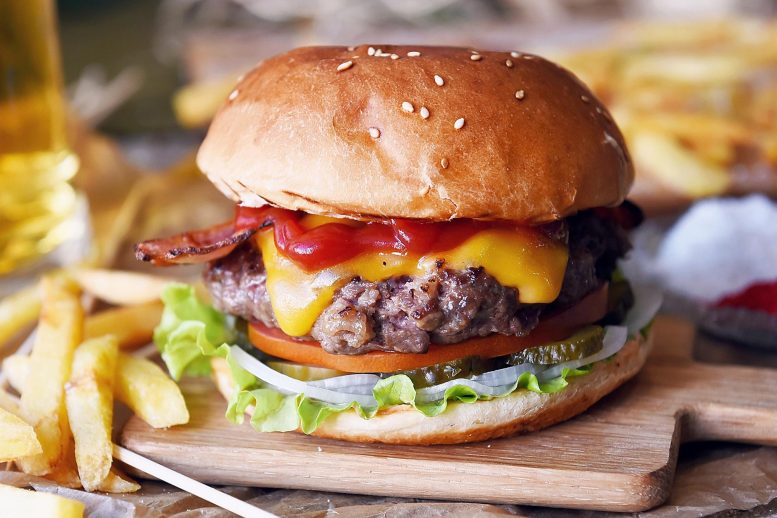
Say goodbye to fast-food burgers and hello to fresh garden salads. While observing 37,698 men for up to 22 years and 83,644 women for up to 28 years, a new study found that regular consumption of red meat, particularly processed red meat, was associated with increased mortality risk.
A new study by Harvard School of Public Health (HSPH) researchers has found that red meat consumption is associated with an increased risk of total, cardiovascular, and cancer mortality. The results also showed that substituting other healthy protein sources, such as fish, poultry, nuts, and legumes, was associated with a lower risk of mortality.
“Our study adds more evidence to the health risks of eating high amounts of red meat, which has been associated with type 2 diabetes, coronary heart disease, stroke, and certain cancers in other studies,” said lead author An Pan, research fellow in the Department of Nutrition at HSPH.
The study was published online in Archives of Internal Medicine.
The researchers, including senior author Frank Hu, professor of nutrition and epidemiology at HSPH, and colleagues, prospectively observed 37,698 men from the Health Professionals Follow-Up Study for up to 22 years and 83,644 women in the Nurses’ Health Study for up to 28 years who were free of cardiovascular disease and cancer at baseline. Their diets were assessed through questionnaires every four years.
A combined 23,926 deaths were documented in the two studies, of which 5,910 were from cardiovascular disease and 9,464 from cancer. Regular consumption of red meat, particularly processed red meat, was associated with increased mortality risk. One daily serving of unprocessed red meat (about the size of a deck of cards) was associated with a 13 percent increased risk of mortality, and one daily serving of processed red meat (one hot dog or two slices of bacon) was associated with a 20 percent increased risk.
Among specific causes, the corresponding increases in risk were 18 percent and 21 percent for cardiovascular mortality, and 10 percent and 16 percent for cancer mortality. These analyses took into account chronic disease risk factors such as age, body mass index, physical activity, and family history of heart disease or major cancers.
Red meat, especially processed meat, contains ingredients that have been linked to increased risk of chronic diseases, such as cardiovascular disease and cancer. These include heme iron, saturated fat, sodium, nitrites, and certain carcinogens that are formed during cooking.
Replacing one serving of total red meat with one serving of a healthy protein source was associated with a lower mortality risk: 7 percent for fish, 14 percent for poultry, 19 percent for nuts, 10 percent for legumes, 10 percent for low-fat dairy products, and 14 percent for whole grains. The researchers estimated that 9.3 percent of deaths in men and 7.6 percent in women could have been prevented at the end of the follow-up if all the participants had consumed less than 0.5 servings per day of red meat.
“This study provides clear evidence that regular consumption of red meat, especially processed meat, contributes substantially to premature death,” said Hu. “On the other hand, choosing more healthful sources of protein in place of red meat can confer significant health benefits by reducing chronic disease morbidity and mortality.”
Reference: “Red Meat Consumption and MortalityResults From 2 Prospective Cohort Studies” by An Pan, PhD; Qi Sun, MD, ScD; Adam M. Bernstein, MD, ScD; Matthias B. Schulze, DrPH; JoAnn E. Manson, MD, DrPH; Meir J. Stampfer, MD, DrPH; Walter C. Willett, MD, DrPH and Frank B. Hu, MD, PhD, 9 April 2012, Archives of Internal Medicine.
DOI: 10.1001/archinternmed.2011.2287
Support for the study was provided by the National Heart, Lung and Blood Institute and the National Cancer Institute.
Other HSPH authors include Qi Sun, Adam Bernstein, JoAnn Manson, Meir Stampfer, and Walter Willett.
Never miss a breakthrough: Join the SciTechDaily newsletter.
Follow us on Google and Google News.
2 Comments
So, for me the important question is how many years are chipped away. I am more than willing to sacrifice 20% of my life, assuming it’s the end part for a lifetime of juicy steaks and ribs.
I’m with you on that one. Also life causes death, why not enjoy it while it lasts, huh..? *grins* But taking away the joys life like, say, smoking will only make people miserable and sad. Just look at old people’s homes, our elderly are not allowed to anything any more, especially the things that brought them pleasure in life. You really think taking red meat away will give us life eternal? If we have to believe Wikipedia we already have 5 types of terrible diseases I shall not name, and this weird itch on our soul. What’s for dinner? Stake, baby.