
Close Menu
    Facebook X (Twitter) Instagram
    SciTechDaily
    • Biology
    • Chemistry
    • Earth
    • Health
    • Physics
    • Science
    • Space
    • Technology
    Facebook X (Twitter) Pinterest YouTube RSS
    SciTechDaily
    Home»Health»Greater Adherence to the Mediterranean Diet Has Impact on Aging
    Health

    Greater Adherence to the Mediterranean Diet Has Impact on Aging

    By Brigham and Women’s Hospital CommunicationsDecember 4, 2014No Comments3 Mins Read
    Facebook Twitter Pinterest Telegram LinkedIn WhatsApp Email Reddit
    Share
    Facebook Twitter LinkedIn Pinterest Telegram Email Reddit
    Mediterranean Diet has Impact on Aging
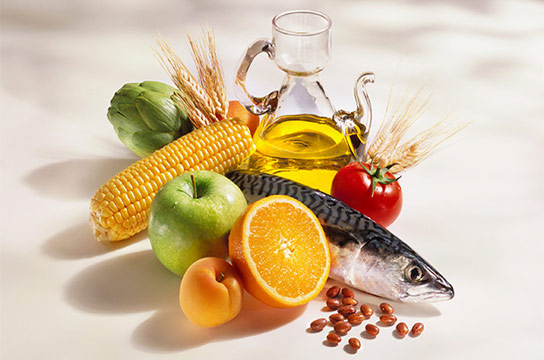
    A study published in The BMJ found that adherence to the Mediterranean diet is linked to longer telomeres, a biomarker of aging. Researchers at Harvard-affiliated Brigham and Women’s Hospital discovered that following the Mediterranean diet correlated with longer telomeres, which are associated with longevity and decreased risk of aging-related diseases. This is the largest population-based study to explore this association in middle-aged women, further supporting the health and longevity benefits of the Mediterranean diet. Credit: Brigham and Women’s Hospital

    New research from Brigham and Women’s Hospital is the first study to link women, Mediterranean diet, and biomarkers of aging, revealing that greater adherence to the Mediterranean diet correlated with longer telomeres.

    The Mediterranean diet consistently has been linked with an array of health benefits, including decreased risk of chronic disease and cancer. Until now, however, no studies had associated the diet with longer telomeres, one of the biomarkers of aging.

    In a study published Tuesday online in The BMJ, researchers at Harvard-affiliated Brigham and Women’s Hospital (BWH) found that greater adherence to the Mediterranean diet correlated with longer telomeres.

    Telomeres are repetitive DNA sequences at the ends of chromosomes that get shorter every time a cell divides. Shorter telomeres have been associated with decreased life expectancy and increased risk of aging-related disease, while longer telomeres have been linked to longevity. Telomere shortening is accelerated by stress and inflammation, and scientists have speculated that adherence to the Mediterranean diet may help protect against that effect.

    “To our knowledge, this is the largest population-based study specifically addressing the association between Mediterranean diet adherence and telomere length in healthy, middle-aged women,” explained Immaculata De Vivo, an associate professor in the Channing Division of Network Medicine at BWH and the Harvard T.H. Chan School of Public Health, the senior author of this study. “Our results further support the benefits of adherence to this diet to promote health and longevity.”

    The researchers analyzed 4,676 disease-free women from the Nurses’ Health Study who had completed the food-frequency questionnaire and whose telomere lengths had been measured. They found that a greater adherence to the Mediterranean diet was associated with longer telomeres, and that even small changes in diet made a difference.

    “Our findings showed that healthy eating, overall, was associated with longer telomeres. However, the strongest association was observed among women who adhered to the Mediterranean diet,” explained Marta Crous Bou, a postdoctoral fellow in the Channing Division of Network Medicine and the first author of the study.

    De Vivo notes that future research should be aimed at determining which components of the Mediterranean diet drive this association. This would allow researchers to gain insight into the biological mechanism, as well as provide a basis for increased public education for informed lifestyle choices.

    Reference: “Mediterranean diet and telomere length in Nurses’ Health Study: population based cohort study” by Marta Crous-Bou, Teresa T Fung, Bettina Julin, Qi Sun and Immaculata De Vivo, 2 December 2014, BMJ.
    DOI: 10.1136/bmj.g6674

    Never miss a breakthrough: Join the SciTechDaily newsletter.
    Follow us on Google and Google News.

    Brigham and Women's Hospital Diet Harvard University Mediterranean Diet Nutrition
    Share. Facebook Twitter Pinterest LinkedIn Email Reddit

    Related Articles

    Groundbreaking New Study Compares Vegan and Mediterranean Diets for Weight Loss and Cholesterol Control

    Higher Protein Intake Does Not Increase Lean Body Mass in Older Men

    Can a Mediterranean Diet Pattern Slow Aging?

    Scientists Trace the Worldwide Origins of Methylmercury in Seafood

    Eating Better Can Help You Live a Healthier, Longer Life

    New MIND Diet May Significantly Lower Risk of Alzheimer’s Disease

    Mediterranean Diet Significantly Reduces the Risk of Suffering a Cardiovascular Death

    Study Links Dietary Glycemic Load and Colon Cancer

    A Low-Glycemic Diet is More Effective at Burning Calories

    Leave A Reply Cancel Reply

    • Facebook
    • Twitter
    • Pinterest
    • YouTube

    Don't Miss a Discovery

    Subscribe for the Latest in Science & Tech!

    Trending News

    Popular Vitamin B3 Supplements May Help Cancer Cells Survive, Scientists Warn

    Scientists Discover Strange Property of Rice and Turn It Into a Smart Material

    NASA Artemis II Skips Burn As Astronaut Captures Stunning View of Earth

    NASA’s Artemis II: Humans Just Left Earth Orbit for the First Time Since 1972

    What Causes Chronic Pain? Scientists Identify Key Culprit in the Brain

    Semaglutide Shows Surprising Mental Health Benefits in Massive 100,000-Person Study

    This Liquid Snapped Instead of Flowing and Scientists Were Shocked

    Breakthrough Alzheimer’s Drug Rewires the Brain Instead of Just Clearing Plaques

    Follow SciTechDaily
    • Facebook
    • Twitter
    • YouTube
    • Pinterest
    • Newsletter
    • RSS
    SciTech News
    • Biology News
    • Chemistry News
    • Earth News
    • Health News
    • Physics News
    • Science News
    • Space News
    • Technology News
    Recent Posts
    • Scientists Discover How Multiple Sclerosis Kills Brain Cells
    • Scientists Discover Why the Brain Gets Stuck in Schizophrenia
    • Scientists Engineer “Tumor-Eating” Bacteria That Devour Cancer From Within
    • Even “Failed” Diets May Deliver Long-Term Health Gains, Study Finds
    • Childhood Junk Food May Rewire the Brain for Life
    Copyright © 1998 - 2026 SciTechDaily. All Rights Reserved.
    • Science News
    • About
    • Contact
    • Editorial Board
    • Privacy Policy
    • Terms of Use

    Type above and press Enter to search. Press Esc to cancel.