
Close Menu
    Facebook X (Twitter) Instagram
    SciTechDaily
    • Biology
    • Chemistry
    • Earth
    • Health
    • Physics
    • Science
    • Space
    • Technology
    Facebook X (Twitter) Pinterest YouTube RSS
    SciTechDaily
    Home»Technology»3D-Printed High-Performance Titanium-Copper Alloys for Medical Devices, Defense and Aerospace
    Technology

    3D-Printed High-Performance Titanium-Copper Alloys for Medical Devices, Defense and Aerospace

    By RMIT UniversityDecember 4, 2019No Comments3 Mins Read
    Facebook Twitter Pinterest Telegram LinkedIn WhatsApp Email Reddit
    Share
    Facebook Twitter LinkedIn Pinterest Telegram Email Reddit
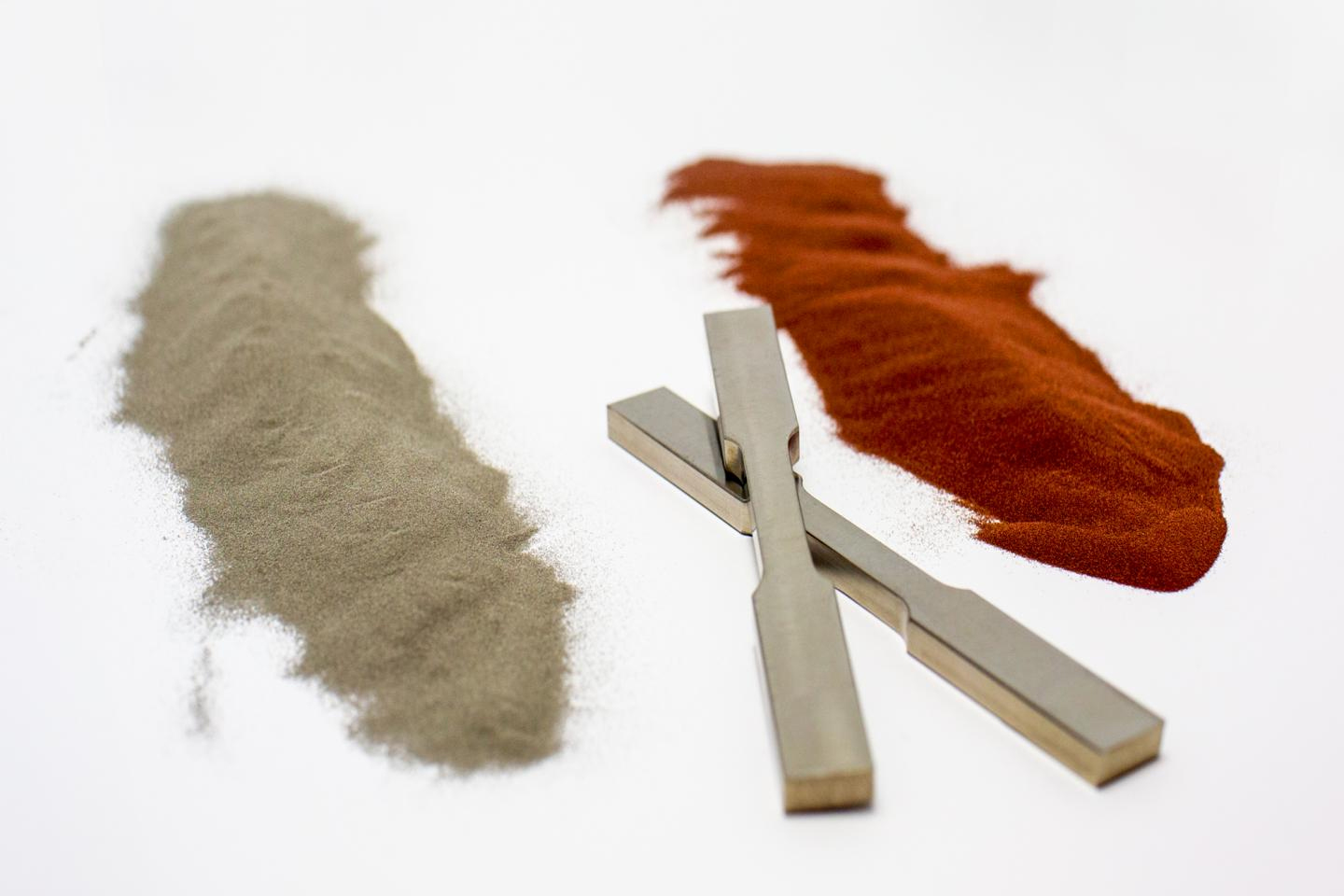
    Titanium-Copper Alloy
    3D-printed titanium-copper bars with titanium powder and copper powder. Credit: RMIT University

    Successful trials of titanium-copper alloys for 3D printing could kickstart a new range of high-performance alloys for medical device, defense, and aerospace applications.

    Current titanium alloys used in additive manufacturing often cool and bond together in column-shaped crystals during the 3D printing process, making them prone to cracking or distortion.

    And unlike aluminum or other commonly used metals, there is no commercial grain refiner for titanium that manufacturers can use to effectively refine the microstructure to avoid these issues.

    But now a new titanium alloy with copper, unveiled today (December 4, 2019) in the journal Nature, appears to have solved this problem.

    Professor Mark Easton from RMIT University’s School of Engineering said their titanium-copper alloy printed with “exceptional properties” without any special process control or additional treatment.
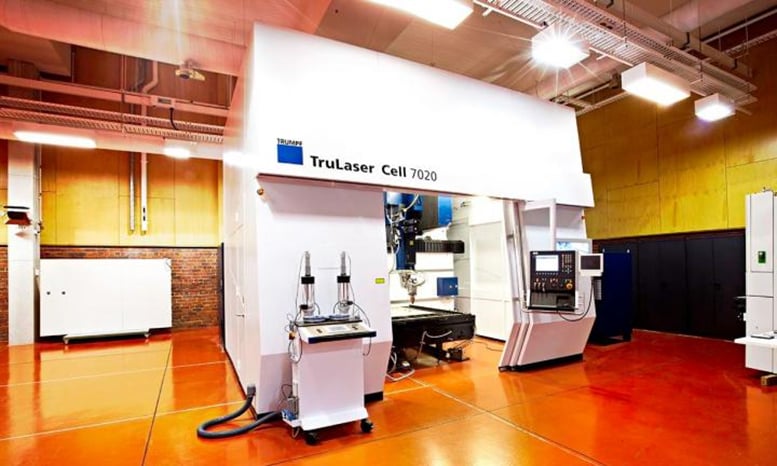
    Trumpf 3D Printer
    The Trumpf 3D printer used in the experiments at RMIT University’s Advanced Manufacturing Precinct. Credit: RMIT University

    “Of particular note was its fully equiaxed grain structure: this means the crystal grains had grown equally in all directions to form a strong bond, instead of in columns, which can lead to weak points liable to cracking.”

    “Alloys with this microstructure can withstand much higher forces and will be much less likely to have defects, such as cracking or distortion, during manufacture,” Easton said.

    The collaborative project involved leading researchers in the area of alloy composition and grain microstructure from RMIT University, CSIRO, the University of Queensland, and the Ohio State University.

    CSIRO Senior Principal Research Scientist, Dr. Mark Gibson, said their findings also suggest similar metal systems could be treated in the same way to improve their properties.

    “Titanium-copper alloys are one option, particularly if the use of other additional alloying elements or heat treatments can be employed to improve the properties further,” he said.

    “But there are also a number of other alloying elements that are likely to have similar effects. These could all have applications in the aerospace and biomedical industries.”

    Gibson said the new breed of alloys could increase manufacturers’ production rates and allow for more complex parts to be manufactured.

    “In general, it opens up the possibility of developing a new range of titanium-based alloys specifically developed for 3D printing with exceptional properties,” he said.

    “It has been a delight, as it has been my good fortune for some time, to work on such an interesting and significant project as this with such a talented band of scientists.”

    Reference: “Additive manufacturing of ultrafine-grained high-strength titanium alloys” by Duyao Zhang, Dong Qiu, Mark A. Gibson, Yufeng Zheng, Hamish L. Fraser, David H. StJohn and Mark A. Easton, 4 December 2019, Nature.
    DOI: 10.1038/s41586-019-1783-1

    The work was part of a project funded by the Australian Research Council. The study ‘Additive manufacturing of ultrafine-grained high-strength titanium alloys’ is published in Nature with DOI 10.1038/s41586-019-1783-1

    RMIT researchers involved in the multi-partner collaboration: Dr. Dong Qiu, Professor Mark Easton and Dr. Duyao Zhang.

    Never miss a breakthrough: Join the SciTechDaily newsletter.
    Follow us on Google and Google News.

    3d Materials Science RMIT University
    Share. Facebook Twitter Pinterest LinkedIn Email Reddit

    Related Articles

    New 3D Printer Produces Complex Glass Objects [Video]

    Bioprinting Living Cells Extremely Fast and at Very High Resolution in a 3D Printer

    Engineers 3D Print Programmed Cells Into Living Devices

    A New Frontier in 3D Printing, Engineers Print Transparent Glass in 3D

    New Process for 3D Printing of Highly Stretchable and Tough Hydrogels

    LLNL Engineers Create New Microscale Energy Absorbing Material

    Solid Concepts 3D Prints First Metal Gun

    Custom 3D Printer Prints Lithium-Ion Microbatteries

    3D Microchip Allows Information to Travel in Three Dimensions

    Leave A Reply Cancel Reply

    • Facebook
    • Twitter
    • Pinterest
    • YouTube

    Don't Miss a Discovery

    Subscribe for the Latest in Science & Tech!

    Trending News

    289-Million-Year-Old Reptile Mummy Reveals Origin of Human Breathing System

    New Brain Discovery Challenges Long-Held Theory of Teenage Brain Development

    Scientists Discover Plants “Scream” – We Just Couldn’t Hear Them Until Now

    Scientists Discover a Surprising Reason Intermittent Fasting Extends Life

    This Simple Fruit Wash Could Make Produce Safer and Last Days Longer

    Scientists Say Adding This Unusual Seafood to Your Diet Could Reverse Signs of Aging

    Scientists Say a Hidden Structure May Exist Inside Earth’s Core

    Doctors Surprised by the Power of a Simple Drug Against Colon Cancer

    Follow SciTechDaily
    • Facebook
    • Twitter
    • YouTube
    • Pinterest
    • Newsletter
    • RSS
    SciTech News
    • Biology News
    • Chemistry News
    • Earth News
    • Health News
    • Physics News
    • Science News
    • Space News
    • Technology News
    Recent Posts
    • Breakthrough Bowel Cancer Trial Leaves Patients Cancer-Free for Nearly 3 Years
    • New Immune Pathway Could Supercharge mRNA Cancer Vaccines
    • Natural Compound Shows Powerful Potential Against Rheumatoid Arthritis
    • 100,000-Year-Old Neanderthal Fossils in Poland Reveal Unexpected Genetic Connections
    • Unexpected Hormone Discovery Could Change How We Treat Arthritis
    Copyright © 1998 - 2026 SciTechDaily. All Rights Reserved.
    • Science News
    • About
    • Contact
    • Editorial Board
    • Privacy Policy
    • Terms of Use

    Type above and press Enter to search. Press Esc to cancel.