
Close Menu
    Facebook X (Twitter) Instagram
    SciTechDaily
    • Biology
    • Chemistry
    • Earth
    • Health
    • Physics
    • Science
    • Space
    • Technology
    Facebook X (Twitter) Pinterest YouTube RSS
    SciTechDaily
    Home»Earth»Puzzle of Southern Africa’s Soaring Landscape Finally Solved With Rare Gas Discovery
    Earth

    Puzzle of Southern Africa’s Soaring Landscape Finally Solved With Rare Gas Discovery

    By University of EdinburghDecember 7, 2019No Comments3 Mins Read
    Facebook Twitter Pinterest Telegram LinkedIn WhatsApp Email Reddit
    Share
    Facebook Twitter LinkedIn Pinterest Telegram Email Reddit
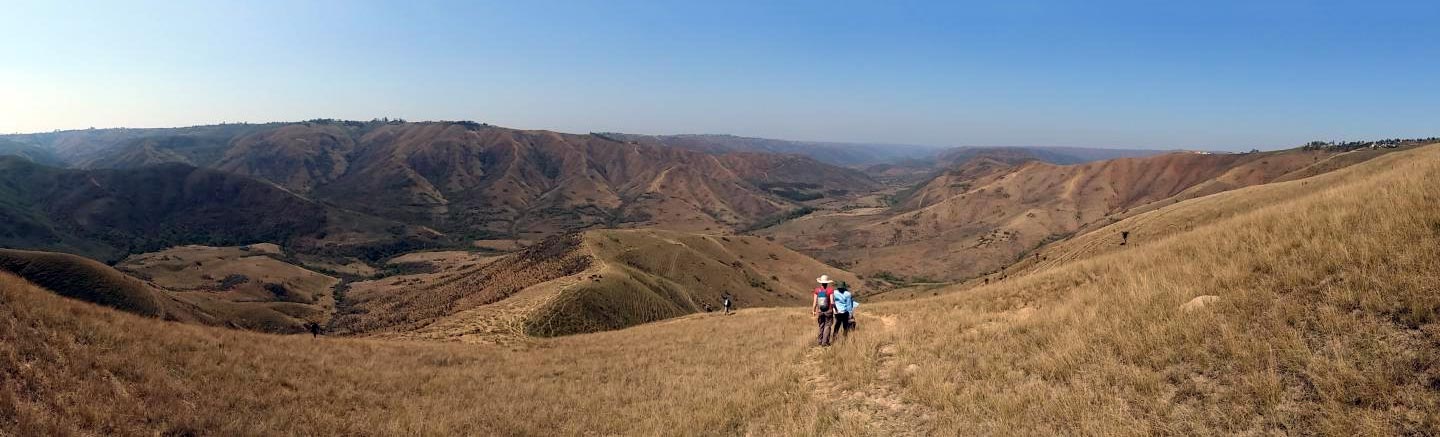
    South Africa Fieldwork
    Researchers doing fieldwork in KwaZulu-Natal, South Africa. Credit: Stuart Gilfillan

    The discovery of gases released from deep beneath the Earth’s crust could help to explain Southern Africa’s unusual landscape, a study suggests.

    Scientists have long puzzled over why areas such as South Africa’s Highveld region are so elevated and flat, with unexpectedly hot rocks below the surface.

    Geologists have revealed that carbon dioxide-rich gases bubbling up through natural springs in South Africa originate from a column of hot, treacle-like material— called a hotspot — located deep inside the Earth.

    Hotspots are known to generate volcanic activity in Hawaii, Iceland and Yellowstone National Park. In South Africa, the hotspot pushes the crust upwards, generating the distinctive landscape, which consists mostly of tablelands more than one kilometer (0.6 miles) above sea level, the researchers say.

    This also explains why rocks beneath the region are hotter than expected — a property that could be harnessed to generate geothermal energy.

    A team led by scientists from the University of Edinburgh analyzed the chemical make-up of gas emerging from a deep crack in the Earth’s crust located in KwaZulu-Natal, South Africa.

    They found that variants of the elements helium and neon present in the gas match the composition of a rocky layer 1,000 kilometers (620 miles) below Earth’s surface — called the deep mantle.

    The findings provide the first physical evidence that Southern Africa lies on top of a plume of abnormally hot mantle, which had until now only been theorized using computer modeling of seismic data.

    The study, published in the journal Nature Communications, was funded by the Engineering and Physical Sciences Research Council and the Natural Environment Research Council.

    The research was completed with support from Scottish Carbon Capture and Storage and the UK Carbon Capture and Storage Research Centre. It also involved scientists from the Universities of Aberdeen and Strathclyde, Scottish Universities Environmental Research Centre, British Geological Survey and South Africa Council for Geoscience.

    Dr. Stuart Gilfillan, of the University of Edinburgh’s School of GeoSciences, who led the study, said: “The high relief and hotter than expected subsurface temperatures of the rocks beneath Southern Africa had been a puzzle for geologists for many years. Our findings confirm that carbon dioxide gas at the surface is from a deep mantle plume, helping to explain the region’s unusual landscape.”

    Reference: “Noble gases confirm plume-related mantle degassing beneath Southern Africa” by S. M. V. Gilfillan, D. Györe, S. Flude, G. Johnson, C. E. Bond, N. Hicks, R. Lister, D. G. Jones, Y. Kremer, R. S. Haszeldine and F. M. Stuart, 5 November 2019, Nature Communications.
    DOI: 10.1038/s41467-019-12944-6

    Never miss a breakthrough: Join the SciTechDaily newsletter.
    Follow us on Google and Google News.

    Africa Geology University of Edinburgh
    Share. Facebook Twitter Pinterest LinkedIn Email Reddit

    Related Articles

    Remarkably Well-Preserved Fossils Helping to Solve Baffling Puzzle That Vexed Darwin

    Earth’s Continental Crust Growth Rate Has Decreased

    California Volcano Observatory is USGS’s Newest

    Humans Implicated in Africa’s Deforestation 3,000 Years Ago

    Lidar Equipment Provides Comprehensive Pictures Earthquake Zones

    Asia and America Will Collide in Millions of Years to Form Supercontinent Amasia

    Little Ice Age Sparked by Volcanoes, Sustained by Sea-Ice Feedback

    Diamonds Are Like the Earth’s Champagne Corks

    New Data Finds North American Continent Extremely Stable

    Leave A Reply Cancel Reply

    • Facebook
    • Twitter
    • Pinterest
    • YouTube

    Don't Miss a Discovery

    Subscribe for the Latest in Science & Tech!

    Trending News

    Scientists May Have Solved a Long-Standing Melanoma Treatment Mystery

    This Flesh-Eating Fly Is Back in the U.S. – Scientists Are Tracking Where It Could Strike Next

    Scientists Have Uncovered a Troubling New Pattern Hidden in America’s Rivers

    “Entirely Surprising” – Scientists Have Found a Martian Meteorite Unlike Any Known Before

    “Find of the Year” – Archaeologists Discover the Smallest Ice Age Figurines Ever Found

    New Research Challenges Common Exercise Advice for Bone Health

    Avoiding These 3 Health Risks in Midlife Linked to 13 More Years Without Dementia

    Where Were All the Tiny Dinosaurs? Scientists May Finally Have an Answer

    Follow SciTechDaily
    • Facebook
    • Twitter
    • YouTube
    • Pinterest
    • Newsletter
    • RSS
    SciTech News
    • Biology News
    • Chemistry News
    • Earth News
    • Health News
    • Physics News
    • Science News
    • Space News
    • Technology News
    Recent Posts
    • The Ancient Mediterranean Diet Wasn’t What You Think
    • 11,000-Year-Old Grains Reveal a Surprise About the Origins of Agriculture
    • Lost Vatican Letter Recasts 1066 as a Holy War Against “Followers of Satan”
    • This Common Gut-Bacteria Compound May Be Linked to Alzheimer’s Disease
    • Scientists Are Discovering Unexpected Benefits of GLP-1 Drugs
    Copyright © 1998 - 2026 SciTechDaily. All Rights Reserved.
    • Science News
    • About
    • Contact
    • Editorial Board
    • Privacy Policy
    • Terms of Use

    Type above and press Enter to search. Press Esc to cancel.