
Close Menu
    Facebook X (Twitter) Instagram
    SciTechDaily
    • Biology
    • Chemistry
    • Earth
    • Health
    • Physics
    • Science
    • Space
    • Technology
    Facebook X (Twitter) Pinterest YouTube RSS
    SciTechDaily
    Home»Earth»Earth’s Continental Crust Growth Rate Has Decreased
    Earth

    Earth’s Continental Crust Growth Rate Has Decreased

    By University of PortsmouthMarch 22, 2012No Comments3 Mins Read
    Facebook Twitter Pinterest Telegram LinkedIn WhatsApp Email Reddit
    Share
    Facebook Twitter LinkedIn Pinterest Telegram Email Reddit
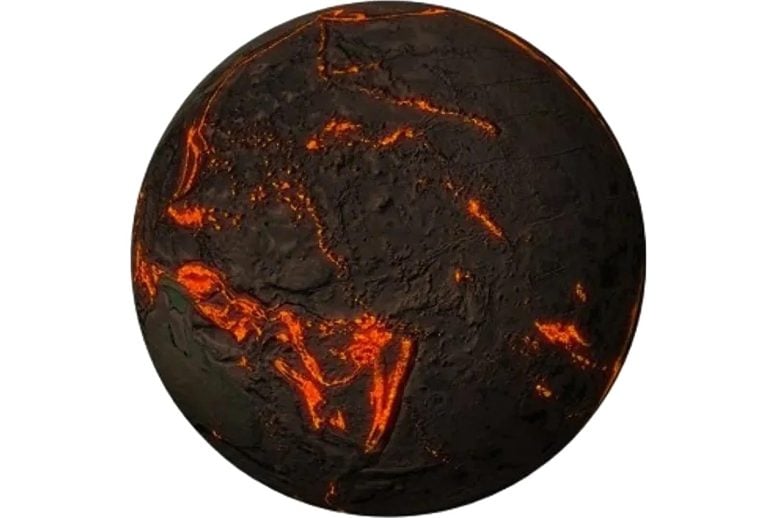
    Earth's Crust Destroyed
    The Earth regulates the net production of new crust by destroying and recycling existing crust.

    Newly published research shows that the growth rate of the Earth’s continental crust has decreased significantly over the last three billion years, leaving researchers to believe that an early form of plate tectonics began around three billion years ago.

    The growth rate of the Earth’s continental crust was high during the first 1.5 billion years of the planet’s history then decreased markedly for the next three billion years to the present day, according to Dr. Craig Storey, of the University of Portsmouth, and colleagues whose research is published in the journal Science.

    The researchers say the Earth regulates the net amount of new crust produced by destroying and recycling existing crust. This was achieved as tectonic plates moved and collided against each other and one plate was forced below the other and deep into the Earth. This process is known as subduction, which also generates new crust in the form of large volumes of magma above the subduction zone and results in chains of volcanoes such as in the present-day Andes. This process also destroys existing crust by eroding and transporting older crust back down to within the Earth’s mantle.

    Dr. Storey, of the School of Earth and Environmental Sciences, worked with academics from the University of Bristol and St Andrew’s University to produce the collaborative paper.

    Their research shows the sharp decrease in the growth of the continental crust indicates a dramatic change in the way it was generated and preserved.

    The conclusions drawn by the researchers are that up to three billion years ago the Earth formed new crust in a different way than today, with larger net volumes of new crust created.

    The researchers modeled the crustal production rates using a mineral called zircon in sedimentary samples from across the globe to give them a glimpse of the historical behavior of magma. The variations were used to calculate the balance between the generation of new crust and the reworking of old crust with time throughout Earth’s history.

    The results suggest that around 65 percent of the present-day volume of the continental crust was already established by three billion years ago, which suggests that about three cubic kilometers (0.7 cubic miles) of crust was added to the continental mass each year during the first 1.5 billion years of Earth’s history. This high growth rate then fell sharply during the next three billion years up to the present day ago with just 0.8 cubic kilometers (0.2 cubic miles) of new crust added each year.

    Dr. Storey said: “What’s becoming apparent is there are various lines of evidence pointing to the same conclusion: That some early form of plate tectonics began around three billion years ago. The challenge now is to determine the nature of that form of plate tectonics, how similar was it to what we can observe today?”

    Reference: “A Change in the Geodynamics of Continental Growth 3 Billion Years Ago” by Bruno Dhuime, Chris J. Hawkesworth, Peter A. Cawood and Craig D. Storey, 16 March 2012, Science.
    DOI: 10.1126/science.1216066

    Never miss a breakthrough: Join the SciTechDaily newsletter.
    Follow us on Google and Google News.

    Crust Geology Planet Formation Tectonic Plates University of Portsmouth
    Share. Facebook Twitter Pinterest LinkedIn Email Reddit

    Related Articles

    Earth’s Crust Is Dripping? An Underground Anomaly Is Causing Turkey’s Konya Basin To Sink

    Shaking Foundations: New Research Contradicts Established Theories on Earth’s Crust Evolution

    Zealandia Secrets Brought to the Surface by Research Voyage – Upends Previous Theory

    Great 2011 Japan Tsunami Magnified by Shifts in Deep Geologic Structure

    Tectonic Plates Used to Sink Much Further Than They do Today

    Yale Researchers Find a Soft Spot in the Nazca Plate

    Unusual Indian Ocean Earthquakes May Signal Tectonic Breakup

    Defects in Mantle Rocks Slow Down the Passage of Seismic Waves

    Diamonds Are Like the Earth’s Champagne Corks

    Leave A Reply Cancel Reply

    • Facebook
    • Twitter
    • Pinterest
    • YouTube

    Don't Miss a Discovery

    Subscribe for the Latest in Science & Tech!

    Trending News

    New Study Reveals Why Ozempic Works Better for Some People Than Others

    Climate Change Is Altering a Key Greenhouse Gas in a Way Scientists Didn’t Expect

    New Study Suggests Gravitational Waves May Have Created Dark Matter

    Scientists Discover Why the Brain Gets Stuck in Schizophrenia

    Scientists Engineer “Tumor-Eating” Bacteria That Devour Cancer From Within

    Even “Failed” Diets May Deliver Long-Term Health Gains, Study Finds

    NIH Scientists Discover Powerful New Opioid That Relieves Pain Without Dangerous Side Effects

    Collapsing Plasma May Hold the Key to Cosmic Magnetism

    Follow SciTechDaily
    • Facebook
    • Twitter
    • YouTube
    • Pinterest
    • Newsletter
    • RSS
    SciTech News
    • Biology News
    • Chemistry News
    • Earth News
    • Health News
    • Physics News
    • Science News
    • Space News
    • Technology News
    Recent Posts
    • The Surprising Reason You Might Want To Sleep Without a Pillow
    • Household Cats Could Hold the Secret to Fighting Breast Cancer
    • Scientists Say This Natural Hormone Reverses Obesity by Targeting the Brain
    • This 15,000-Year-Old Discovery Changes What We Know About Early Human Creativity
    • 35-Million-Year-Old Mystery: Strange Arachnid Discovered Preserved in Amber
    Copyright © 1998 - 2026 SciTechDaily. All Rights Reserved.
    • Science News
    • About
    • Contact
    • Editorial Board
    • Privacy Policy
    • Terms of Use

    Type above and press Enter to search. Press Esc to cancel.