
Close Menu
    Facebook X (Twitter) Instagram
    SciTechDaily
    • Biology
    • Chemistry
    • Earth
    • Health
    • Physics
    • Science
    • Space
    • Technology
    Facebook X (Twitter) Pinterest YouTube RSS
    SciTechDaily
    Home»Science»Superworms Digest Plastic: Superpower Made Possible by Bacterial Sidekicks
    Science

    Superworms Digest Plastic: Superpower Made Possible by Bacterial Sidekicks

    By American Chemical SocietyJune 6, 20201 Comment2 Mins Read
    Facebook Twitter Pinterest Telegram LinkedIn WhatsApp Email Reddit
    Share
    Facebook Twitter LinkedIn Pinterest Telegram Email Reddit
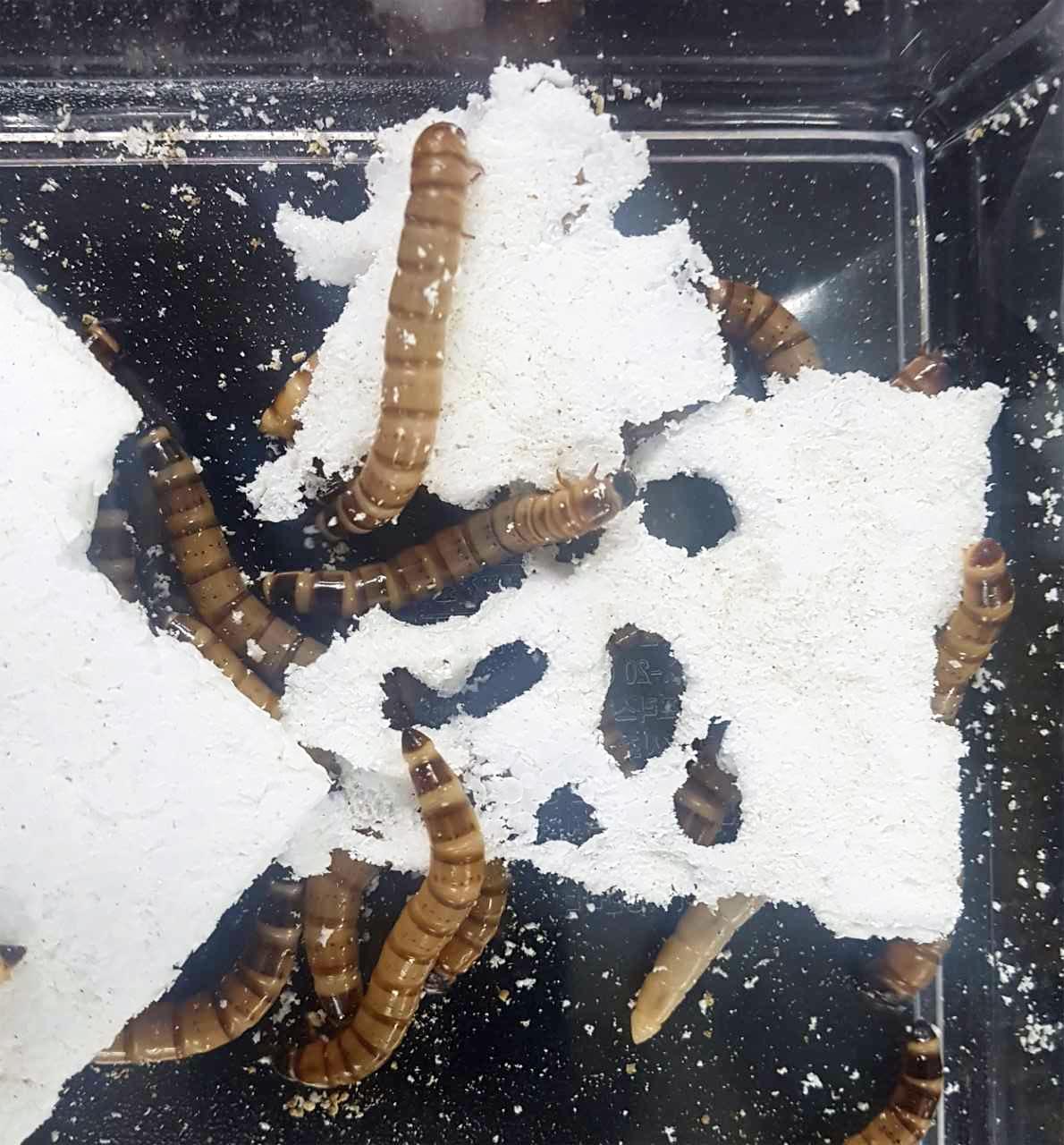
    Superworms Digest Plastic
    Bacteria from the gut of superworms can degrade polystyrene (white material). Credit: Adapted from Environmental Science & Technology 2020, DOI: 10.1021/acs.est.0c01495

    Resembling giant mealworms, superworms (Zophobas atratus) are beetle larvae that are often sold in pet stores as feed for reptiles, fish, and birds. In addition to their relatively large size (about 2 inches or 5 centimeters long), these worms have another superpower: They can degrade polystyrene plastic. Now, researchers reporting in ACS’ Environmental Science & Technology have linked this ability to a strain of bacteria that lives in the larvae’s gut.

    Polystyrene is used in packaging containers, disposable cups, and insulating materials. When thrown in landfills or littered in the environment, the plastic takes several hundred years to completely break down. Recently, several studies have found that mealworms and superworms can ingest and degrade polystyrene within a few weeks. In mealworms, this ability was linked to a certain strain of polystyrene-degrading bacteria in the worms’ gut. Jiaojie Li, Dae-Hwan Kim, and colleagues wanted to search for similar bacteria in superworms.

    The team placed 50 superworms in a chamber with polystyrene as their only carbon source, and after 21 days, the worms had consumed about 70% of the plastic. The researchers then isolated a strain of Pseudomonas aeruginosa bacteria from the gut of the worms and showed that it could grow directly on the surface of polystyrene and break it down. Finally, they identified an enzyme from the bacteria, called serine hydrolase, that appeared to be responsible for most of the biodegradation. This enzyme, or the bacteria that produce it, could someday be used to help break down waste polystyrene, the researchers say.

    Reference: “Biodegradation of Polystyrene by Pseudomonas sp. Isolated from the Gut of Superworms (Larvae of Zophobas atratus)” by Hong Rae Kim, Hyun Min Lee, Hee Cheol Yu, Eunbeen Jeon, Sukkyoo Lee, Jiaojie Li, and Dae-Hwan Kim, 6 May 2020, Environmental Science & Technology.
    DOI: 10.1021/acs.est.0c01495

    The authors acknowledge funding from the CJ Blossom Idea Lab of the CJ Corporation, the Undergraduate Research Program at Daegu Gyeongbuk Institute of Science and Technology and the INGE funds of Gwangju Institute of Science and Technology.

    Never miss a breakthrough: Join the SciTechDaily newsletter.
    Follow us on Google and Google News.

    American Chemical Society Bacteria Entomology Plastic Pollution Polymers
    Share. Facebook Twitter Pinterest LinkedIn Email Reddit

    Related Articles

    Engineered Bacteria Eat Waste Plastic and Make Spider Silk – “Nature’s Kevlar”

    How Is It Raining Plastic?! [Video]

    Water Coolers Can Release Potentially Harmful Compounds Into Drinking Water

    Microbes in Cow Stomachs Can Break Down Plastic – Sustainable Way to Reduce Plastic Litter

    Bacteria-Sized Metallic Robots Take On Microplastics – And Win by Breaking Them Down

    Polar Bears at Sea Have Higher Pollution Levels Than Those Staying on Land – Here’s Why

    Turning Waste Plastic Into Filtration Membranes

    New ‘Self-Cleaning’ Concrete Is Also Strong, Heat-Insulating and Soundproof

    Polystyrene, a Common Plastic, Degrades Much Faster Than Expected in Sunlight

    1 Comment

    1. Douglas Furtek on June 6, 2020 5:57 pm

      My children noticed a few months ago that our superworms – kept to feed our gecko – were eating plastic shopping bags, presumably polyethylene.

      Reply
    Leave A Reply Cancel Reply

    • Facebook
    • Twitter
    • Pinterest
    • YouTube

    Don't Miss a Discovery

    Subscribe for the Latest in Science & Tech!

    Trending News

    This Copper Drug Clears Alzheimer’s Brain Toxins and Boosts Memory

    Adults Over 65 Lost Massive Amounts of Weight With Ozempic

    How Flocking Birds “Defy” One of Physics’ Most Fundamental Laws

    Physicists Create a New Kind of Schrödinger’s Cat State From Exotic Quantum Building Blocks

    Your Diet Could Be Missing the Key Ingredient for Heart Protection

    Researchers Warn Widely Prescribed Blood Pressure Drugs Could Be Harming Diabetic Kidneys

    James Webb Spots Something Strange Between Day and Night on an Alien Planet

    How Ancient People Moved a 6-Ton Stone 700 Kilometers to Stonehenge

    Follow SciTechDaily
    • Facebook
    • Twitter
    • YouTube
    • Pinterest
    • Newsletter
    • RSS
    SciTech News
    • Biology News
    • Chemistry News
    • Earth News
    • Health News
    • Physics News
    • Science News
    • Space News
    • Technology News
    Recent Posts
    • Ancient Black Holes May Have Survived a Cosmic Era Before the Big Bang
    • What if Time Isn’t Fundamental? Physicists Just Tested the Idea in the Lab
    • Scientists Let People Play Video Games Using Only Their Thoughts
    • Women’s Brains May Be More Vulnerable to Dementia Risk Factors Than Scientists Realized
    • Scientists Say We’ve Been Wrong About the Aging Brain
    Copyright © 1998 - 2026 SciTechDaily. All Rights Reserved.
    • Science News
    • About
    • Contact
    • Editorial Board
    • Privacy Policy
    • Terms of Use

    Type above and press Enter to search. Press Esc to cancel.