
Close Menu
    Facebook X (Twitter) Instagram
    SciTechDaily
    • Biology
    • Chemistry
    • Earth
    • Health
    • Physics
    • Science
    • Space
    • Technology
    Facebook X (Twitter) Pinterest YouTube RSS
    SciTechDaily
    Home»Science»Turning Waste Plastic Into Filtration Membranes
    Science

    Turning Waste Plastic Into Filtration Membranes

    By King Abdullah University of Science & Technology (KAUST)November 24, 2019No Comments3 Mins Read
    Facebook Twitter Pinterest Telegram LinkedIn WhatsApp Email Reddit
    Share
    Facebook Twitter LinkedIn Pinterest Telegram Email Reddit
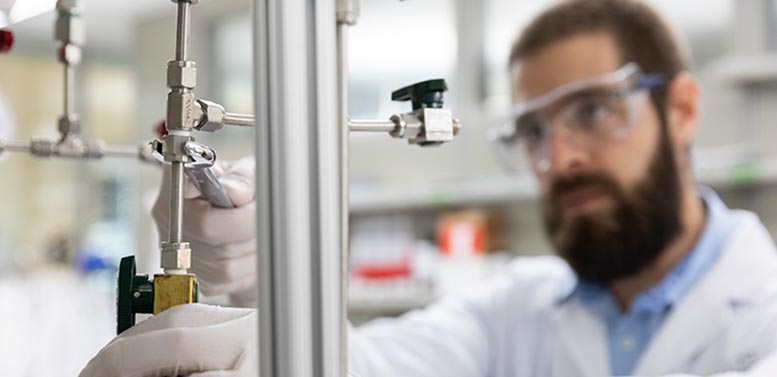
    Bruno Pulido
    Bruno Pulido tests the efficiency of the team’s synthetic membrane. Credit: © 2019 KAUST

    Discarded PET bottles could find a new life in the chemical industry.

    In a world that seems to be drowning in plastic bottles, recycling this waste into useful materials would help to reduce its environmental impact. KAUST researchers have now invented a way to turn plastic bottles into porous membranes that could be used as molecular filters in the chemical industry.

    Roughly 40 percent of the chemical industry’s energy used goes into separating and purifying chemicals in heat-intensive processes, such as distillation and crystallization. Using porous membranes to separate molecules from liquids could dramatically reduce that energy consumption. But most conventional membranes are not robust enough to withstand the sort of solvents used in industry, and alternative ceramic membranes tend to be very expensive.

    The KAUST team turned instead to recycled poly(ethylene terephthalate) (PET). “PET is mechanically and chemically robust, making it useful for filtration and purification processes that require sterilization or cleaning with acids or bleach,” says Bruno Pulido, Ph.D. student. In 2016, global production of PET reached 50 million tons, accounting for about 9 percent of total plastic production. Roughly 30 percent of PET is used in the food industry, including single-use plastic bottles. PET is typically “down-cycled” into lower-value products, such as clothing fabrics, so converting it into higher-value filtration membranes could provide a strong economic incentive to improve recycling rates.
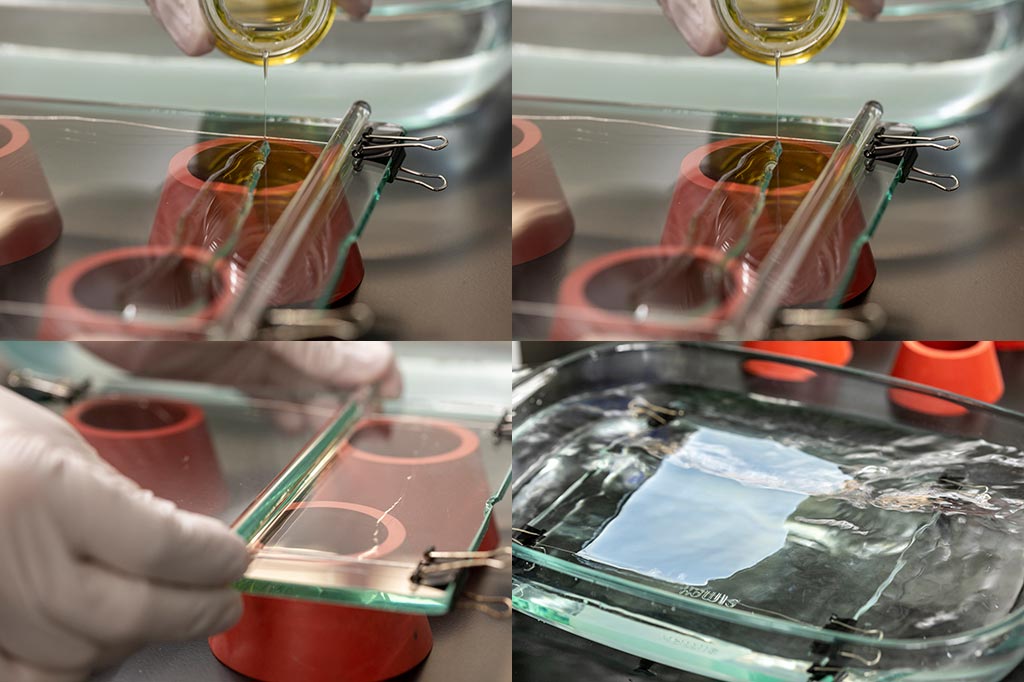
    Fabrication Polymeric Synthetic Membrane
    Fabrication of the polymeric synthetic membrane. Credit: © 2019 KAUST

    To create their membranes, the researchers dissolved the PET and then used a different solvent to make the PET solid again, this time in the shape of a membrane instead of a bottle.

    The team tested a wide range of different processing conditions and solvents and used an additive called poly(ethylene glycol) (PEG) to help form pores within the PET membranes. Changing the concentration and size of the PEG molecules helped to control the number and size of pores within the membrane, and thus fine-tune its filtration properties.
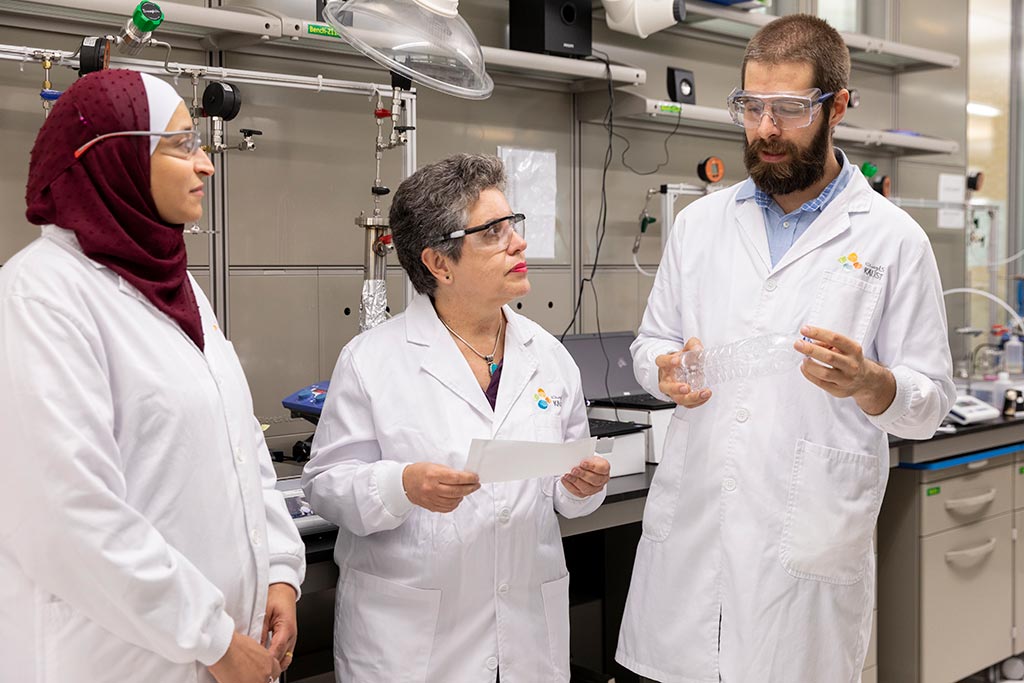
    Ola Habboud Suzana Nunes Bruno Pulido
    (Left to right) Ola Habboud, Suzana Nunes and Bruno Pulido discuss the potential of their PET membrane for application to industry. Credit: © KAUST 2019

    After optimizing this process, the team measured how easily liquid flowed through the membranes and how well they separate molecules of different sizes. The best membranes had pore sizes that ranged from 35 to 100 nanometers wide, with pores covering up to 10 percent of the membrane’s area; they also performed well at 100 degrees Celsius.
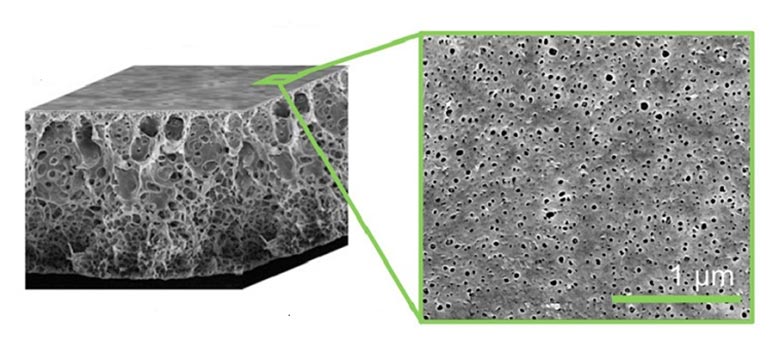
    Microscope PET Bottle Filtration Membrane
    Electron microscope image of the pores of a PET bottle ( left) and the filtration membrane (right). Credit: © 2019 Bruno Pulido

    Pulido says that the membranes could be used as a support for thin layers of other filtration materials, such as those found in reverse osmosis membranes. “We’re also working on the development of PET hollow fibers, a type of membrane with additional advantages over flat membranes,” he adds.

    Reference: “Recycled Poly(ethylene terephthalate) for High Temperature Solvent Resistant Membranes” by Bruno A. Pulido, Ola S. Habboub, Sandra L. Aristizabal, Gyorgy Szekely and Suzana P. Nunes, 22 July 2019, ACS Applied Polymer Materials.
    DOI: 10.1021/acsapm.9b00493

    Never miss a breakthrough: Join the SciTechDaily newsletter.
    Follow us on Google and Google News.

    Environment KAUST Plastic Pollution Polymers
    Share. Facebook Twitter Pinterest LinkedIn Email Reddit

    Related Articles

    Microplastics Are Leaking Invisible Chemical Clouds Into Rivers and Oceans

    Common Chemical Found in Sunscreen Could Be Supercharging Plastic Pollution

    Shocking Scientists: Toxic Cancer-Linked Plasticizers Found in Southern California Air

    New Plant-Based Plastic Releases 9 Times Less Microplastics

    Devices Can Reduce Fibers Produced From Washing Machines by Up to 80%

    Superworms Digest Plastic: Superpower Made Possible by Bacterial Sidekicks

    Converting Plastic Waste From Cities and Rivers Into Fuel

    The Health Challenges of the Growing Class of Megacities

    Da Vinci’s Last Supper Threatened By Air Pollution

    Leave A Reply Cancel Reply

    • Facebook
    • Twitter
    • Pinterest
    • YouTube

    Don't Miss a Discovery

    Subscribe for the Latest in Science & Tech!

    Trending News

    Scientists May Have Found the Key to Jupiter and Saturn’s Moon Mystery

    Scientists Uncover Brain Changes That Link Pain to Depression

    Saunas May Do More Than Raise Body Temperature – They Activate Your Immune System

    Exercise in a Pill? Metformin Shows Surprising Effects in Cancer Patients

    Hidden Oceans of Magma Could Be Protecting Alien Life

    New Study Challenges Alzheimer’s Theories: It’s Not Just About Plaques

    Artificial Sweeteners May Harm Future Generations, Study Suggests

    Splashdown! NASA Artemis II Returns From Record-Breaking Moon Mission

    Follow SciTechDaily
    • Facebook
    • Twitter
    • YouTube
    • Pinterest
    • Newsletter
    • RSS
    SciTech News
    • Biology News
    • Chemistry News
    • Earth News
    • Health News
    • Physics News
    • Science News
    • Space News
    • Technology News
    Recent Posts
    • As Cities Invade the Amazon, Yellow Fever Makes a Dangerous Comeback
    • “Asian Flush” May Be a Hidden Trigger for Deadly Heart Damage
    • AI Could Detect Early Signs of Alzheimer’s in Under a Minute – Far Before Traditional Tests
    • What if Dark Matter Has Two Forms? Bold New Hypothesis Could Explain a Cosmic Mystery
    • Researchers Expose Hidden Chemistry of “Ore-Forming” Elements in Biology
    Copyright © 1998 - 2026 SciTechDaily. All Rights Reserved.
    • Science News
    • About
    • Contact
    • Editorial Board
    • Privacy Policy
    • Terms of Use

    Type above and press Enter to search. Press Esc to cancel.