
Close Menu
    Facebook X (Twitter) Instagram
    SciTechDaily
    • Biology
    • Chemistry
    • Earth
    • Health
    • Physics
    • Science
    • Space
    • Technology
    Facebook X (Twitter) Pinterest YouTube RSS
    SciTechDaily
    Home»Health»Water Coolers Can Release Potentially Harmful Compounds Into Drinking Water
    Health

    Water Coolers Can Release Potentially Harmful Compounds Into Drinking Water

    By American Chemical SocietySeptember 1, 2021No Comments3 Mins Read
    Facebook Twitter Pinterest Telegram LinkedIn WhatsApp Email Reddit
    Share
    Facebook Twitter LinkedIn Pinterest Telegram Email Reddit
    Water Cooler
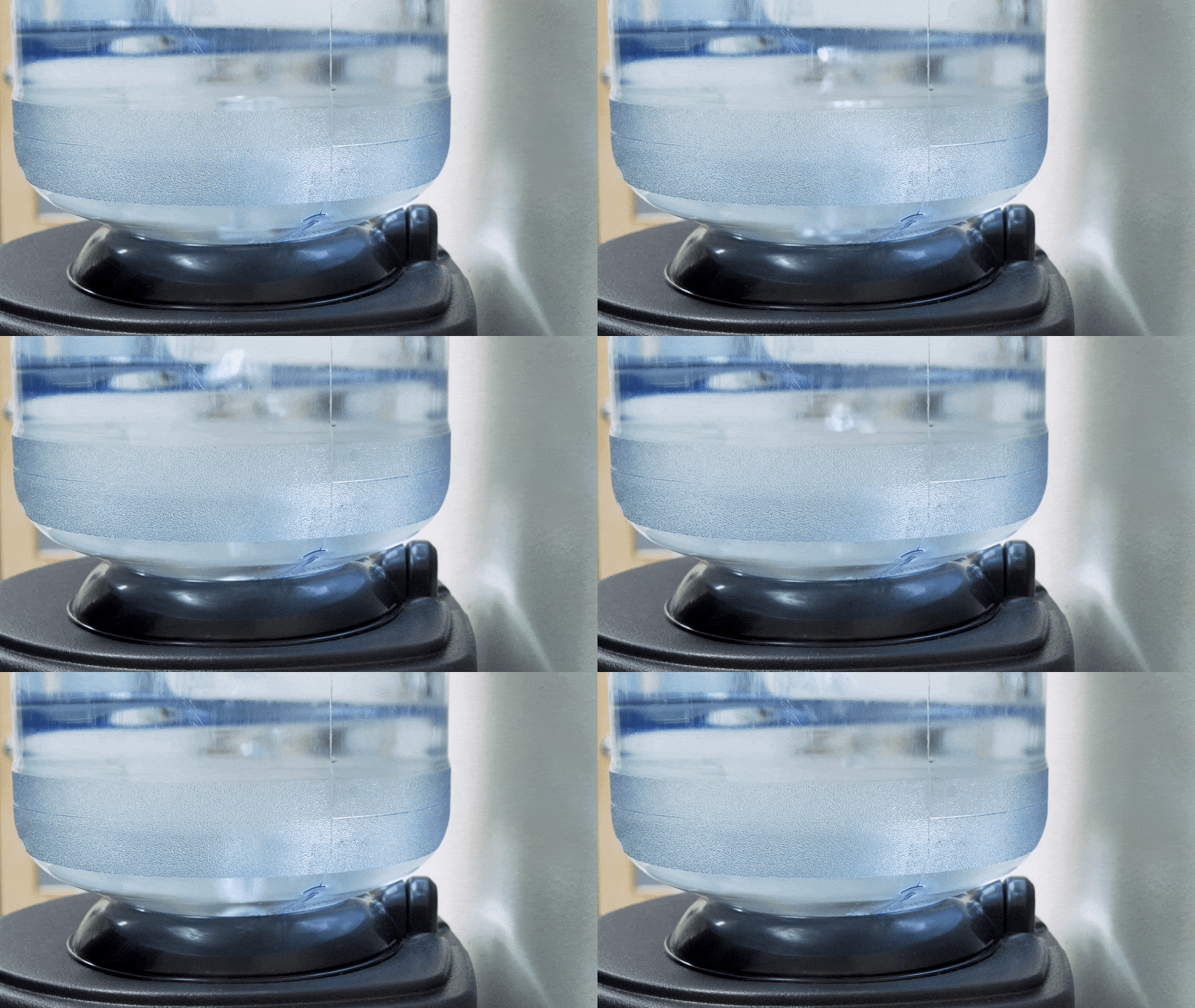
    Water coolers, although convenient, may pose a risk as their tanks and components are made of materials that could potentially release unwanted or harmful compounds into drinking water.

    Watercoolers can release organophosphate esters like TCIPP into drinking water through their plastic and tubing parts.

    Watercoolers have become a staple in homes, offices, and schools, but their tanks and parts are made of materials that could release unwanted or potentially harmful compounds into drinking water. In a preliminary study, researchers in ACS’ Environmental Science & Technology Letters report that organophosphate esters (OPEs) were found in water dispensed from these systems, but they estimated that daily consumption would be far below the levels associated with health problems.

    As drinking water from freestanding dispensers has become wildly popular, some concern has been raised about the quality of the water coming out of these systems. For example, OPEs have been found in various types of drinking water, including tap, well, and bottled water, in some locations in the U.S., South Korea, and China. These compounds are used widely worldwide, replacing harmful brominated flame retardants and as additives in plastics, and now researchers are finding that OPEs are also associated with poor health outcomes. Because these substances are applied to materials or used as additives, which are not strongly bonded to plastic polymers, they can easily contaminate dust or leach into water. So, Yali Shi, Guangshui Na and colleagues wanted to see if water dispensers could contribute to OPE exposure, estimating the amount someone would consume on a daily basis if they only drank water from these types of systems.

    The researchers collected water from 53 water dispensers in office buildings in China, both from the storage tanks and dispensed through room temperature and hot water taps. They analyzed the samples for 22 OPEs and detected eight of them in the majority of samples, with tris (2-chloroisopropyl) phosphate (TCIPP) being the most abundant. The water dispensed from the hot and room temperature taps had higher amounts of these compounds than water held in the tanks. Upon closer inspection, the researchers found that the plastic dispenser and the tubing contained these compounds, and the tubing could accumulate OPEs from the air. Finally, the team calculated that if people drank water dispensed solely from these systems, their total daily exposure to TCIPP — a potential carcinogen and endocrine disruptor — was far less than is considered to cause harm to humans. The researchers say that while their study was small, it identifies a need for future research to examine whether silicone is the most suitable tubing material for watercoolers.

    Reference: “Increased Human Exposure to Organophosphate Esters via Ingestion of Drinking Water from Water Dispensers: Sources, Influencing Factors, and Exposure Assessment” by Minmin Hou, Yali Shi, Guangshui Na, Zongshan Zhao and Yaqi Cai, 1 September 2021, Environmental Science & Technology Letters.
    DOI: 10.1021/acs.estlett.1c00592

    The authors acknowledge funding from the National Key R&D Program of China and the National Natural Science Foundation of China.

    Never miss a breakthrough: Join the SciTechDaily newsletter.
    Follow us on Google and Google News.

    American Chemical Society Plastic Pollution Polymers Public Health
    Share. Facebook Twitter Pinterest LinkedIn Email Reddit

    Related Articles

    Study Finds 95% of Tested Beers Contain Toxic “Forever Chemicals”

    “Safe” Plant-Based Plastics Linked to Organ Damage

    People With Inflammatory Bowel Disease (IBD) Have More Microplastics in Their Feces

    Bacteria-Sized Metallic Robots Take On Microplastics – And Win by Breaking Them Down

    Superworms Digest Plastic: Superpower Made Possible by Bacterial Sidekicks

    Turning Waste Plastic Into Filtration Membranes

    Polystyrene, a Common Plastic, Degrades Much Faster Than Expected in Sunlight

    Warning: Cleaning With Bleach Can Be Harmful to People and Pets

    Warning: Plastic Teabags Release Microscopic Particles Into Tea

    Leave A Reply Cancel Reply

    • Facebook
    • Twitter
    • Pinterest
    • YouTube

    Don't Miss a Discovery

    Subscribe for the Latest in Science & Tech!

    Trending News

    One of the Universe’s Largest Stars May Be Getting Ready To Explode

    Scientists Discover Enzyme That Could Supercharge Ozempic-Like Weight Loss Drugs

    Popular Sweetener Linked to DNA Damage – “It’s Something You Should Not Be Eating”

    Ancient “Rock” Microbes May Reveal How Complex Life Began

    Researchers Capture Quantum Interference in One of Nature’s Rarest Atoms

    “A Plague Is Upon Us”: The Mass Death That Changed an Ancient City Forever

    Scientists Discover Game-Changing New Way To Treat High Cholesterol

    This Small Change to Your Exercise Routine Could Be the Secret to Living Longer

    Follow SciTechDaily
    • Facebook
    • Twitter
    • YouTube
    • Pinterest
    • Newsletter
    • RSS
    SciTech News
    • Biology News
    • Chemistry News
    • Earth News
    • Health News
    • Physics News
    • Science News
    • Space News
    • Technology News
    Recent Posts
    • Bee Bacteria Could Fix a Major Flaw in Plant-Based Milk
    • Scientists Discover a Surprising Way To Make Bread Healthier and More Nutritious
    • Natural Compounds Boost Bone Implant Success While Killing Bacteria and Cancer Cells
    • After 60 Years, Scientists Uncover Unexpected Brain Effects of Popular Diabetes Drug Metformin
    • New Research Uncovers Hidden Side Effects of Popular Weight-Loss Drugs
    Copyright © 1998 - 2026 SciTechDaily. All Rights Reserved.
    • Science News
    • About
    • Contact
    • Editorial Board
    • Privacy Policy
    • Terms of Use

    Type above and press Enter to search. Press Esc to cancel.