
Close Menu
    Facebook X (Twitter) Instagram
    SciTechDaily
    • Biology
    • Chemistry
    • Earth
    • Health
    • Physics
    • Science
    • Space
    • Technology
    Facebook X (Twitter) Pinterest YouTube RSS
    SciTechDaily
    Home»Health»Bioengineered Membrane to Capture Airborne COVID-19 Droplets – Inspired by Plant That Traps Insects
    Health

    Bioengineered Membrane to Capture Airborne COVID-19 Droplets – Inspired by Plant That Traps Insects

    By University of MaineJuly 22, 2020No Comments2 Mins Read
    Facebook Twitter Pinterest Telegram LinkedIn WhatsApp Email Reddit
    Share
    Facebook Twitter LinkedIn Pinterest Telegram Email Reddit
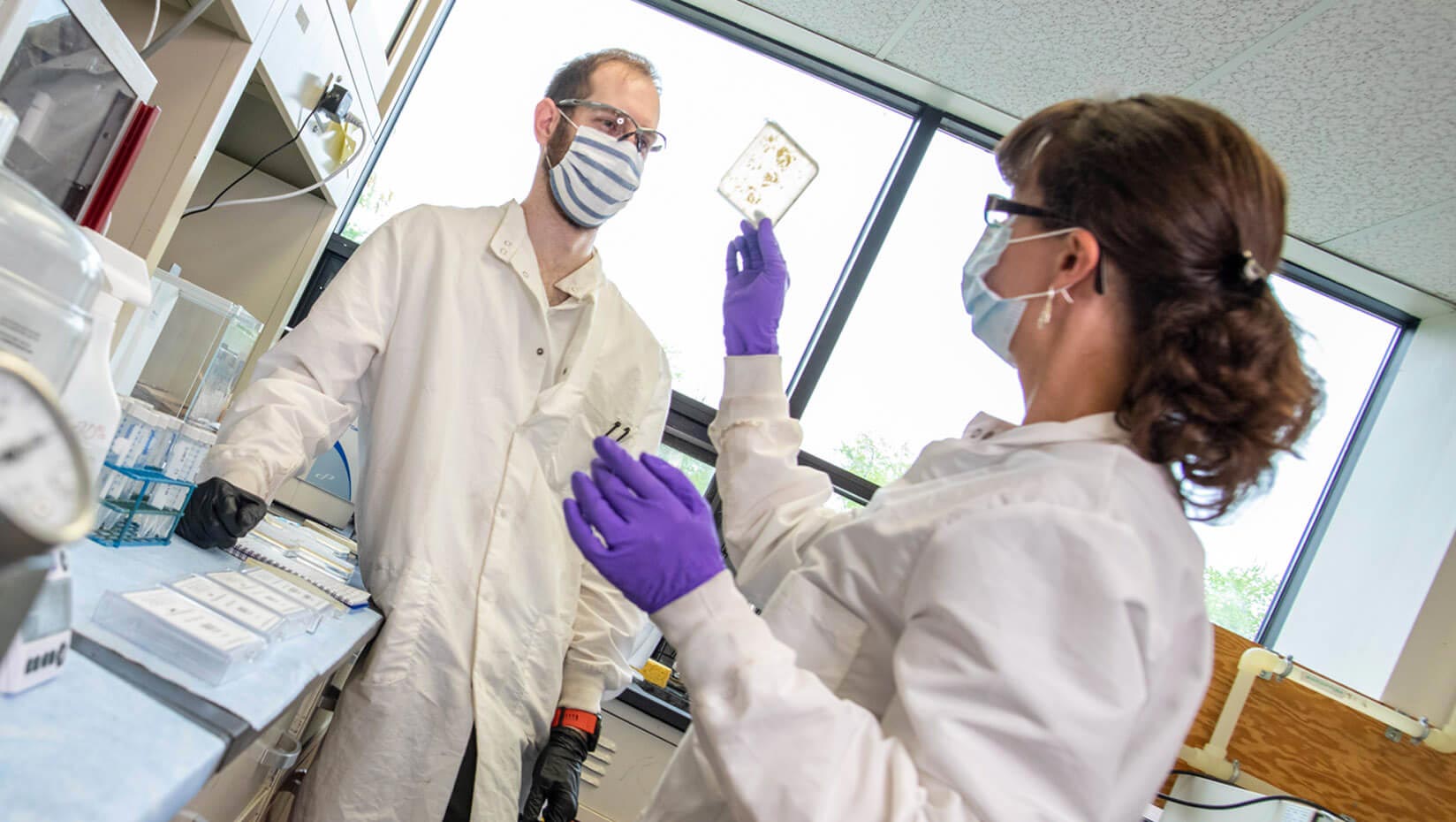
    Bioengineered Membrane Captures Airborne COVID-19 Droplets
    University of Maine, University of Massachusetts Amherst team bioengineering a membrane to capture COVID-19 airborne droplets. Credit: University of Maine

    Team’s inspiration comes from nature — the pitcher plant, with its liquid membrane that traps insects.

    Detection and analysis of airborne coronavirus droplets using a bioengineered membrane is the focus of exploratory research at the University of Maine and University of Massachusetts Amherst, funded by the National Science Foundation (NSF).

    Their inspiration comes from nature — the pitcher plant, with its liquid membrane that traps insects. 

    The project, led by UMaine biomedical engineer Caitlin Howell and UMass Amherst chemical engineer Jessica Schiffman, received a more than $225,000 NSF EAGER award — early-concept grants for exploratory research. Collaborating on the project is UMaine virologist Melissa Maginnis.

    According to NSF, EAGER funding supports “untested, but potentially transformative research ideas or approaches.” The research typically involves “radically different approaches, applies new expertise or engages novel disciplinary or interdisciplinary perspectives.”

    The spread of COVID-19 via aerosolized droplets by talking, coughing, and sneezing is a major concern during the coronavirus pandemic. The interdisciplinary research team at UMaine and UMass Amherst hopes to develop novel technology to facilitate the efficient collection of viruses from bioaerosols.

    Their model for the membrane technology is the carnivorous Nepenthes pitcher plant, which has a slippery rim and inner walls that cause insects to fall and become trapped within its digestive fluid. The team will engineer a composite material with a liquid layer on the surface of a membrane to capture pathogenic particles for analysis. 

    The goal is to develop a membrane that can be used as an insert in any air filtration system to capture virus-containing droplets and make them easier to collect from the insert for analysis. The technology would be inexpensive and widely deployable in high-risk locations, such as hospitals, schools, elder-care facilities and travel hubs.

    “Disease-causing agents such as the novel coronavirus (SARS-CoV-2) that take form as bioaerosols present unique challenges for disease surveillance, containment, and treatment,” noted the researchers in their NSF proposal. “This work will fill a critical gap in current methods of monitoring the spread of disease.” 

    Previous attempts to design aerosol collection systems for viruses have had limited success due to either the difficulty of retrieving intact virus particles from a solid filter surface or inadequate or low air filtration rates.

    Never miss a breakthrough: Join the SciTechDaily newsletter.
    Follow us on Google and Google News.

    Biomedical Engineering COVID-19 Infectious Diseases Public Health University of Massachusetts Amherst Virology
    Share. Facebook Twitter Pinterest LinkedIn Email Reddit

    Related Articles

    New Biosensor Technology Makes Coronavirus Testing Quick and Easy

    New Genetic Identification of COVID-19 Susceptibility Will Aid Treatment

    FDA Approved Drug May Help Calm Cytokine Storm in COVID-19

    New Portable Analyzer Can Detect Antivirus Antibody in Just 20 Minutes

    Antibody Neutralizes SARS and COVID-19 Coronaviruses – On Accelerated Path Toward Clinical Trials

    Experts Dire Warning: 250,000,000 People in Africa Will Catch Coronavirus and Up to 190,000 Will Likely Die

    Team of Biochemists and Virologists Discover Potential Targets for COVID-19 Therapy

    How COVID-19 Kills: New Study Explains the Mechanisms of the New Coronavirus

    Vitamin D Linked to Low Coronavirus Death Rate

    Leave A Reply Cancel Reply

    • Facebook
    • Twitter
    • Pinterest
    • YouTube

    Don't Miss a Discovery

    Subscribe for the Latest in Science & Tech!

    Trending News

    What if Time Isn’t Fundamental? Physicists Just Tested the Idea in the Lab

    Scientists Say We’ve Been Wrong About the Aging Brain

    68 Quadrillion Miles: Scientists Map Earth’s Vast Hidden Fungal Network for the First Time

    Hidden Damage From Youth May Explode Into Disease Later in Life

    Climate Models May Be Wrong About How Trees Store Carbon

    Scientists Discover Brain-Protecting Peptide That Could Change Parkinson’s Treatment

    This Copper Drug Clears Alzheimer’s Brain Toxins and Boosts Memory

    Adults Over 65 Lost Massive Amounts of Weight With Ozempic

    Follow SciTechDaily
    • Facebook
    • Twitter
    • YouTube
    • Pinterest
    • Newsletter
    • RSS
    SciTech News
    • Biology News
    • Chemistry News
    • Earth News
    • Health News
    • Physics News
    • Science News
    • Space News
    • Technology News
    Recent Posts
    • Scientists Discover a Gene That Boosts Youth – but It Comes With a Cost
    • A Decade-Long Physics Mystery May Finally Be Solved
    • AI Cracks the Secrets of How the Universe’s Heaviest Elements Are Forged
    • After 50 Years, Astronomers Finally Found What the Milky Way’s Black Hole Was Hiding
    • Scientists Discover Immune Cells That Can Fight Both Measles and Nipah
    Copyright © 1998 - 2026 SciTechDaily. All Rights Reserved.
    • Science News
    • About
    • Contact
    • Editorial Board
    • Privacy Policy
    • Terms of Use

    Type above and press Enter to search. Press Esc to cancel.