
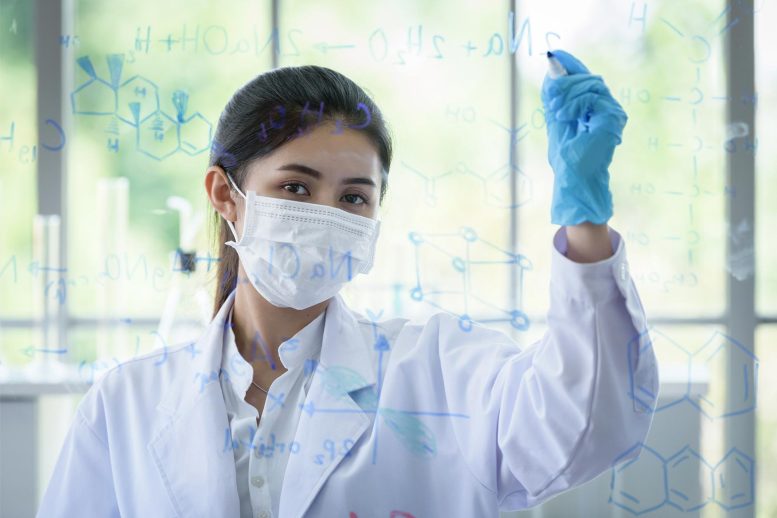
The new process is a more environmentally friendly, cleaner, safer, and cost-effective way to make cell-based meat.
By zapping animal cells with a magnet, researchers from the National University of Singapore (NUS) have discovered a revolutionary method of producing cell-based meat. By using fewer animal products, this innovative method streamlines the production of cell-based meat and makes it safer, cleaner, and more cost-effective.
The benefits of cultured meat over traditional animal agriculture include a reduced carbon footprint and a lower chance of animal disease transmission. However, the current method of producing cultured meat needs the use of other animal products, which largely defeats the purpose, or drugs to stimulate the meat’s growth.
Animal cells are given animal serum – typically fetal bovine serum (FBS), which is a combination obtained from the blood of fetuses excised from pregnant cows killed in the dairy or meat industries – to help them develop and proliferate in order to cultivate cell-based meat. This is an important, though cruel and costly, stage in the current cell-based meat manufacturing process. Many of these molecules, ironically, come from the muscles of the slain animal, but scientists had no idea how to stimulate their release in large-scale bioreactors. Other methods for promoting cell proliferation include the use of drugs or genetic engineering.
The complex manufacturing method for cell-based meat raises costs, restricts manufacturing scale, and threatens commercial viability.
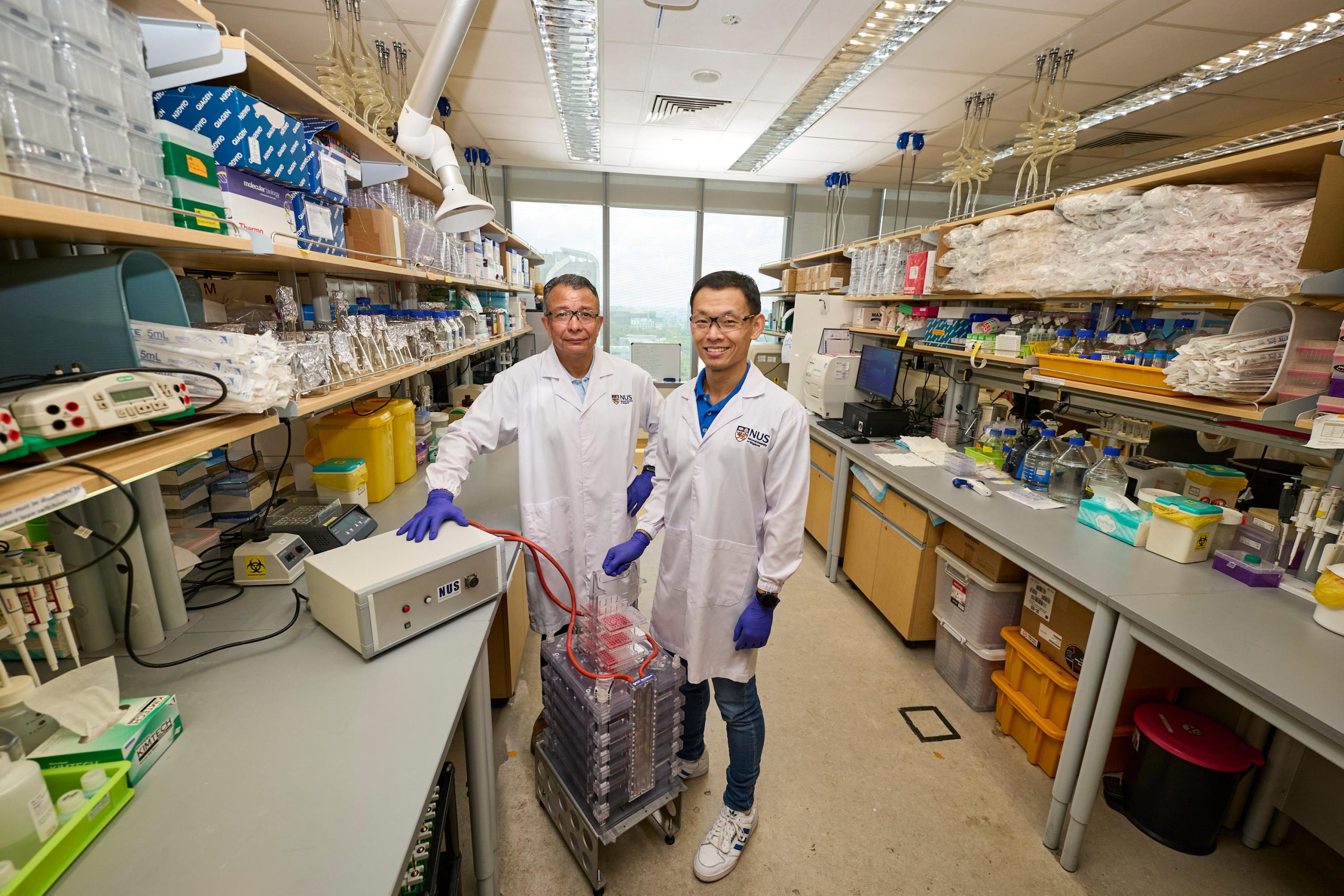
To help address this challenge, a multidisciplinary research team led by Associate Professor Alfredo Franco-Obregón, who is from the NUS Institute for Health Innovation & Technology and the NUS Yong Loo Lin School of Medicine, came up with an unconventional method of using magnetic pulses to stimulate the growth of cell-based meat.

Growing Cell-Based Meat With the Help of a Magnet
The NUS technique uses a delicately tuned pulsed magnetic field developed by the team to culture myogenic stem cells, which are found in skeletal muscle and bone marrow tissue.
Assoc Prof Franco-Obregón explained, “In response to a short 10-minute exposure to the magnetic fields, the cells release a myriad of molecules that have regenerative, metabolic, anti-inflammatory, and immunity-boosting properties. These substances are part of what is known as the muscle “secretome” (for secreted factors) and are necessary for the growth, survival, and development of cells into tissues. We are very excited about the possibility that magnetically-stimulated secretome release may one day replace the need for FBS in the production of cultured meat.”

He added, “The growth-inducing secretomes can be harvested in the lab safely and conveniently, and also at low cost. This way, the myogenic stem cells will act as a sustainable and green bioreactor to produce the nutrient-rich secretomes for growing cell-based meat at scale for consumption. The muscle knows how to produce what it needs to grow and develop – it simply needs a little bit of encouragement when it is outside its owner. This is what our magnetic fields can provide.”
Applications in Regenerative Medicine
The harvested secretomes can also be used for regenerative medicine. The NUS team used the secreted proteins to treat unhealthy cells and found that they help to accelerate the recovery and growth of unhealthy cells. Therefore, this method can potentially help to cure injured cells and speed up a patient’s recovery.
Reference: “Brief exposure to directionally-specific pulsed electromagnetic fields stimulates extracellular vesicle release and is antagonized by streptomycin: A potential regenerative medicine and food industry paradigm” by Craig Jun Kit Wong, Yee Kit Tai, Jasmine Lye Yee Yap, Charlene Hui Hua Fong, Larry Sai Weng Loo, Marek Kukumberg, Jürg Fröhlich, Sitong Zhang, Jing Ze Li, Jiong-Wei Wang, Abdul Jalil Rufaihah and Alfredo Franco-Obregón, 13 July 2022, Biomaterials.
DOI: 10.1016/j.biomaterials.2022.121658
A patent has also been filed for this novel technology and the NUS team is currently in active discussions with potential industry partners to commercialize the technology.
Never miss a breakthrough: Join the SciTechDaily newsletter.
Follow us on Google and Google News.
2 Comments
Wouldn’t it be more ethical and direct to work on developing Soylent Green?
Could the same method be used for regrowth of limbs or other body parts?