
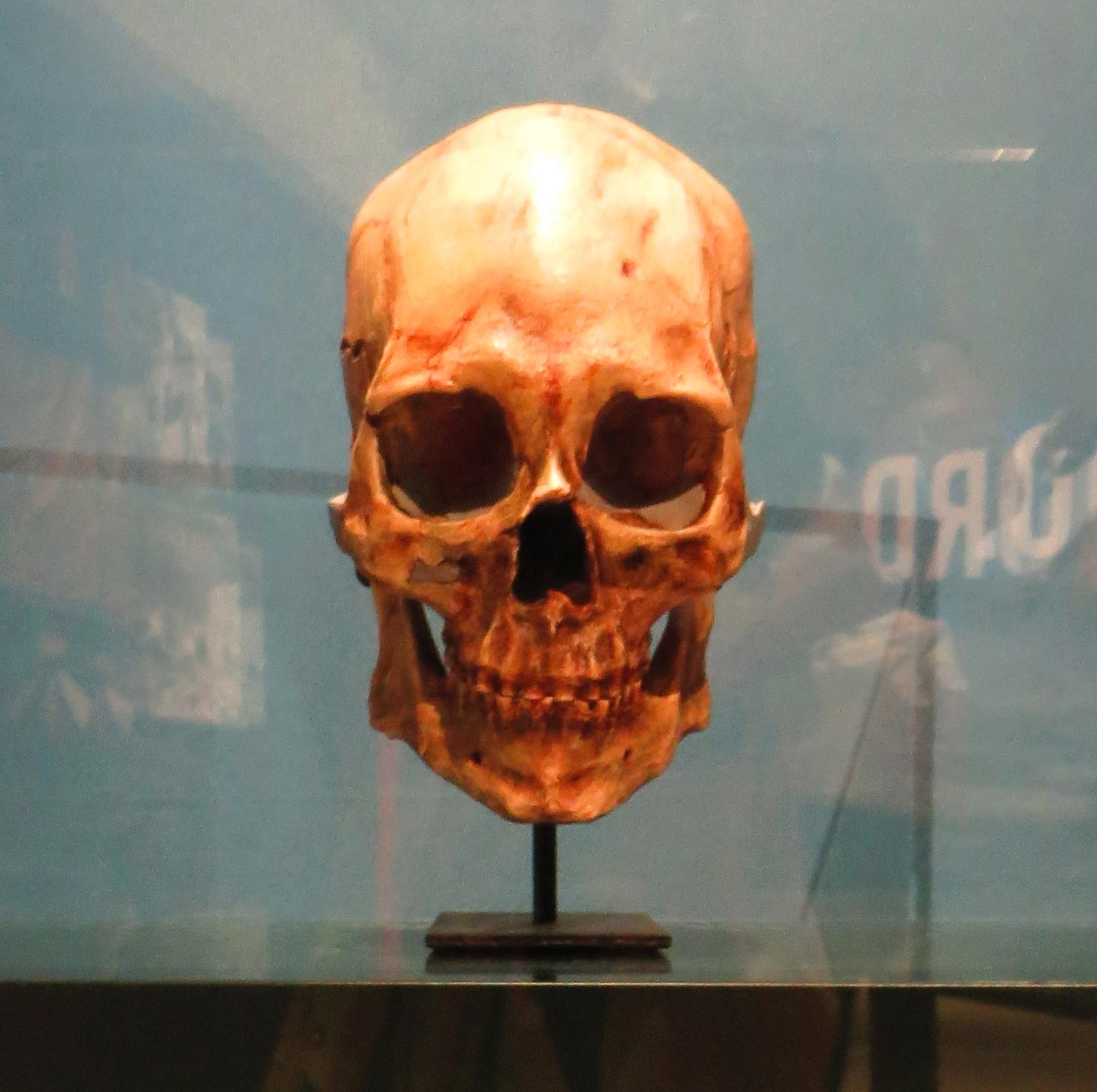
Ancient genomic analysis has revolutionized our understanding of early human migration, particularly across the Americas.
A ball of 4,000-year-old hair frozen in time tangled around a whalebone comb led to the first ever reconstruction of an ancient human genome just over a decade ago.
The hair, which was preserved in arctic permafrost in Greenland, was collected in the 1980s and stored at a museum in Denmark. It wasn’t until 2010 that evolutionary biologist Professor Eske Willerslev was able to use pioneering shotgun DNA sequencing to reconstruct the genetic history of the hair. He found it came from a man from the earliest known people to settle in Greenland known as the Saqqaq culture. It was the first time scientists had recovered an entire ancient human genome.
Now a review of the first decade of ancient genomics of the Americas published in Nature on June 16, 2021, written by Professor Willerslev a Fellow of St John’s College, University of Cambridge, and director of The Lundbeck Foundation GeoGenetics Centre, University of Copenhagen, with one of his longstanding collaborators Professor David Meltzer, an archaeologist based at Southern Methodist University, Texas, shows how the world’s first analysis of an ancient genome sparked an incredible ‘decade of discovery’.
“The last 10 years have shown us what it means to be human. We won’t ever see that depth of human experience on this planet again – people entered new areas with absolutely no idea of what was in front of them.”
Professor Willerslev said: “The last ten years has been full of surprises in the understanding of the peopling of the Americas – I often feel like a child at Christmas waiting to see what exciting DNA present I am about to unwrap! What has really blown my mind is how resilient and capable the early humans we have sequenced DNA from were – they occupied extremely different environments and often populated them in a short space of time.”
“We were taught in school that people would stay put until the population grew to a level where the resources were exhausted. But we found people were spreading around the world just to explore, to discover, to have adventures.”
“The last 10 years have shown us a lot about our history and what it means to be human. We won’t ever see that depth of human experience on this planet again – people entered new areas with absolutely no idea of what was in front of them. It tells us a lot about human adaptability and how humans behave.”
Revising Migration Myths Through DNA
For decades, scientists relied on archaeological findings to reconstruct the past and theories weren’t always accurate. It was previously thought, that there were early non-Native American people in the Americas but the ancient DNA analysis so far has shown that all of the ancient remains found are more closely related to contemporary Native Americans than to any other population anywhere else in the world.
Professor Meltzer, who worked on the review with Professor Willerslev while the former was at St John’s College as a Beaufort Visiting Scholar added: “Genomic evidence has shown connections that we didn’t know existed between different cultures and populations and the absence of connections that we thought did exist. Human population history is far more complex than previously thought.
“A lot of what has been discovered about the people of the Americas could not have been predicted. We have seen how rapidly people were moving around the world when they have a continent to themselves, there was nothing to hold them back. There was a selective advantage to seeing what was over the next hill.”
“We have seen how rapidly people were moving around the world when they have a continent to themselves, there was nothing to hold them back. There was a selective advantage to seeing what was over the next hill.”
In 2013, scientists mapped the genome of a four-year-old boy who died in south-central Siberia 24,000 years ago. The burial of an Upper Palaeolithic Siberian child was discovered in the 1920s by Russian archaeologists near the village of Mal’ta, along the Belaya River. Sequencing of the Mal’ta genome was key as it showed the existence of a previously unsampled population that contributed to the ancestry of Siberian and Native American populations.
Two years later, Professor Willerslev and his team published the first ancient Native American genome, sequenced from the remains of a baby boy ceremonially buried more than 12,000 years ago in Anzick, Montana.
In 2015, their ancient genomic analysis was able to solve the mystery of Kennewick Man, one of the oldest and most complete skeletons ever found in the Americas, and one of the most controversial.
The 9,000-year-old remains had been surrounded by a storm of controversy when legal jurisdiction over the skeleton became the focus of a decade of lawsuits between five Native American tribes, who claimed ownership of the man they called Ancient One, and the United States Army Corps of Engineers.
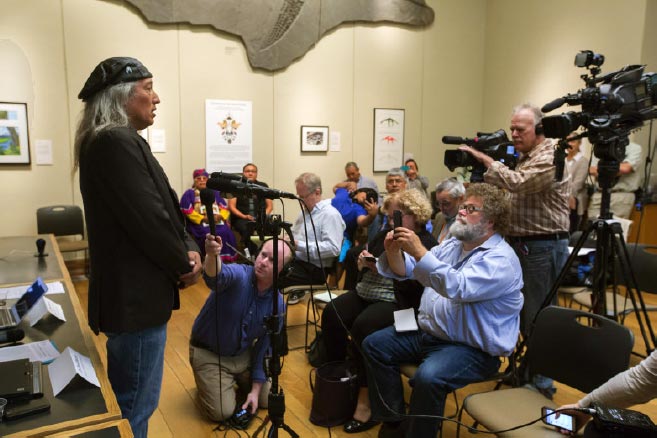
Collaborating with Native Tribes for Ethical Research
Professor Willerslev, who has rightly learned to be mindful of cultural sensitivities when searching for ancient DNA, has spent much of the past decade talking to tribal community members to explain his work in detail and seek their support.
This meant he was able to agree with members of the Colville Tribe, based in Washington State where the remains were found, that they would donate some of their DNA to allow Professor Willerslev and his team to establish if there was a genetic link between them and Kennewick Man.
Jackie Cook, a descendant of the Colville Tribe and the repatriation specialist for the Confederated Tribes of the Colville Reservation, said: “We had spent nearly 20 years trying to have the Ancient One repatriated to us. There has been a long history of distrust between scientists and our Native American tribes but when Eske presented to us about his DNA work on the Anzick child, the hair on my arms stood up.
“Our knowledge of human history has been fundamentally changed thanks to ancient genomic analysis – and the incredible findings have only just begun.”
“We knew we shouldn’t have to agree to DNA testing, and there were concerns that we would have to do it every time to prove cultural affiliation, but our Council members discussed it with the elders and it was agreed that any tribal member who wanted to provide DNA for the study could.”
The Kennewick Man genome, like the Anzick baby, revealed the man was a direct ancestor of living Native Americans. The Ancient One was duly returned to the tribes and reburied.
Cook added: “We took a risk but it worked out. It was remarkable to work with Eske and we felt honored, relieved and humbled to be able to resolve such an important case. We had oral stories that have passed down through the generations for thousands of years that we call coyote stories – teaching stories. These stories were from our ancestors about living alongside woolly mammoths and witnessing a series of floods and volcanoes erupting. As a tribe, we have always embraced science but not all history is discovered through science.”

Work led by Professor Willerslev was also able to identify the origins of the world’s oldest natural mummy, called Spirit Cave. Scientists discovered the ancient human skeleton back in 1940, but it wasn’t until 2018 that a striking discovery was made that unlocked the secrets of the Ice Age tribe in the Americas.
The revelation came as part of a study that genetically analyzed the DNA of a series of famous and controversial ancient remains across North and South America, including Spirit Cave, the Lovelock skeletons, the Lagoa Santa remains, an Inca mummy, and the oldest remains in Chilean Patagonia.
Scientists sequenced 15 ancient genomes spanning from Alaska to Patagonia and were able to track the movements of the first humans as they spread across the Americas at ‘astonishing’ speed during the Ice Age and also how they interacted with each other in the following millennia.
Debunking the Paleoamerican Hypothesis
The team of academics not only discovered that the Spirit Cave remains was a Native American but they were able to dismiss a longstanding theory that a group called Paleoamericans existed in North America before Native Americans. Spirit Cave was returned to The Fallon Paiute-Shoshone Tribe, a group of Native Americans based in Nevada, for burial.
Professor Willerslev added: “Over the past decade human history has been fundamentally changed thanks to ancient genomic analysis – and the incredible findings have only just begun.”
Reference: “Peopling of the Americas as inferred from ancient genomics” by Eske Willerslev and David J. Meltzer, 16 June 2021, Nature.
DOI: 10.1038/s41586-021-03499-y
Never miss a breakthrough: Join the SciTechDaily newsletter.
Follow us on Google and Google News.
4 Comments
… the shadow on the wall of the cave, still stuck…
The answer to climate change migration it worked then and it will work again.
Migrate from the coasts and the equator to start, stopping building in all areas near large water bodies.Embrace change and flourish.
Stating Humans are “native” anywhere on this planet except for the origin of ultimately the Human species and the muck they crawled out of is comical. Regardless of the DNA scientists find and try to argue themselves into thinking, one fact remains, Humans have been migrating around this planet for half a million years or more. “Native Americans” have no more “right” to anywhere than any other Human on this planet and did the same thing Humans have done for millions of years, displaced or killed those before them and ultimately killed amongst themselves until they were displaced by Humans stronger than them.
Trying to lay claim to any landmass through DNA is simple minded politics and not science.
Agreed. It is called nationalism and it is very backwards and the source of war which threatens to destroy the planet.