
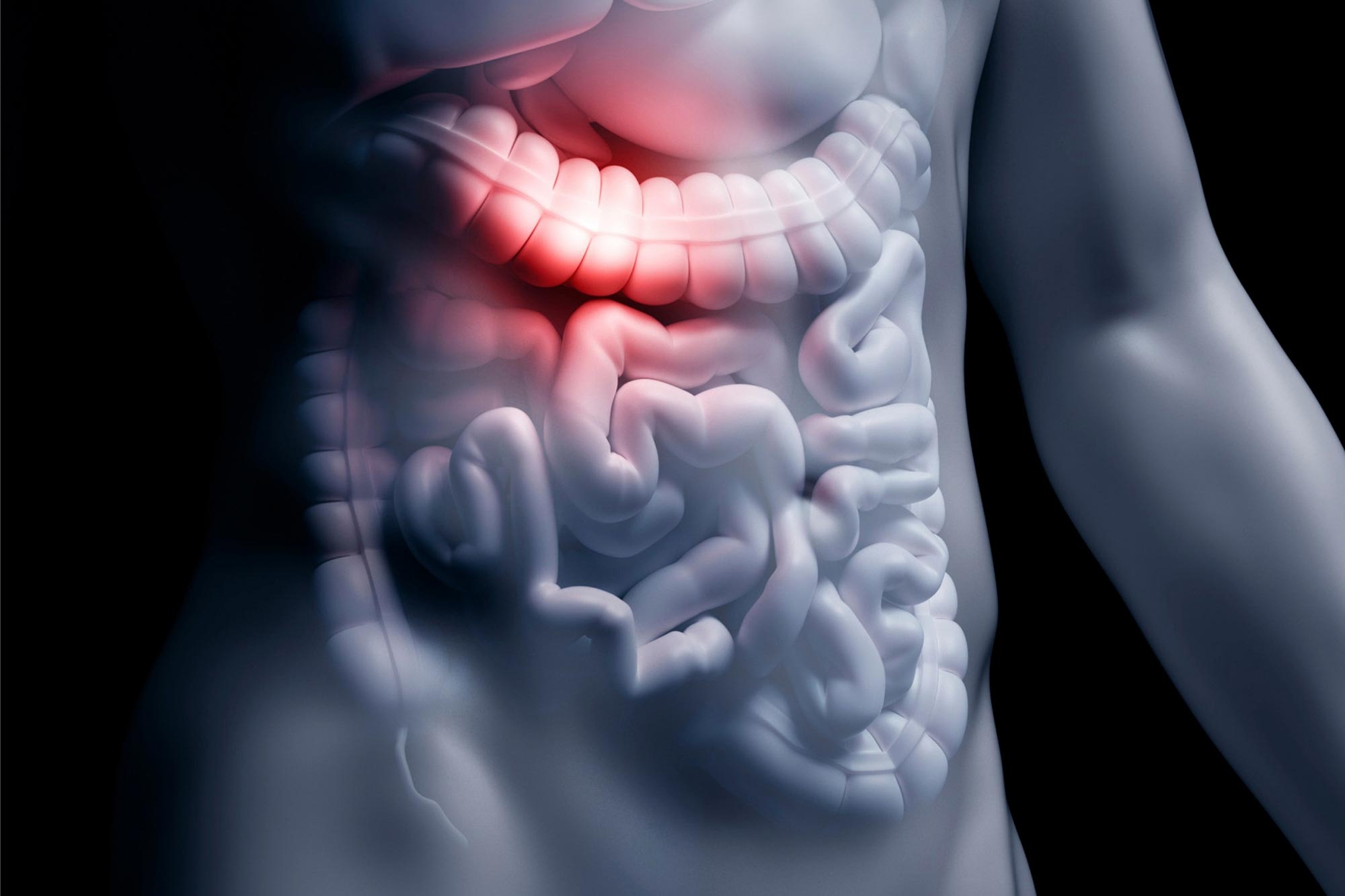
Rodents fed a diet high in soluble fiber showed improved resistance to a microorganism that causes diarrhea and can be fatal in weakened individuals. Researchers found that acetate plays a key role in regulating the immune response.
A study published in Cell Host & Microbe by researchers from Brazil and the United States indicates that a diet high in soluble fiber may help protect the gut from harmful bacteria.
The findings come from experiments involving mice infected with Clostridioides difficile, a bacterium that causes colon inflammation and diarrhea and affects roughly 500,000 people annually in the United States.
“We were able to treat the mice that had an infection with a diet supplemented with soluble fiber. This is digested by the intestinal microbiota, which produces compounds such as acetate. This initiates a cascade of interactions that leads to an appropriate immune response to deal with the infection,” explains José Fachi, first author of the study, conducted during his postdoctoral studies at Washington University School of Medicine in Saint Louis, United States.
The study was a collaboration between Washington University and the State University of Campinas (UNICAMP) in Brazil. The researchers found that mice fed a soluble fiber-rich diet produced higher levels of acetate in their intestines. This rise in acetate helped modulate the immune response in the intestinal epithelium—the tissue lining the gut, enhancing the body’s ability to combat C. difficile infection.
Acetate is a short-chain fatty acid produced by the digestion of soluble fibers, a process carried out by the bacteria that live in the intestine.
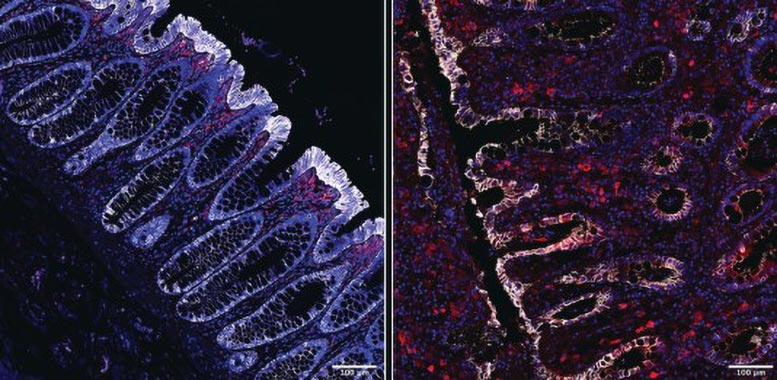
In the study, mice fed a low-fiber diet produced little acetate. As a result, the expression of components of the so-called major histocompatibility complex class 2 (MHC-II) was increased in the intestinal epithelium. Although MHC-II is an essential molecule in the defense against infection, its excessive production can cause exaggerated inflammation, which damages the tissues and worsens the patient’s condition.
“It’s a similar effect to what happens in severe COVID-19 when the immune response itself leads to tissue destruction and even death. In our study, the consumption of soluble fiber regulated this response,” says Sarah de Oliveira, a doctoral student at UNICAMP’s Institute of Biology (IB) and co-author of the article.
Oliveira carried out the work during a research internship at Washington University with support from FAPESP.
The work is part of the project “Analysis of the molecular mechanisms involved in the interaction of microbiota metabolites and host cells during inflammation”, funded by FAPESP and coordinated by Marco Vinolo, professor at IB-UNICAMP.
Vinolo is supervising Oliveira’s doctoral work and advised Fachi, who also received a fellowship.
Dangerous bacteria
Usually acquired by older hospitalized patients who have been treated with antibiotics, C. difficile infection causes severe diarrhea, which can lead to sepsis (generalized infection) and even death.
Many strains are resistant to existing drugs, making treatment difficult. In Brazil, studies on this topic are scarce, partly due to the limited availability of testing, especially in the public health system.
In the animals treated in the study with a diet low in fiber and therefore low in acetate production, the immune response was exacerbated. The epithelial cells overproduced MHC-II, which has the function of presenting pathogen molecules (antigens) to activate CD4+ T lymphocytes, which are responsible for fighting infection.
Among these defense cells, intraepithelial lymphocytes (IELs) became over-activated and began releasing more inflammatory mediators, such as gamma-type interferon. The excess of these molecules intensifies the inflammation, causing more serious tissue damage and worsening the overall condition of the host, which can lead to death.
With the results of the mouse tests in hand, the researchers analyzed biopsies from patients who had been infected with C. difficile. As in the animals, the most severe cases had a higher presence of MHC-II and CD4+ T lymphocytes compared to the less severe cases.
“The study provides a broader understanding of the role of dietary fiber in the immune system. Although we’ve already shown the relationship between the production of short-chain fatty acids and immunity in other studies, this time we were able to demonstrate an unprecedented and coordinated event between the microbiota, the epithelium, and the immune cells in the fight against infection,” comments Vinolo, who coordinated the work with Marco Colonna of Washington University in Saint Louis.
The authors emphasize the importance of a high-fiber diet for gut health. The soluble fibers found in foods such as fruits, vegetables, legumes, and whole grains help prevent intestinal problems and can reduce the risk of serious infections, such as those caused by C. difficile.
“Simple food choices, such as including more fiber in the diet, can make a significant difference in protecting against intestinal infections,” concludes Fachi.
Reference: “Fiber- and acetate-mediated modulation of MHC-II expression on intestinal epithelium protects from Clostridioides difficile infection” by José L. Fachi, Sarah de Oliveira, Tihana Trsan, Silvia Penati, Susan Gilfillan, Siyan Cao, Pollyana Ribeiro Castro, Mariane Font Fernandes, Krzysztof L. Hyrc, Xiuli Liu, Patrick Fernandes Rodrigues, Bishan Bhattarai, Brian T. Layden, Marco Aurélio R. Vinolo and Marco Colonna, 17 January 2025, Cell Host & Microbe.
DOI: 10.1016/j.chom.2024.12.017
The study was funded by the ão Paulo Research Foundation.
Never miss a breakthrough: Join the SciTechDaily newsletter.
Follow us on Google and Google News.
1 Comment
How do you know if you are eating enough fiber? Stool constitution?
I would assume that one of the symptoms from lack of enough fiber would be constipation. Perhaps this is why there are so many advertisements for laxative OTC’s.